
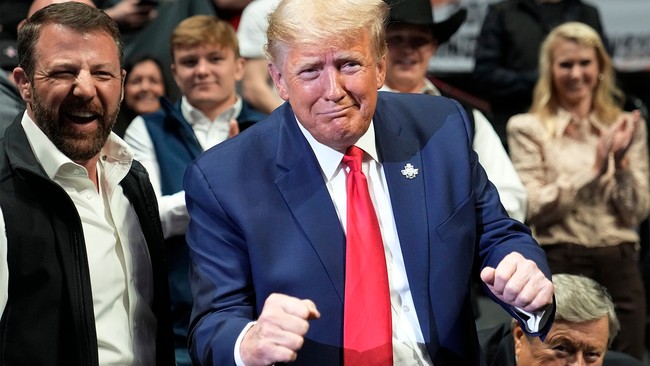
This piece reports on President Donald Trump’s Oval Office remarks about Operation Epic Fury and Iran, and on the swearing-in of Markwayne Mullin as the ninth Secretary of Homeland Security. It covers the administration’s messaging, Mullin’s priorities, reactions from DHS ranks and other officials, and the broader policy signals coming from the White House.
In the Oval Office, President Trump provided a public update on what he called Operation Epic Fury and said Iran was ready to “play ‘Let’s Make a Deal.'” The comments were delivered in a direct, no-nonsense tone that reflected the administration’s approach to foreign threats. That framing set the stage for a swift personnel move at the Department of Homeland Security, signaling an aggressive posture on both homeland defense and overseas pressure.
Shortly after his remarks, the president presided over the swearing-in of Markwayne Mullin as DHS Secretary, following his confirmation. The ceremony underscored a coordinated strategy: personnel choices aligned with policy goals. Bringing a Senate-confirmed conservative into DHS sends a clear message that the administration wants action, not gridlock.
At the ceremony, Secretary Mullin emphasized reopening the Department of Homeland Security as a core priority and ending partisan paralysis that has hamstrung national security efforts. He framed DHS’s mission in personal terms, promising to “fight for your family just as I’ll fight for mine,” a line that resonated with rank-and-file concerns about public safety and frontline morale. That personal framing matches the administration’s broader pitch: security measures protect everyday Americans first.
I am grateful for President Trump’s trust in me to lead the U.S. Department of Homeland Security. It’s an honor to serve.
As @DHSgov Secretary, I’m committed to safeguarding the American people and protecting the homeland. I’ll fight for your family just as I’ll fight for mine.
I look forward to standing shoulder to shoulder with the 260,000 outstanding DHS employees and their families to keep our nation safe.
My first priority is to end the partisan fighting and reopen the U.S. Department of Homeland Security as a matter of national security.
Let’s get to work.
Mullin laid out Day One objectives that focus on operational readiness, employee support, and removing bureaucratic obstacles that limit response capacity. He also pushed his former Senate colleagues to use reconciliation tools to pass the SAVE America Act, making clear he expects policy wins, not just internal housekeeping. That political push shows the administration sees DHS as central to a legislative and executive effort to secure borders and bolster domestic protection.
Frontline agencies reacted visibly to the transition. TSA personnel, still affected by funding disputes, reportedly greeted Mullin warmly, demonstrating how personnel changes can lift morale among unpaid or under-resourced teams. Those visible displays of support matter when the administration asks agencies to execute new directives quickly and effectively.
Military and service leaders also showed public support for the new DHS leadership, including remarks from senior Navy officials who attended the event. The cross-branch welcome reflects a unified senior leadership that the White House wants to present as ready to coordinate responses at home and abroad. That unity helps the administration move faster on complex security challenges that span departments.
Trump’s announcement about Iran and the immediate swearing-in of Mullin after confirmation suggest premeditated planning: policy announcements paired with leadership changes to ensure follow-through. That pattern aims to avoid the delays of previous administrations and to project both deterrence overseas and strengthened homeland defenses. For a White House focused on results, aligning words with personnel is a deliberate strategy to get things done.
The administration’s rhetoric around Operation Epic Fury and negotiations with Iran positions the U.S. as actively shaping outcomes rather than reacting to events. Domestically, placing Mullin at DHS signals a focus on practical security reforms and on restoring morale and function to an agency the president has repeatedly described as critical. Expect the early days of Mullin’s tenure to emphasize clearing backlog issues, restoring funding stability, and driving measurable operational changes.
Observers should watch how quickly Mullin moves to implement his stated priorities and whether the administration follows through with legislative pressure to back those moves. Personnel decisions matter, but they only pay off if paired with clear authority, resources, and a willingness to insist on results. For now, the message from the Oval Office is unmistakable: leadership changes are a tool to make policy happen, not just symbolism.


Add comment