
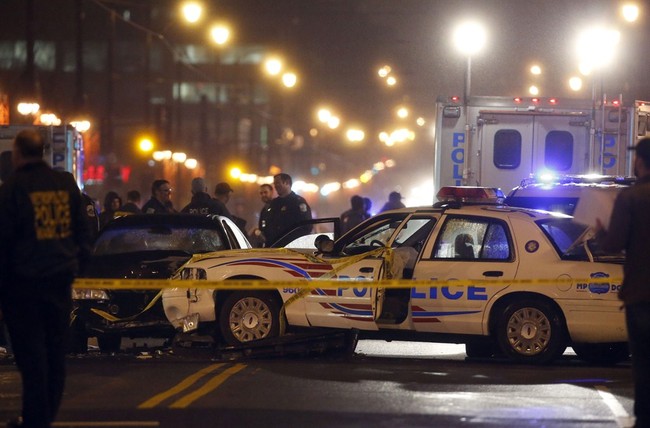
A U.S. Park Police officer was shot in Southeast Washington, D.C., and flown to a hospital, prompting a heavy law enforcement response and public concern; this article reports the known facts, statements from officials and unions, witness accounts, and the political context surrounding policing in the capital.
An officer was struck in the 5000 block of Queens Stroll Place SE Friday evening and was transported by medevac to a local hospital. Initial reports describe a chaotic scene with multiple gunshots heard by neighbors and a swift federal response. Authorities have released limited details while investigations continue and the community waits for more clarity.
Political context sharpened reactions because of recent debates over law and order in Washington, where the presence and use of federal resources became a partisan flashpoint. Supporters of a tougher stance on crime point to past interventions as evidence that stronger enforcement can reduce violence. Skeptics argue not to conflate one incident with broader policy, but the shooting nonetheless fuels the ongoing discussion about public safety in the capital.
A federal police officer with the U.S. Park Police was wounded in a shooting in Southeast D.C. Friday evening.
The shooting happened around 7:30 p.m. Friday in the 5000 block of Queens Stroll Place SE.
The officer was transported to a local hospital via medevac helicopter in non-life-threatening condition. U.S. Park Police did not share further details.
A neighbor told WTOP news partner 7News that he heard at least a dozen gunshots when police were on the scene.
FBI Director Kash Patel addressed the situation and noted uncertainty about the officer’s condition as the investigation proceeds. The incident involved federal and local agencies coordinating on scene, which is typical when federal officers are involved in violent incidents inside the district. That interagency dynamic complicates how information is released and how the public is briefed during active investigations.
The D.C. Police Union publicly confirmed the shooting and asked for prayers for the officer and colleagues. That statement highlighted solidarity among law enforcement groups and underscored anxiety within the policing community. When an officer is hurt on duty it not only affects the immediate family but also raises concerns among those who work daily in hazardous environments.
“We can confirm that a member of US Park Police was shot in the 5000 blk of Queens Stroll Place SE,” the union posted on X. “We’re all sending prayers for the officer and @1791FOP at this time.”
Multiple witnesses described a heavy police presence and the sound of sustained gunfire, which contributed to neighborhood alarm. Officers blocked off streets and investigators canvassed the area for leads, shell casings, and any surveillance footage that might clarify timelines. Residents who saw medevac activity reported both shock and a demand for swift answers about what allowed violence to erupt in that block.
Community leaders and elected officials expressed concern and urged patience as investigators collected evidence and interviewed witnesses. Statements of prayer and support circulated on social media, reflecting the emotional response to an officer-involved shooting. At the same time, some voices used the moment to reiterate calls for clearer public safety plans and accountability for rising violent crime in parts of the capital.
Investigators have not publicly confirmed suspect descriptions, motives, or arrest details, leaving key questions unanswered. Standard practice in active cases is to withhold specifics that could compromise ongoing inquiries or jeopardize prosecutions. Still, the lack of granular detail fuels speculation, and officials face pressure to balance transparency with investigative integrity.
Law enforcement unions and conservative commentators framed the incident as another sign that stronger enforcement policies are needed to protect officers and civilians alike. That view emphasizes restoring order through firm policing and support for federal and local officers who confront violent crime. Opposing perspectives warn against conflating policy debates with individual tragedies and call for careful, evidence-based reforms.
Emergency responders moved quickly and used medevac assets to get the wounded officer medical care as soon as possible, which officials say likely contributed to stabilizing the situation. First-responder coordination in the capital frequently involves federal, local, and specialized medical teams working under tight time windows. The rapid medevac illustrates how critical timely medical intervention is in potentially life-threatening incidents.
As investigations continue, the community and law enforcement advocates are watching for updates about the officer’s condition, any suspects, and the facts that led to the shooting. The incident will likely remain part of the broader conversation on crime and public safety policy in Washington. For now, investigators are piecing together evidence and officials are appealing for calm while the inquiry unfolds.
Comfort his family and fellow officers with Your peace that surpasses understanding.
Protect every man and woman who puts on the uniform today. In Jesus’ name, Amen. 🙏🏿
Add comment