
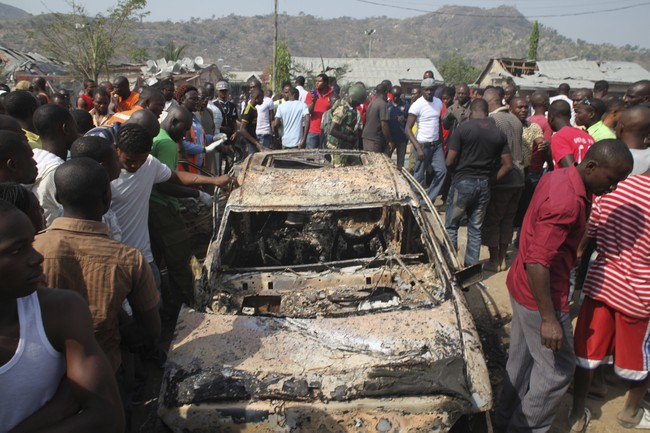
President Trump designated Nigeria a Country of Particular Concern in October 2025, and a bipartisan congressional team led by Reps. Riley M. Moore and Tom Cole produced a detailed report documenting widespread attacks on Christians, calling Nigeria the deadliest place on earth for believers and offering a set of forceful recommendations for U.S. policy responses.
The Trump administration’s move to label Nigeria a Country of Particular Concern was a clear signal that religious freedom matters to this White House. The report grew out of a congressional fact-finding mission and extensive hearings, and it aims to turn those findings into concrete U.S. actions. The narrative is stark: communities under sustained assault need more than statements, they need tailored policy and pressure.
Lawmakers Riley M. Moore and Tom Cole were asked to map the problem and propose solutions that actually protect vulnerable populations. Their investigation included a bipartisan trip to Nigeria, consultations with religious leaders, and interviews with victims and officials. That groundwork is central to the report’s credibility and to the recommendations it advances.
From the fieldwork flowed a hard conclusion: Christians in large parts of Nigeria face repeated violence and systemic threats. The report places responsibility on armed Fulani militias and extremist networks that carry out killings, kidnappings, and attacks on places of worship. It also points to legal structures in northern states, including blasphemy measures, that chill speech and target minorities.
This report is the result of months of investigation, including a bipartisan congressional fact finding trip to Nigeria, hearings with expert witnesses, consultations with religious leaders, meetings with Internally Displaced Persons, and engagement with senior Nigerian government officials.
The report does not shy away from blunt statistics and repeated patterns of brutality, saying the scope of the violence is on par with headline crises elsewhere. It highlights attacks on pastors, priests, schools, and entire villages, and stresses the human toll of displacement, fear, and economic devastation. That level of documentation matters when Washington must decide whether to apply real pressure.
After decades of persecution, Nigeria is the deadliest place in the world to be a Christian. Christians are subject to ongoing violent attacks from well-armed Fulani militias and terrorist groups, resulting in the death and murder of tens of thousands of Christians, including pastors and priests, the destruction of thousands of churches and schools, as well as kidnappings. Blasphemy laws in Nigeria’s northern states silence speech and dissent, target Christians and minorities, and justify so-called “convictions” without due process.
The authors make a pointed case that U.S. policy must move beyond protest and toward protective measures. They call for a bilateral security agreement focused on safeguarding at-risk communities and disrupting jihadist networks. They also suggest conditional use of U.S. assistance to spur accountable action by Nigerian authorities, coupled with targeted sanctions and visa restrictions for those complicit in abuses.
The report leans on evidence that Christians face disproportionate lethal danger, and the language is unambiguous: “Christians are 5 times more likely to be killed than any other religious group.” That data-driven assertion frames the recommendations and gives moral weight to policy steps aimed at deterrence and accountability. For a Republican viewpoint, calling out repression and standing with persecuted believers is both principled and strategic.
Christians are 5 times more likely to be killed than any other religious group.
Fulani militias and terrorist groups constantly attack Christians: targeting pastors and priests, burning schools and churches, often on holy days.
They have killed tens of thousands.
Among the proposals are technical assistance to help Nigeria dismantle violent Fulani militias, diplomatic coordination with like-minded partners, and a demand for repeal of Sharia and blasphemy statutes that enable persecution. The report urges linking aid to measurable steps to stop violence and protect minorities, an approach consistent with using American leverage to promote human rights. It emphasizes accountability rather than open-ended generosity.
Nigerian officials responded to the report by denying state-sanctioned persecution and framing violence as part of complex security challenges. Their statement stressed that the violence is driven by terrorism, organized crime, and communal tensions rather than government policy. Those denials complicate diplomacy, but they do not negate the documented experiences of victims on the ground.
Policymakers in Washington now face choices: ignore the findings and hope the violence fades, or act with the tools the report recommends—security pacts, conditional aid, sanctions, and international cooperation. From a Republican perspective, asserting American leadership, pressing for clear reforms, and protecting threatened communities are essential. Anything less risks normalizing targeted persecution and leaving vulnerable people to fend for themselves.
The report gives the administration a roadmap for pushing tangible change without surrendering U.S. interests. It aims to translate moral clarity into durable policy that shields believers, supports rule of law, and holds perpetrators to account. Those goals line up with a foreign policy that pairs strength with defense of fundamental freedoms.

Add comment