
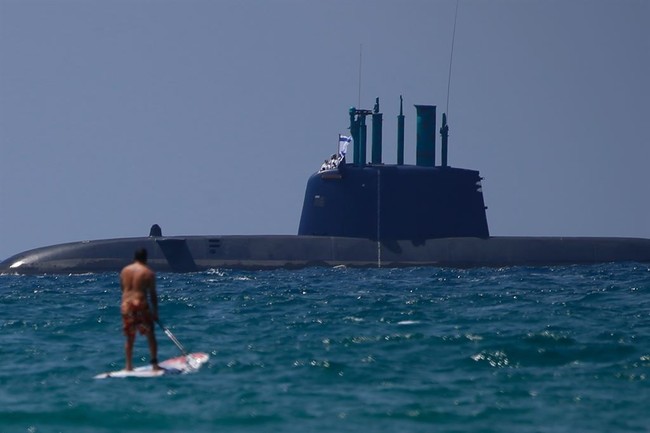
The Israeli Navy has received a new Dolphin-class submarine from Germany, a cutting-edge diesel-electric boat priced at $634 million that strengthens Israel’s undersea deterrent and reconnaissance edge amid regional tensions with Iran.
Germany’s latest delivery brings Israel’s Dolphin-class fleet to six boats, all German-built and progressively more capable. The new vessel is being hailed as the most advanced Dolphin variant yet, and Israeli officials describe it as adding meaningful range and flexibility to undersea operations. Observers see the arrival as a direct boost to maritime deterrence at a time when regional threats remain high.
The reported price tag for the submarine was $634 million, reflecting extensive modernization and custom systems tailored to Israeli requirements. Defense analysts highlight that this investment is about more than hulls and engines; it is about sensors, strike options, and survivable platforms. For a small nation with large security concerns, sea-based capabilities are a critical component of strategic depth.
“The handover of the INS Drakon is expected to significantly bolster Israel’s underwater strike and reconnaissance capabilities,” the media reported, and an official statement from the naming ceremony described the submarine as being “equipped with unique systems, including groundbreaking technologies that expand the range of the IDF’s capabilities across various arenas.” These exact words underscore how the platform is meant to work across surveillance, intelligence and strike roles. The boat’s classification as a Dolphin AIP class suggests air-independent propulsion elements that extend submerged endurance.
Built by ThyssenKrupp Marine Systems, the submarine adds a sea-based layer of deterrence that analysts link directly to the broader regional posture. Observers say the boat provides “deterrence and retribution” options in a fraught neighborhood, and many view undersea forces as a stabilizing factor by complicating an adversary’s calculations. The combination of stealth, range and payload flexibility makes modern diesel-electric submarines a potent tool for smaller naval powers.
There remains ongoing debate about whether any of the Dolphin vessels are fitted to deliver nuclear weapons, and official silence from manufacturers and governments fuels speculation. Some expert assessments point to evidence that the boats can launch cruise missiles, whether through torpedo tubes or vertical launch cells, which raises questions about dual-capable mission sets. Public authorities have historically avoided direct confirmation, leaving analysts to interpret technical signals and historical tests.
“There is consistent speculation that Israel’s submarines have been refitted to carry missiles armed with nuclear weapons for the country to maintain a survivable second-strike option. The German government has refused to comment on modifying the Dolphin-class submarines delivered to Israel to fit cruise missiles armed with nuclear warheads.However, German officials such as former Head of the Policy Planning Staff of the German Ministry of Defense Hans Rühle, have stated that they assumed Israel intended to equip the submarines with nuclear weapons.” This passage reflects the long-running ambiguity that surrounds strategic submarine capabilities and national policy decisions.
Historical reporting has added layers to that debate, noting past observations and claims about missile tests and modifications. “In June 2002, former U.S. State Department and Pentagon officials confirmed that the U.S. Navy observed Israeli missile tests in the Indian Ocean in 2000, and that the Dolphin-class vessels have been fitted with nuclear-capable cruise missiles of a new design. However, the Israeli Defense Forces have consistently denied any such missile tests. Experts disagree on whether Israel adapted Harpoon cruise missiles to carry an indigenously developed nuclear warhead or if it modified the Gabriel 4LR anti-ship missile.” Those sentences highlight contested interpretations that persist in open-source analysis.
Given Israel’s narrow geography and the security environment around it, enhancing survivable strike options at sea makes strategic sense to many planners. The submarine provides a hidden, mobile platform that complicates adversary planning and bolsters a nation’s ability to respond after any catastrophic attack. Whether the primary emphasis is conventional strike or a second-strike nuclear option, the tactical and psychological effects of undersea forces are clear to regional decision-makers.
For now, the operational effect is straightforward: Israel has another modern submarine in service, improving patrol tempo, reconnaissance reach and the range of naval options available to commanders. In a region where threats can reemerge or shift rapidly, platforms that can operate quietly and persistently under the surface are valued assets. The arrival of this Dolphin-class boat is another piece in the broader mosaic of defense planning and deterrence posture.


Add comment