
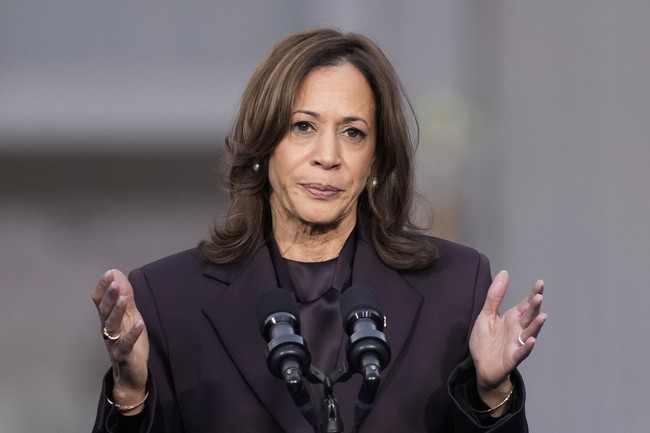
I’ll cut to the chase: Kamala Harris is back on the stage and talking about embracing “ruthlessness,” and that line deserves scrutiny. This piece walks through what she said, the context of her 2024 loss, the reaction it should provoke, and why focusing on political combat instead of policy matters to voters.
Kamala Harris is being floated again for 2028, despite a campaign that collapsed in 2024 under heavy losses in swing states and large spending. She and her campaign reportedly burned through roughly $1.5 billion in an abbreviated effort, and that record still hangs over any renewed push. Given that history, her recent comments about embracing a tougher posture ring especially tone-deaf to many voters.
She showed up as the keynote speaker at the Masquerade Sneaker Ball in New Orleans and used the occasion to press a theme of fighting back, even instructing the crowd about adopting “ruthlessness.” That word choice is striking from a candidate or potential candidate who already struggled to convey what she would do differently from the administration she served under. The line about “ruthlessness” didn’t play in a policy vacuum; it landed on the backdrop of a presidential loss and a campaign that never articulated a clear, distinct agenda.
Harris argued the party had to confront a “broken status quo” and push against opaque political funding and what she called dark money. Translating those complaints into a prescription of harder tactics is where the problem starts. Many onlookers remember the relentless attacks on President Trump and see a pattern of escalation from one side that includes threats and violence in rare but serious instances. That context makes talk of “ruthlessness” uncomfortable rather than rallying.
When challenged about having a distinct agenda separate from President Biden in 2024, she infamously answered, “Not a thing that comes to mind,” and that exchange still circulates for a reason. A nominee who can’t clearly explain how they would govern differently or better has little room to boast about tactical ferocity. Voters generally want tangible plans that improve their lives, not a pledge to intensify political conflict.
She also framed the argument in terms of defending the people’s power, even saying, “That fights back hard when they threaten the power of the people.” That phrasing echoes throughout the event, but taken at face value it sounds more like incitement than civic resolve. In politics words matter, and elected officials or potential leaders must weigh the consequences of rallying rhetoric that could be interpreted as an instruction to escalate rather than to govern.
https://x.com/KamalaHarris/status/2085931548784681131
Beyond the rhetoric, look at the Democrats’ priorities over the last decade: much energy spent on opposing one man rather than building a coherent set of policies that meet everyday needs. For many voters, that narrow focus on political warfare explains why the party struggles to win trust on issues like the economy, public safety, and education. Harris’s speech reinforced the sense that the party remains centered on combat rather than constructive change.
There are real concerns tied to elevating combative language. High-profile threats and violent episodes have peppered the political landscape, and calling for greater ruthlessness without clear guardrails risks normalizing escalation. Responsible leadership should emphasize accountability and the rule of law, not ambiguous calls to take harder measures that could be misread by an eager crowd seeking action.
At the same time, the Democratic base might like the toughness pitch, seeing it as a response to political opposition they perceive as existential. But electoral politics requires appealing beyond the base to persuadable voters, independents, and those tired of constant conflict. A message that keeps centering confrontation will likely alienate the very voters candidates need to win back trust and build a governing coalition.
If Democrats are serious about winning in 2028, they need candidates who can lay out specific policies that improve life for average Americans and who can do so without sounding like they are calling for vendetta-style politics. The country does not need leaders who trade in muscular rhetoric for its own sake; it needs plans that actually deliver results and reassure citizens that disputes will be resolved through institutions and law.
So if the party decides to push Harris again, they will be betting on a candidate whose recent public remarks spotlight a willingness to prioritize political combat over policy clarity. That gamble carries predictable downsides: reminders of past defeats, questions about priorities, and the risk of escalating rhetoric into harmful outcomes. Voters deserve clear choices on substance, not just promises of new ferocity.


Add comment