
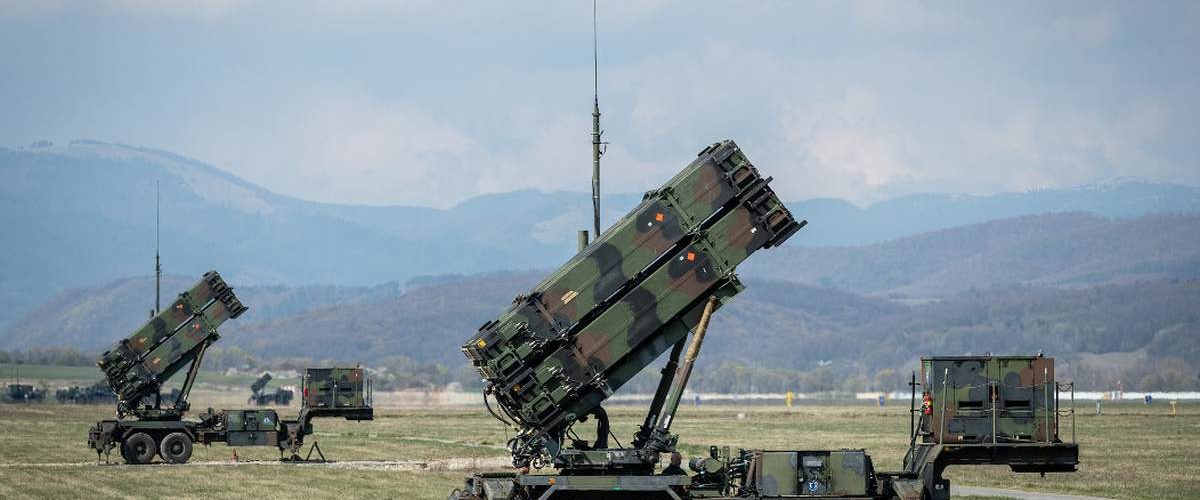
The Department of War has struck seven-year framework agreements with General Dynamics Ordnance and Tactical Systems and Lockheed Martin to accelerate production of THAAD interceptors and PAC-3 MSE missiles, aiming to rebuild depleted air-defense inventories and expand domestic manufacturing capacity.
The new agreements are multiyear procurement contracts designed to boost production quantities and speed deliveries for critical missile subcomponents supporting Terminal High Altitude Area Defense and Patriot Advanced Capability-3 Missile Segment Enhancement systems. This move signals a clear, intentional shift toward restoring the stockpiles our forces need to deter and defeat missile threats. From a Republican perspective, this is the kind of decisive industrial policy we should support: give industry certainty, cut unnecessary delays, and prioritize the Warfighter.
The Department of War (DoW) announced the signing of two pivotal framework agreements with General Dynamics Ordnance and Tactical Systems (GD-OTS) and Lockheed Martin. These agreements initiate seven-year multiyear procurement (MYP) contracts designed to increase production quantities and accelerate delivery schedules for critical missile subcomponents supporting the Terminal High Altitude Area Defense (THAAD) and Patriot Advanced Capability-3 Missile Segment Enhancement (PAC-3 MSE) interceptor programs.
Officials say the ramp-up is being fast-tracked, and the language from leadership leans into cutting bureaucracy and shortening timelines. That kind of urgency matters when you believe, as we should, that preparedness saves lives and that industry needs stable demand signals to invest in factories and skilled workers. Fast production lines are not a luxury; they are an insurance policy against a future crisis where every interceptor counts.
“Today’s announcement represents an example of the evolution of how we partner with industry to expand the Arsenal of Freedom, outpace emerging threats, and ensure the Warfighter never faces a fair fight,” said Under Secretary of War for Acquisition and Sustainment Michael P. Duffey. “General Dynamics and Lockheed Martin have answered the call. We are cutting red tape, shortening timelines, and rapidly scaling our domestic manufacturing capacity to deliver the advanced air and missile defense capabilities.”
Practical realities drove this decision. Reports indicate that recent operations have drawn down inventory levels, with unconfirmed estimates suggesting heavy usage of THAAD and PAC-3 MSE interceptors. Whether exact numbers are 50, 60, or an alarming 80 percent, the takeaway is the same: we burned through a lot of missiles and now we need production lines humming to replenish them. For conservatives who prioritize a strong defense, the goal should be sustainable industrial base recovery without surrendering oversight of taxpayer dollars.
There is an important fiscal caveat built into these agreements: funding remains subject to annual appropriations from Congress. That creates a dependency on lawmakers to provide the money each year, even as industry receives the long-term signal to invest. It’s a reasonable balance between executive action and legislative control, but it also means the success of these deals hinges on Congress doing its job and passing timely budgets.
The funding for these transformative agreements is subject to annual appropriations. These agreements provide industry with a stable, long-term demand signal by guaranteeing minimum annual procurement quantities which empowers General Dynamics and its lower-tier suppliers to make generational investments in workforce expansion, bulk material purchases, and facility upgrades.
That reliance on annual appropriations brings politics into play, as it should. With elections looming and control of the House and Senate potentially shifting, the continuity of defense spending is not guaranteed. Republicans ought to press for predictable funding lines now, because the last thing we want is production halted midstream while adversaries stockpile or field new capabilities.
Strategically, this reset recognizes that future conflicts could look very different from recent limited engagements. Even if the most recent confrontation was handled without a near-peer adversary, the lessons are clear: ballistic missiles remain a persistent threat and interceptors are a critical component of layered defense. We must be prepared for higher-intensity fights where attrition rates could spike and domestic production capacity will determine how long we can sustain operations.
Rebuilding the Arsenal of Freedom also means investing in people and places. These multiyear deals guarantee minimum annual buys that let suppliers hire, train, and upgrade facilities with confidence. That flow of investment revitalizes communities and secures supply chains against disruption, which is a conservative win: strong national defense, stronger local economies, and reduced reliance on fragile foreign sources.
Finally, this approach underscores a broader Republican point: defense readiness requires steady, pragmatic policymaking that backs industry and the military at the same time. We should favor actions that reduce needless regulatory hurdles, lock in sensible long-term demand signals for suppliers, and ensure Congress provides the resources necessary to keep those production lines running. That’s how you deter foes, reassure allies, and avoid the scramble to rearm when it’s already too late.

Add comment