
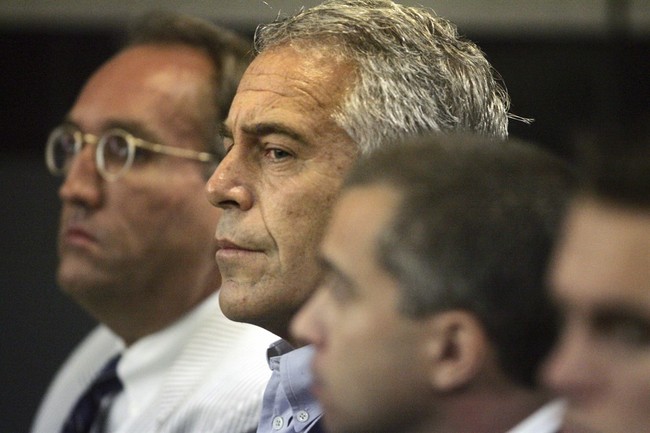
The House Oversight Committee’s release of 20,000 documents from Jeffrey Epstein’s estate set off a predictable political circus, with Democrats seizing a handful of emails to attack President Donald Trump and the media rushing to call them bombshells. This article walks through what the emails actually say, how they have been presented, and why the supposed revelations fall short of proving any wrongdoing by Trump. It also examines the context around Mar-a-Lago, Epstein’s relationships, and the motives behind the timing of this campaign. Readers deserve clarity about facts, redactions, and political theater when documents are leaked in the middle of a heated national debate.
The Oversight Committee released a large document trove and Democrats cherry-picked three emails to make headlines. The most cited note dates to 2011 and involves an exchange between Jeffrey Epstein and Ghislaine Maxwell. Epstein wrote, “I want you to realize that that dog that hasn’t barked is Trump…[REDACTED VICTIM] spent hours at my house with him,, he has never once been mentioned. police chief, etc. i’m 75% there.” Maxwell replied, “I have been thinking about that.”
These lines have been framed as proof of a connection when, in reality, they are vague, redacted, and unsourced claims from Epstein, a convicted sex offender whose credibility is nil. Democrats redacted the victim’s name, and the most plausible reason for the redaction is the same reason others have noted: the likely identity of that victim is Virginia Giuffre. Her sworn deposition states Trump never flirted with her and that she did not see Trump and Epstein together in the same room.
Virginia Giuffre’s public statements after her death also describe interactions at Mar-a-Lago that were entirely nonsexual and transactional in nature, including babysitting work for families renting homes at the estate. She wrote in her memoir, “Nobody’s Girl,” that “Trump couldn’t have been friendlier, telling me it was fantastic that I was there.” Those remarks undercut the rush to portray Epstein’s throwaway comments as definitive evidence of criminal collusion.
The other two highlighted emails involve Michael Wolff, the journalist who has a history of retracted or disputed reporting. In 2015 Wolff emailed Epstein about potential media questions for Trump, and the exchange reads more like media strategizing than proof of a secret relationship. Wolff advised letting Trump “hang himself” and discussed ways Epstein might exploit any answer, a manipulative posture that says more about Wolff’s tactics than about Trump’s conduct.
A 2019 email from Epstein to Wolff mentions Virginia Giuffre and Mar-a-Lago in redacted terms and asserts that “Of course he knew about the girls as he asked Ghislaine to stop.” That line is little more than Epstein offering a boast or an assertion without corroboration. Facts we do have show Trump expelled Epstein from Mar-a-Lago after complaints, and Trump has publicly explained the expulsion as related to staffing issues at the club.
When pressed about why Epstein was told to leave, Trump told reporters that Epstein was hiring away spa employees and that members complained about losing staff. The public record includes differing accounts of the precise circumstances, but kicking Epstein out of the club is consistent with someone distancing themselves from troubling behavior, not colluding with it.
Political timing matters. The release came amid outrage over the Schumer Shutdown and party infighting, which creates a motive for Democrats to manufacture headlines to distract voters. The emails were trotted out almost immediately as a counterpunch to criticism of Democratic tactics, and the effort looks like a classic gotcha designed for cameras rather than a measured presentation of new, provable facts.
The mainstream reaction has been to amplify the most salacious-sounding lines without giving readers the context of redactions, disputed sources, and sworn statements that contradict a narrative of Trump’s culpability. Media outlets love drama, and Democrats love narrative framing, but neither has produced new evidence that changes the established record about Trump’s relationship with Epstein.
Trump responded on Truth Social, calling the Democrats’ effort a diversion from their failures and insisting Republicans should focus on reopening the country and addressing economic harm caused by the shutdown. His core point is political: when one side is flailing, expect them to fling anything that might stick, regardless of the underlying proof. The quoted statement reads: “The Democrats are trying to bring up the Jeffrey Epstein Hoax again because they’ll do anything at all to deflect on how badly they’ve done on the Shutdown, and so many other subjects. Only a very bad, or stupid, Republican would fall into that trap. The Democrats cost our Country $1.5 Trillion Dollars with their recent antics of viciously closing our Country, while at the same time putting many at risk — and they should pay a fair price. There should be no deflections to Epstein or anything else, and any Republicans involved should be focused only on opening up our Country, and fixing the massive damage caused by the Democrats!”
He followed up with: “In other words, the Democrats are using the Jeffrey Epstein Hoax to try and deflect from their massive failures, in particular, their most recent one — THE SHUTDOWN!” That political framing is central to how this story will be used in coming days, and it highlights the reality that legal documents dropped into the public sphere are often weaponized for partisan advantage more than for truth-seeking.
It is reasonable to demand full transparency about Epstein and anyone who may have enabled him, but it is also reasonable to demand evidence rather than innuendo. The committee’s document dump contains many items worth reviewing, but the three emails now dominating headlines do not amount to a smoking gun tying the president to criminal conduct. Voters should expect better from both sides: Democrats should produce real evidence, and media outlets should stop presenting redacted, anonymous assertions as conclusive proof.


Add comment