
Checklist: report the strike and casualties; explain immediate diplomatic moves and ceasefire dynamics; summarize IDF responses and strategic positions in southern Lebanon; present statements from Hezbollah and Iran-related text including the MOU excerpt.
At about 12:20 AM Friday Israeli time (2:20 PM PST / 5:20 PM EST Thursday), an attack drone struck near the Israel-Lebanon border, killing the commander of the 52nd Battalion of the 401st Armored Brigade and three other soldiers. A few hours later, around 4:00 AM Friday Israeli time (6:00 PM PST / 9:00 PM EST Thursday), another drone strike in the same area wounded five additional IDF soldiers, including four officers and an NCO. These strikes mark an escalation that came amid fragile efforts to maintain a ceasefire between Israel and Hezbollah.
Following the strikes, Hezbollah quickly sought outside assistance to press for a renewal of the ceasefire, contacting diplomatic channels in Qatar and the United States. Israel’s envoy to Washington responded bluntly, saying, “Hezbollah attacked, took a beating and ran to ask for the ceasefire to be renewed.” Recent ceasefire announcements have typically been issued by mediators rather than by Israel directly, a pattern that complicates battlefield and diplomatic clarity.
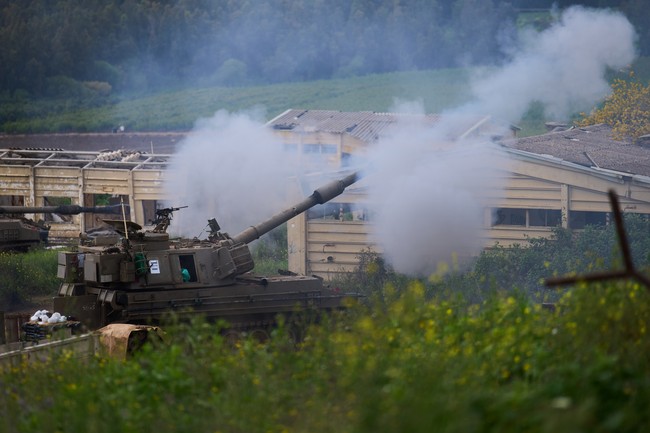
The Israeli military says its posture in Lebanon remains firm and unchanged; an internal source stressed there is “nothing new in the ceasefire.” At the same time, the IDF reported striking roughly 150 Hezbollah targets across southern Lebanon in retaliation for the drone attacks. Israeli leadership has made clear that orders to withdraw Israeli forces from southern Lebanon would cross a red line and will not be accepted.
Hezbollah’s political and military leadership framed the confrontation differently, issuing a warning about existential stakes for the organization in Lebanon. The group’s secretary-general released a statement asserting a narrative of survival and resistance, and a senior lawmaker warned that regional actors were prepared to respond to what they called ongoing Israeli violations. Those statements underline how both sides are staging this conflict as part of a larger strategic contest.
“We are going through the most dangerous stage of our lives in Lebanon. The plan being implemented against us today aims to end the resistance and its people and to completely eliminate its presence in Lebanon. They want to implement their plan through the Israeli war in Lebanon, which ignores all rules. The project to eliminate Hezbollah and establish the occupation has failed, and the Israelis will withdraw from every last centimeter of our land.”
Another Hezbollah official added a terse political warning: “Israel is trying to undermine the efforts for calm through its strikes. Iran is determined to attack northern Israel in response to the Israeli violations. The equation of unity of the arenas will have the final say regarding the efforts for calm.” Those words reflect an effort to tie actions in Lebanon to broader Iranian strategic calculations across multiple fronts.
Geography matters here. The strikes were reported near the Lebanese village of Kfartebnit, about five miles north of Israel’s northernmost point and near the historic Beaufort Castle area. The castle sits atop a steep cliff overlooking the Litani River and has been contested for decades; the IDF holds the site following operations earlier this year. Control of high ground and chokepoints like Beaufort influences both defensive depth and the ability to interdict cross-border operations.
Operationally, Israeli forces have advanced deep into southern Lebanon, deploying two divisions in the area and operating up to the Litani River and in places north of it. Bridges over the Litani have been destroyed as part of an effort to constrict Hezbollah movement, leaving fighters in southern positions with limited avenues of escape. Israeli commanders say the objective remains eliminating Hezbollah’s military capabilities in the area.
The battlefield developments have a direct impact on diplomacy with Tehran. Reports indicate Iranian officials are hesitant to engage in talks in Switzerland while Israeli forces remain active in Lebanon, and Tehran’s foreign ministry said the recent digital signing of a memorandum of understanding reduces urgency for in-person meetings. Iran’s statement underscored military readiness and a pledge to improve combat capabilities in the event of any violation.
The MOU between the United States and Iran contains language that has driven political controversy, especially in point 10, which details immediate economic provisions following signing. The paragraph reads in full:
“10. The United States undertakes that immediately after the signing of this Memorandum of Understanding, and until the date of the lifting of sanctions, the United States Treasury Department will issue waivers for exports of Iranian crude oil, petrochemical products and their derivatives, and all related services, including banking, insurance, transportation, and the like.”
Critics argue that granting Iran rapid access to oil revenue while negotiations continue risks funding proxy operations and emboldening regional adventurism. Supporters counter that economic measures can be calibrated to keep Tehran engaged in diplomacy, but the strikes in Lebanon show how quickly violence can undermine those calculations.
The recent attacks and the subsequent military and diplomatic responses illustrate the fragile link between battlefield activity and international negotiations. As Israeli forces press to degrade Hezbollah in southern Lebanon, rival political and military leaders in the region are signaling that they are prepared to escalate in response, leaving little room for a stable pause while talks continue elsewhere.

Add comment