
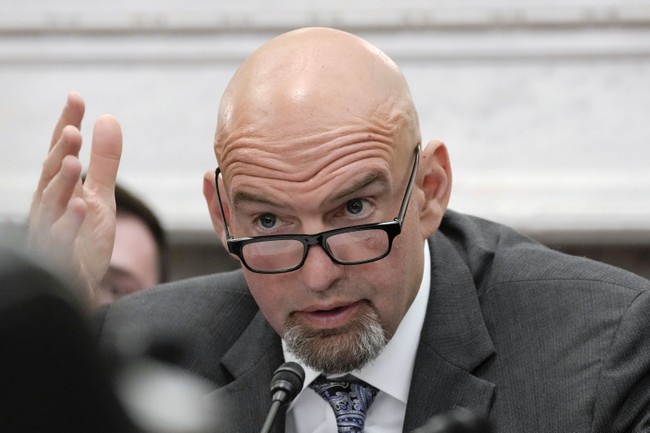
I’ll lay out what this piece covers: how Sen. John Fetterman broke with his party over the shutdown, the toxic attacks he says came from the far left, his clash with Gov. Josh Shapiro, private concerns shared with Democratic leaders, and the political ripple effects from those disputes.
Sen. John Fetterman has never been one to hide his opinions, and that bluntness has put him at odds with fellow Democrats more than once. He voted to reopen the government and publicly criticized the shutdown tactics, which upset many on his own side. That split highlights a growing strain between pragmatic Democrats and a more punitive faction on the left.
Fetterman says the most vicious backlash came not from Republicans but from the far left on niche platforms and pseudo-anonymous corners of the internet. He described how attacks turned deeply personal, not just policy criticism, and how that tone surprised him coming from his political allies. Those reactions, he argues, show a movement willing to celebrate cruelty in ways that hurt basic decency in politics.
Fetterman called out a particular left-leaning social site where he says the abuse was especially extreme. He told an interviewer that the rhetoric wasn’t just insults but calls for his death and mockery of his health struggles. That kind of vitriol, he says, is corrosive to public life and to the idea of fair political debate.
And the difference is, I mean, the right would say really rough things and names. You know, some names I won’t — I won’t repeat on, on TV. But — but — but the — on the left, it was like they want me to die or we’re cheering for your next stroke. Or that’s terrible, that depression. Why couldn’t the depression have won? And I hope your kids find you.
He even recounted seeing a stroke gif and people celebrating his suffering, a revelation that stunned the interviewer on camera. Fetterman insists he won’t let that stop him from speaking plainly, but he also wants to expose how the left’s internal nastiness undercuts its credibility. For Republicans watching, his critique serves as confirmation that partisan nastiness can cross ideological lines and damage public trust.
Beyond the online attacks, Fetterman goes after perceived ambition inside his own party, focusing on a falling-out with Pennsylvania Gov. Josh Shapiro. The two clashed during a Board of Pardons meeting over commuting sentences, and their disagreement snowballed into a heated off-mic moment. Fetterman admits he called Shapiro a profane name into a hot mic, evidence of how raw that split became.
“I told him there were two tracks — that one and the one in which he ran for governor and I ran for the Senate (which was the one I preferred),“ Fetterman writes in his new book, “Unfettered,” as excerpted by the Philadelphia Inquirer
”I had no interest in friction, only in what I felt was justice.”
He framed Shapiro as motivated by political calculations rather than principle, and that perception left their relationship strained. Despite the rupture, Fetterman says he wished Shapiro well, though he also raised private doubts about Shapiro’s instincts to key Democratic operatives. Those private conversations are now public, and they paint a picture of a party with internal mistrust when unity is most needed.
Fetterman privately warned another top Democratic campaign about Shapiro while the party explored running-mate choices, a detail that matters in political circles. That kind of whispering can make or break high-profile ticket decisions, and it reflects how personality conflicts affect broader strategy. Political operatives take those private assessments seriously when vetting candidates and building trust on a national stage.
For conservatives, Fetterman’s candid critiques offer useful political ammunition: when Democrats splinter public sympathy erodes and governing capacity suffers. His willingness to call out his party exposes weaknesses that opponents can highlight during campaigns and debates. At the same time, his story is a reminder that intra-party tensions can have real consequences for governance and elections alike.
An editor’s note in the original coverage framed the shutdown as a policy failure by Democratic leadership, arguing it prioritized other interests over American citizens. That perspective sees the shutdown as a political choice with tangible costs, and it assigns blame to national party leaders. Whatever labels people attach, the shutdown and the internal feuds Fetterman describes underscore how fragile coalition politics can be.
Fetterman’s memoir passages and media interviews show a politician uncomfortable with extremes, willing to call out cruelty from allies, and quick to spar with powerful figures in his own party. Whether voters view him as principled or undisciplined depends on their tolerance for blunt talk and independent streaks. Either way, his account gives a vivid look at the fractures inside a major political party during a tense moment in American politics.

Add comment