
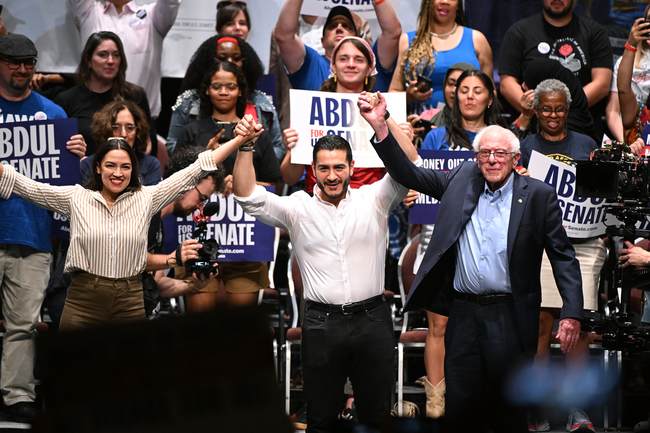
The internet never forgets, and a batch of old videos resurfacing from Abdul El-Sayed’s YouTube channel has stirred a fresh controversy that touches on fireworks, the Second Amendment, border priorities, and what candidates owe voters about past statements. This piece looks at what those clips said, how the campaign reacted, and why those positions matter in a Michigan statewide contest. It also examines the practical and constitutional realities surrounding proposals like replacing the Second Amendment with a right to government-funded healthcare. Finally, it notes the political consequence: these revelations are shaping perceptions in a swing-state matchup and feeding partisan attacks.
Voters often expect campaigns to be front-facing and forward-looking, but when a candidate’s old content contradicts that image, it becomes fair game. Abdul El-Sayed reportedly made several videos that were later made private, including a segment arguing four reasons “why fireworks suck” and criticizing the value of the Second Amendment. Those clips have prompted strong reactions because they clash with traditional patriotic imagery and rural values in much of Michigan. The attempt to remove or hide the material has not silenced it; once online, statements tend to persist in public memory and in archive copies.
Michigan Democratic Senate nominee Abdul El-Sayed once asked his YouTube viewers whether Americans could “PLEASE” find another way to celebrate the Fourth of July, in a video promising four reasons “why fireworks suck.”
The since-removed video from July 2024 included a chapter titled “Fireworks just aren’t worth it: hear us out” and cited Detroit’s post-fireworks air quality, the chemicals used in fireworks, their potential to trigger PTSD in veterans, and the risks they pose to children and pets.
Those specific objections—air quality, chemical residues, PTSD triggers for veterans, and safety risks to kids and pets—are not trivial topics. They reflect genuine concerns that many cities and public-health advocates have raised. But in a political campaign, the messenger and the tone matter as much as the substance. Framing fireworks as something that “suck” on a holiday that millions of Americans associate with national pride will predictably provoke a backlash, especially in areas outside dense urban centers.
Other deleted clips attributed to El-Sayed reportedly broaden the problem by touching on immigration and constitutional changes. According to reports, he minimized the southern border as among Americans’ top five concerns and suggested replacing the Second Amendment’s guarantee to bear arms with a constitutional right to health care. Those propositions land as radical or out of step for many swing-state voters who prize personal liberty and traditional civil institutions.
In other since-removed clips, El-Sayed argued that the southern border was not among Americans’ five biggest concerns and lambasted Republicans for focusing on it. In another he floated replacing the Second Amendment’s right to bear arms with a constitutional right to health care.
Replacing the Second Amendment would not be a simple policy tweak; it would require a formal constitutional amendment ratified by 38 states. With 29 states currently operating under constitutional carry laws, the political math for a repeal looks infeasible. More than a legal issue, the debate exposes a deeper philosophical divide about what a “right” means and whether public policy can or should transform rights into guaranteed entitlements funded by others.
Rights traditionally limit government power and protect individual liberty; turning a right into an entitlement paid for by taxpayers changes the relationship between citizen and state. Advocates for government-guaranteed health care argue society has obligations to provide essential services, while opponents counter that forcing others to pay undermines personal freedom and property rights. That clash sits at the core of the controversy surrounding the idea of swapping constitutional protections for social guarantees.
Campaign responses have followed a familiar script: the campaign claims older clips do not reflect current views and emphasizes personal anecdotes meant to humanize the candidate. Those lines of defense can help with loyal supporters, but they rarely erase the impression made by the original statements among undecided voters. In a close statewide race, questions about consistency and judgment—especially on cultural touchstones like Independence Day and firearms policy—become politically costly.
Strategically, opponents are using the resurfaced material to paint a picture of ideological extremism and cultural disconnection from large parts of Michigan. The release and removal of content feeds a narrative about transparency and authenticity that both parties wield in tight contests. For voters who weigh cultural identity and constitutional protections heavily, these clips reinforce doubts about electability and alignment with local values.
At the end of the day, this episode is a reminder to any public figure that past words can shape present impressions, and that policy proposals that recalibrate constitutional rights toward entitlements will provoke intense debate. Michigan voters will have to decide whether they view these resurfaced positions as proof of a coherent agenda or as old remarks that the candidate has since revised. Meanwhile, the political fallout continues to ripple through the race as campaigns and commentators press their interpretations.
The YouTube videos, at least 100 of which appear to have been made private, are another example of how El-Sayed’s years as a prolific podcaster, commentator and social-media user have left behind an extensive record — some of it subsequently deleted — that Republicans could use to portray him as both ideologically left-wing and culturally out of step with swing-state voters.


Add comment