
Trump’s Air Force One ‘Decoy’ Fooled the Press. Good. That Was the Point.
The president’s travel from Ankara on July 8 involved a deliberate security move that misled parts of the press, and that outcome was exactly what it was meant to be. This piece explains what happened, why secrecy mattered, how the press reacted, and why leakers deserve scrutiny.
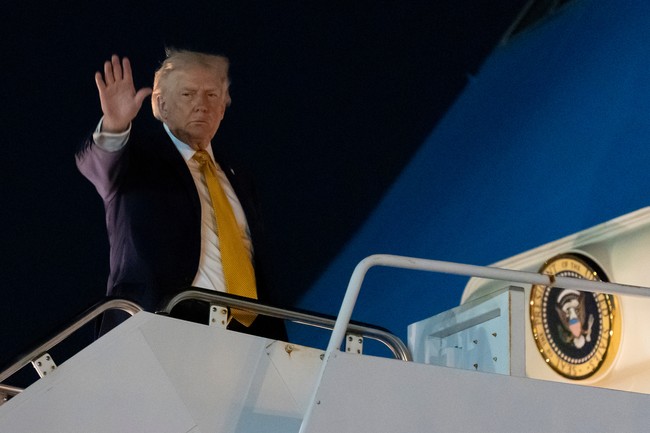
Reports emerged that President Trump departed Turkey on July 8 on a different aircraft than what the cameras showed, after U.S. intelligence warned of a missile threat. Officials say the threat came from Iran, prompting a decision to use a secondary plane and turn the public-facing jet into a decoy. The maneuver was organized to protect the president while minimizing the risk to operational security.
The Washington Post and other outlets ran with the story, portraying the switch as a secret mission and complaining that media members aboard the visible plane were kept in the dark. That coverage leaned into outrage over being excluded, but being close to the president comes with a security trade-off. Journalists accept the risk and the privilege when they take seats in the presidential press pool; they are not owed full access to classified operational decisions.
Certain anonymous sources described the operation in detail, and those accounts were amplified across the press. The leaks included precise tactics and timing, which undercuts the purpose of the secrecy and puts operational safety at risk. If the intel community felt the threat credible enough to change plans, airing the specifics afterward is reckless and counterproductive.
The administration has claimed that Trump departed Turkey on July 8 on the former Air Force One. Trump announced on social media that he would use the “former Air Force One” rather than the plane that flew him there, a newer Boeing 747-8 gifted to the United States by Qatar. The security of the Qatar-provided aircraft has been called into question, and Trump said last month after the trip that it would undergo additional upgrades.
In Ankara, Trump boarded the old Air Force One jumbo jet in view of television cameras. He was secretly shuttled minutes later to a smaller plane — an Air Force C-32A — via an airport catering truck typically used to load meals and other supplies preflight, according to the U.S. official and corroborating material reviewed by The Post. That made Air Force One a “decoy” with media and some White House staff aboard, the official said.
That quoted description reads like a movie scene, and the spectacle is part of why the press is so eager to turn it into a scandal. But operational security is not a reality show prop; it’s a life-or-death calculus. The purpose of deception like this is straightforward: save lives by misleading potential attackers, not to keep reporters comfortable.
Reporters who travel with the president do so for access, influence, and scoops. They apply for and accept those press pool slots knowing conditions can change fast. No one forces reporters to be on a plane that could be used as a decoy; they volunteer for proximity and the privilege that comes with it. If you want access to the inner circle, you accept the risks and limits that come with real-world security decisions.
There is an important institutional point being missed in the media uproar: leaking operational details about protective moves undermines future protective moves. When anonymous sources feed exact methods and timelines to sympathetic outlets, it makes it harder for officials to conduct future operations securely. The press has a duty to be careful when reporting on tactics tied directly to safety.
The plane used as a decoy was not a paper tiger; even older presidential-configured aircraft carry extensive survivability systems and hardened communications for crisis scenarios. The people who disembarked onto the alternate aircraft were still in a fortified environment designed to keep the commander in chief functioning under threat. Calling it a scandal because cameras were fooled misses the point.
https://x.com/CBSNews/status/2087222540842185128
At the heart of this episode is a simple truth: security succeeds when fewer people know sensitive details. The media’s indignation about being deceived doesn’t change that reality, and the leaks that followed deserve more scrutiny than the tactical move itself. Officials did their job; the story should be focused on why sensitive details were allowed out afterward.
The optics of the press being baited by a decoy jet make for dramatic headlines, and that drama fuels appetite for follow-ups. But dramatic optics do not equal wrongdoing when an action protects the president from an assessed threat. The right question now is who leaked the operation and why, because the bigger risk to national security is the bleed of operational detail into the public sphere.

Add comment