
I’ll explain what happened, who’s implicated, the legal angle, how this fits into broader funding concerns, and what this means for the activists involved.
The California Attorney General moved to shut down Arc of Justice, a charity tied to Code Pink co-founder Medea Benjamin, after the organization failed to file tax returns for three years and could not account for more than $51 million in assets. The action raises questions about how millions flowed through nonprofits connected to activist networks and who funded those operations. That matters because some of the donors and intermediaries under scrutiny have been linked to foreign influence and complex funding chains. The story combines legal oversight, political theater, and the practical consequences for activist groups dependent on outside cash.
Arc of Justice was set up to support advocacy and activism, and the AG’s decision is notable because the missing funds are large enough to attract federal attention. Failing to file taxes for three consecutive years is a clear red flag for regulators and donors alike. When a nonprofit cannot account for tens of millions, even a sympathetic official has to act to protect the public interest and the integrity of charitable status. This is accountability catching up to an operation that apparently operated with surprisingly little transparency.
Arc of Justice—the California-based charity established by Code Pink cofounder Medea Benjamin to dole out millions to Code Pink and other far left activist groups—was recently ordered by the state’s attorney general to cease all operations after failing to file taxes for three consecutive years and account for more than $51 million in assets that still remain a mystery, according to documents reviewed by the Washington Free Beacon.
The larger pattern here involves funding networks that funnel money into activist causes without clear public trails. Investigators point to ties between Arc of Justice and figures in a broader funding web, including Neville Roy Singham, who has been described in public reporting as a financier with international connections. When money moves across borders and through layers of nonprofits, transparency suffers, and oversight becomes essential. That is why state and federal authorities tend to converge on cases where nonprofit reporting is missing or inconsistent.
The silence from Arc of Justice raises unanswered questions about a foundation that has long served as the financial backbone for a network of radical advocacy groups tied to Benjamin and her Code Pink cofounder, Jodie Evans. Evans is married to Neville Roy Singham, a Maoist American tech mogul who funds far-left causes from his base in Shanghai and who’s currently the subject of a Justice Department criminal probe.
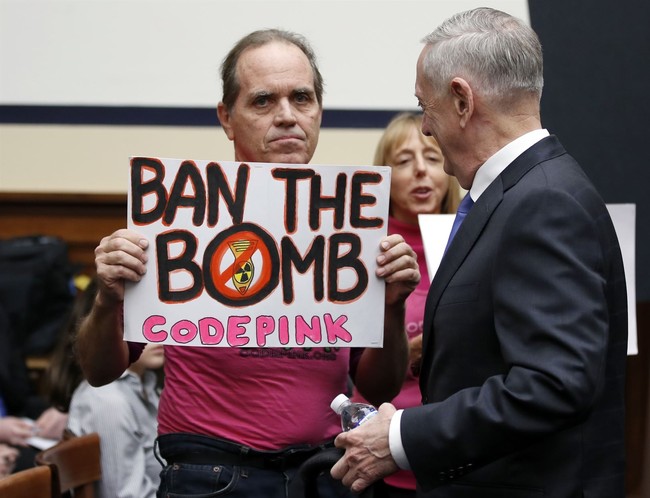
Code Pink, which has had up to a quarter of its operations funded by Singham, is one of the left’s most visible agitators, sending its supporters to disrupt high-profile congressional proceedings where they accuse Israel of “genocide.” Code Pink, which brims with anti-American sentiment, is also notorious for backing dictators, strongmen, and authoritarian regimes—meeting with Cuban communist officials in Havana, cooperating with Hamas, defending Nicolás Maduro, and explaining away Chinese atrocities against the Uyghurs.
Those specific activities and associations are part of why this story carries political weight. From a Republican perspective, the idea that radical activism could be propped up by shadowy funding streams is both troubling and familiar. Activist groups that regularly disrupt civic institutions and praise authoritarian regimes deserve scrutiny when their money sources are opaque. Legal accountability isn’t about politics alone; it’s about ensuring that tax-exempt entities follow the law and do not become conduits for foreign interests or illicit finance.
Federal officials have reportedly taken notice as well, with public reporting indicating that Singham is under investigation for allegedly routing funds through nonprofits to foreign entities and misreporting on tax forms. If the federal probe finds coordinated schemes to conceal funding origins, criminal charges could follow for individuals and organizations that facilitated the transfers. The presence of tens of millions unaccounted for will make any enforcement effort more urgent and complex.
Singham is reportedly under federal investigation for breaching federal law by funneling millions through his nonprofit groups to Chinese entities and then lying about it on tax forms, and the shadowy benefactor’s dark money operation is under pressure, according to Sam Lyman, a former senior adviser to Treasury Secretary Scott Bessent.
“For years, Neville Singham and his associates have been playing financial shell games across a series of U.S.-based nonprofits,” said Lyman, who now serves as head of research at the Bitcoin Policy Institute. “The goal is to fund extremist causes that undermine American sovereignty by using the 501(c)(3) legal structure as a shield. But the scheme is starting to unravel, and Medea Benjamin’s Arc of Justice is the latest example.”
For activist groups like Code Pink, the shutdown of a funding source can force rapid adjustments to budgets and operations. Grassroots actions, travel, and paid staff all depend on predictable financing, and the abrupt removal of millions from the ledger is disruptive. That practical fallout is part of the effect of enforcement: it not only addresses legal issues but also reorders the activist ecosystem by making donors and organizations answer for their paperwork and provenance.
This case will be watched closely by regulators, lawmakers, donors, and the public as more documents and filings become available. If authorities recover a clear trail showing improper transfers or tax violations, it could prompt broader probes of similar networks. Meanwhile, the story reinforces the point that nonprofit status carries responsibilities and that public trust hinges on transparent financial practices.


Add comment