
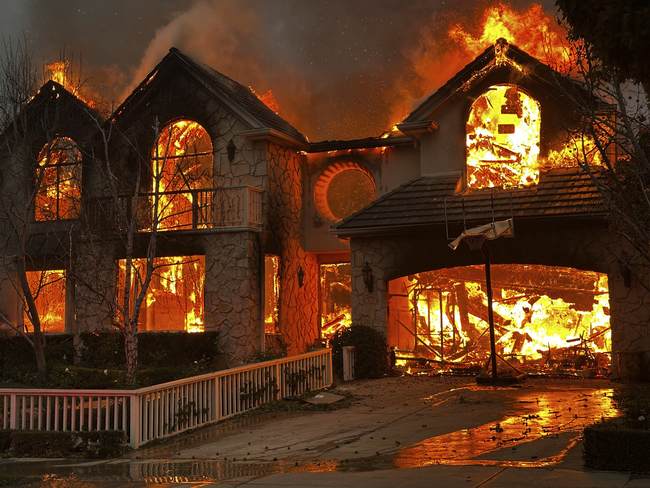
The jury in the federal trial of Jonathan Rinderknecht, accused in the Palisades Fire, reported being unable to reach a unanimous decision after initial reports suggested a verdict had been reached; the courtroom exchanged notes indicating the jurors were “at a standstill” and “deadset” about their positions, leaving open the real possibility of a hung jury in a case that centers on alleged arson that sparked a devastating January 2025 wildfire.
On Thursday afternoon, reporters who had followed the trial first circulated word that the panel had delivered a verdict, only for the court to clarify that jurors had sent a note saying they were stuck. Journalists on the scene, including a Metro reporter who first reported the outcome, corrected their updates as the new note arrived. That back-and-forth left observers watching for whether the judge would try to prod the jury toward a decision or accept an impasse.
The jury’s note reportedly described a stalemate, and subsequent communication suggested jurors felt additional materials would not change minds in the room. The panel told the judge they believed any extra guidance would be unhelpful, and one reporter relayed that exchange as the judge considered his next steps. Those details are central because they determine whether further instructions, an Allen charge, or a mistrial could follow.
https://x.com/brittny_mejia/status/2070266400304963749
The back-and-forth included a response indicating each faction in the jury was “deadset” on its position, which raised the distinct possibility of a hung jury. When jurors signal that additional information won’t break the deadlock, courts often weigh whether further deliberation is likely to produce unanimity. If the panel remains divided, the judge may have to declare a mistrial and leave prosecutors to decide whether to retry the case.
Driven by revenge, anger and loneliness, Rinderknecht ignited a small brush fire around midnight on New Year’s Eve 2025 at a remote, deserted area adjacent to the Pacific Palisades’ Summit neighborhood that ultimately exploded into the deadly conflagration that wiped out much of the upscale community, a prosecutor told jurors on Tuesday.
Firefighters initially thought they had extinguished the New Year’s Eve Lachman Fire, but instead it smoldered underground for six days in the root system of brushes and trees before bursting into view as the deadly Palisades Fire on Jan. 7, 2025, bolstered by strong Santa Ana winds, Assistant U.S. Attorney Danbee Kim said during closing arguments of Rinderknecht’s trial.
Rinderknecht “had a deeply entrenched belief that the wealthy were destroying the world,” she said, telling the panel in federal court that to the defendant’s way of thinking, “the Pacific Palisades neighborhood represented all of that.”
Prosecutors framed their case around motive and opportunity, asserting that the defendant deliberately started a small brush fire that later reignited and grew into the tragic Palisades Fire. They described how that initial blaze smoldered in root systems and then, under Santa Ana wind conditions, spread into a much larger inferno. Those claims were at the heart of closing arguments aimed at persuading jurors of intent and causation.
Defense arguments countered that the evidence did not conclusively tie Rinderknecht to a deliberate act that caused the catastrophe, and jurors were asked to weigh gaps and uncertainties. That contest between competing narratives is what juries are meant to resolve, but when deliberations stall, it tests the limits of the trial process. The current note from the jury suggests those debates remained unresolved at the end of the session.
If the jury remains deadlocked, the court faces several options: further instruction to jurors, encouragement to continue deliberating, or ultimately declaring a mistrial if unanimity cannot be reached. A mistrial would send the case back to prosecutors to decide whether to retry it, a decision that would factor in the strength of their evidence and the practicalities of another trial. Any such outcome would prolong closure for victims and the community affected by the blaze.
The Palisades and Eaton fires covered roughly 59 square miles, killed 31 people in early 2025, and destroyed more than 16,000 structures, facts that have loomed large throughout the proceedings. Those figures have made this trial particularly consequential in public view, and the stakes for both sides reflect the scale of the destruction. Community members, survivors, and officials have followed the courtroom developments closely, seeking answers about cause and accountability.
Courtroom watchers will be paying attention to whether the judge issues a directive aimed at breaking the stalemate or instead accepts that the jury cannot agree. Either path carries consequences for the administration of justice and for the people affected by the fire itself. For now, the jury remains at an impasse, and the next steps will determine whether this case moves toward resolution or returns to square one.

Add comment