
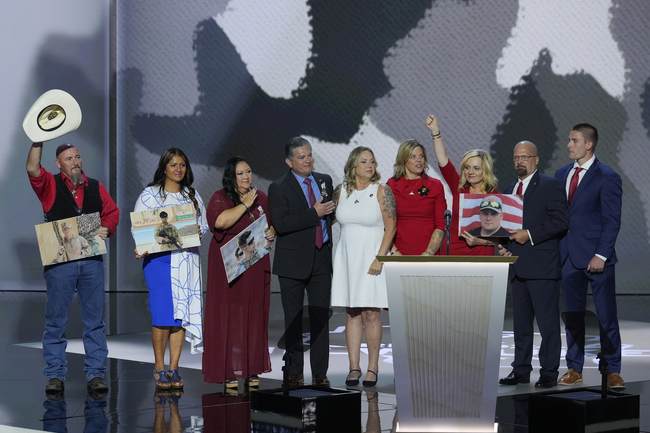
Congress is considering the HONOR Gold Star Families Act, a bipartisan proposal to double the military death gratuity from $100,000 to $200,000 and make the increase retroactive to the start of 2026, aiming to help families of service members killed in recent Middle East clashes.
American troops are once again exposed to danger in the Middle East, and some will return wounded while others will not return at all. In response, lawmakers are moving to ensure families left behind receive greater financial recognition for their sacrifice. The proposal centers on adjusting a benefit that has not changed since 2006, despite rising costs and continued threats overseas.
Rep. Matt Van Epps of Tennessee introduced the HONOR Gold Star Families Act to increase the death gratuity to $200,000 and apply the change retroactively to cover losses beginning in 2026. Van Epps is a West Point graduate and combat veteran who served in Iraq and Afghanistan, and he frames the bill as a basic obligation of the nation when it sends citizens into harm’s way. The measure has attracted bipartisan sponsors, reflecting broad concern for military families across the political spectrum.
Members of both parties, including Rep. Jen Kiggans and Rep. Jill Tokuda, have signed on as supporters and co-sponsors. Bipartisan backing is notable because it shows rare agreement on the need to care for those who pay the highest price in service. Organizations that work with Gold Star families and veterans have also expressed support for increasing the benefit.
The legislative push follows a string of recent casualties tied to attacks in the region, underscoring the urgency for policymakers. Several service members have already lost their lives in retaliatory strikes and base incidents, and others have been injured while deployed. For grieving families, the immediate challenges include funeral expenses, childcare, mortgages, rent, and everyday bills that do not pause after a death in service.
Van Epps recounted a conversation with a Gold Star spouse that captured why the bill matters on a human level. The words of that spouse have been repeated to emphasize the stark reality that loss does not reduce household costs. Those firsthand accounts are a driving force behind the push to raise the death gratuity now rather than later.
“Unfortunately, this week we learned that a seventh servicemember has died as a result of an Iranian attack on U.S. forces in Saudi Arabia,” Van Epps told the Examiner.
“This is tragic news and undergirds the need to ensure that our Gold Star families are taken care of. That’s why I introduced the HONOR Gold Star Families Act alongside Reps. Kiggans and Tokuda. This bipartisan legislation demonstrates that when it comes to taking care of our troops and their families, there are no sides of the aisle. We are all Americans.”
Those words convey a clear intent: the measure is intended to be a practical support, not a symbolic gesture. The death gratuity often serves as one of the first financial supports a bereaved family receives, and increasing it could ease short-term burdens during the most chaotic weeks after a loss. Advocates say updating the fixed $100,000 amount is long overdue given inflation and modern costs.
Advocacy groups with close ties to families of the fallen have voiced backing for the bill. Longstanding organizations that focus on Gold Star families and veteran advocacy see the increase as a necessary alignment of benefits with contemporary realities. Leaders in those groups argue that treating the death gratuity as a static figure fails to reflect ongoing sacrifices.
“As one Gold Star wife recently told me, ‘Your bills don’t get cut in half when you lose your spouse.’ Her words were a stark reminder of the difficult reality many Gold Star families face in the wake of unimaginable loss,” Van Epps said.
Retired Navy Commander John Wells, executive director of Military Veterans Advocacy, has said the fixed benefit is no longer appropriate. Critics of the current level call the $100,000 figure outdated and insufficient to cover immediate and pressing needs. Lawmakers proposing the increase emphasize that this is about meeting a duty to families who have already given so much.
The geopolitical backdrop makes the proposal more salient: recent strikes, counterstrikes, and intelligence assessments about regional capabilities have kept U.S. forces on heightened alert. The Pentagon has reported numerous injuries among service members deployed in the region, and headlines about deaths have brought attention to how the nation supports survivors. For families, policy changes like this one are a tangible expression of national responsibility.
Each death carries a household and a story—parents who have lost a child, spouses who must rebuild alone, and children who will grow up remembering a parent only through photos and stories. While no law can erase grief, lawmakers say adjusting the death gratuity is a concrete step Congress can take to lessen the financial shock that often follows a service member’s death. The HONOR Gold Star Families Act seeks to ensure the nation’s response is proportionate to the sacrifice made.



Add comment