
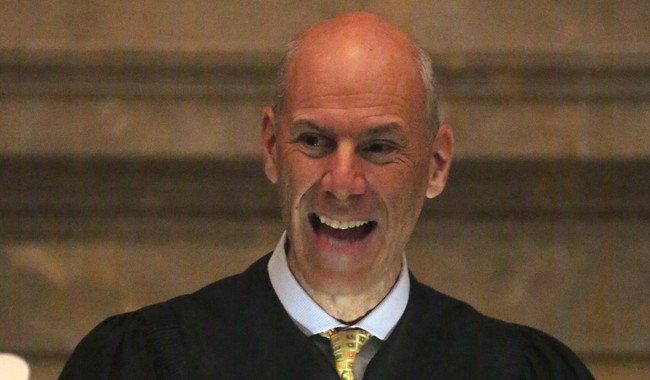
Chief U.S. District Judge James Boasberg issued a temporary rule requiring that magistrate judges be notified whenever a grand jury fails to return an indictment, a change that creates formal records of declinations and comes after a failed effort to indict six Democratic members of Congress.
Federal grand juries usually operate out of sight, deciding whether charges move forward without routine formal notification to the court when they decline to indict. Boasberg’s order interrupts that long-standing silence by mandating a written report to the duty magistrate judge whenever a grand jury fails to concur in an indictment. The shift does not make those results public, but it does convert private declinations into sealed entries that the court must now acknowledge.
The order reads in plain terms the new expectation for grand jury forepersons. “This Court finds that notification should be provided to the duty magistrate judge whenever a grand jury fails to concur in an indictment, regardless of whether the defendant has already been charged.” That language insists on a formal step that did not exist as a routine matter before.
Boasberg’s directive also spells out the mechanics of reporting. “When a grand jury fails to concur in an indictment in a GJO investigation, the foreperson shall promptly and in writing report the lack of concurrence to the duty magistrate judge under seal.” Those words ensure that even negative outcomes are logged in the court’s sealed record and can be reviewed if a dispute or pattern emerges.
The order is explicitly temporary, but temporary can change expectations in long-lasting ways. “This order shall remain in effect for 120 days, during which time the Court will consider the adoption of a local rule requiring such notifications.” The 120-day window gives the court a trial run while opening the door to a permanent rule that would alter how grand jury outcomes are tracked in the district.
The timing is politically charged. The directive followed a high-profile effort by federal prosecutors to obtain indictments against six Democratic members of Congress related to statements urging military personnel to reject purportedly unlawful orders. Those particular investigations did not yield indictments, and the court’s new reporting requirement arrives in the wake of that failure. From a Republican perspective, the sequence looks like a response to one set of results and raises questions about selective scrutiny.
Courts have authority to manage internal procedures, and judges can tweak how their dockets are documented. Still, the change is far from routine. Grand jury secrecy has been treated as a central safeguard for decades, and turning even declinations into sealed entries creates a new paper trail that investigators, opposing counsel, and judges can later review. That matters for transparency and for political actors who watch how the justice system treats different sides.
Boasberg’s broader record is part of why observers are watching closely. He has issued rulings that have affected the former administration, and critics on the right view him as repeatedly coming down against President Trump and related policies. That history makes any procedural change he orders a subject of suspicion among Republicans who fear judicial overreach or bias in how federal processes are applied.
The practical effect of the rule is straightforward: grand juries still decide whether charges should proceed, but their decision to decline no longer ends in the jury room without acknowledgment. The court will receive a sealed notice, creating a formal marker that an indictment was not returned. In future disputes, that sealed notice could be central to questions about prosecutorial judgment, selective investigations, or the reasons a matter did not move forward.
Secrecy remains intact in part because the reports are filed under seal, but seal is not the same as silence. By requiring a written notification, the court creates a retrievable record, and that record can be examined under court order or in internal reviews. For those who argue that the justice system must be even-handed, the new rule raises both hope and concern: hope that unexplained declinations will not disappear, and concern that procedural changes may reflect political currents rather than purely neutral administration.
Editor’s Note: Unelected federal judges are hijacking President Trump’s agenda and insulting the will of the people.


Add comment