
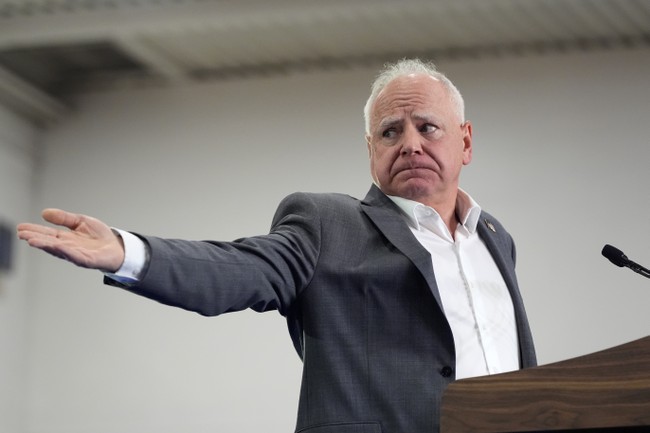
This piece examines allegations that Governor Tim Walz ignored or enabled widespread fraud in Minnesota’s social services, highlights reporting that brought the issue to national attention, and presents first-hand accusations from Minnesota DHS employees who say whistleblowers were retaliated against and leadership protected the guilty.
Minnesota’s recent scandals have piled up over Governor Tim Walz’s two terms, and critics say these are not isolated incidents but symptoms of a wider failure in leadership. The state faced major civil unrest, controversial social policy battles, a deadly shooting at a church, and now persistent claims of fraud within programs meant to help vulnerable communities. All of this sets the stage for a political fight where accountability and public trust are the stakes.
A high-profile national outlet finally turned a spotlight on years of alleged fraud centered in Minnesota’s Somali communities, detailing how the problem grew inside social services. The reporting argues that efforts to root out fraudulent billing and misuse were often stonewalled or minimized by officials who feared political fallout. That attention has forced the governor to respond publicly, framing the issue as a problem of criminals exploiting well-intentioned programs.
Mr. Walz, Minnesota’s second-term governor who gained national attention last year as Kamala Harris’s running mate in a White House bid, said this week that claims of racism did not hinder his administration’s response to fraud.
Mr. Walz has said that his administration may have erred on the side of generosity during the pandemic as the state pushed out large sums of money quickly, seeking to keep Minnesotans housed, fed and healthy.
“The programs are set up to move the money to people,” Mr. Walz said in an interview. “The programs are set up to improve people’s lives, and in many cases, the criminals find the loopholes.”
Mr. Walz, who is seeking a third term next year, has created a new task force to pursue fraud cases; made it easier for state agencies to share information with one another; and announced plans for new technology, including artificial intelligence tools, to spot suspicious billing practices.
“The message here in Minnesota,” Mr. Walz said, “is if you commit a crime, if you commit fraud against public dollars, you are going to go to prison.”
The governor’s public posture now includes promises of task forces, data sharing, and AI tools, but those pledges come after years of allegations that problems were minimized or ignored. Political opponents are already using the scandal to argue for change, and the issue is shaping a competitive governor’s race. Voters who worry about accountability and fiscal integrity see the controversy as central to who should run the state next.
Fraud has already become a central issue in a competitive governor’s race. Lisa Demuth, a Republican and current Minnesota House speaker, accused the governor of raising taxes while letting “fraud run wild” in a video announcing her bid to replace Mr. Walz.
In recent months Mr. Walz’s administration began shutting down the housing program altogether, acknowledging that it was riddled with fraud. Last month the state hired an independent auditor to review claims for 14 other Medicaid-funded programs that the state said were at high risk of fraud.
Inside the Minnesota Department of Homeland Security, employees publicly objected to what they say was active retaliation against those who raised alarms. Staffers allege they were reassigned, silenced, or threatened after reporting suspicious billing and program abuses. Their account claims leadership prioritized political optics over stopping fraud, and that has fueled calls for federal intervention to ensure investigations are thorough and impartial.
Tim Walz is 100% responsible for massive fraud in Minnesota. We let Tim Walz know of fraud early on, hoping for a partnership in stopping fraud but no, we got the opposite response. Tim Walz systematically retaliated against whistleblowers using monitoring, threats, repression, and did his best to discredit fraud reports. Instead of partnership, we got the full weight of retaliation by Tim Walz, certain DFL members and an indifferent mainstream media. It’s scary, isolating and left us wondering who we can turn to.
In addition to retaliating against whistleblower, Tim Walz disempowered the Office of the Legislative Auditor, allowing agencies to disregard their audit findings and guidance. Media and politicians supporting Tim Walz or the DFL-agenda attacked whistleblowers who were trying to raise red flags on fraudulent activities.
This is a cascade of systemic failures leading up to Tim Walz. Agency leaders appointed by Tim Walz willfully disregarded rules and laws to keep fraud reports quiet – even to the extent of threatening families of whistleblowers. These same leaders are not qualified for their jobs, instead getting leadership jobs via Tim Walz’s friendship so state government were left floundering. DFL lawmakers refused to acknowledge fraud and deflected any serious conversation to stop fraud. Biased mainstream media such as WCCO and MPR showed absolutely no interest in covering fraud happening in our own state. Programs, especially in behavioral health and disability services were built without any guardrails against fraud, all in an attempt to extract more funding from legislature and the federal government.
As staff, we firsthand witnessed and observed fraud happening yet we were shutdown, reassigned and told to keep quiet. Sometimes more. Leadership did not want to appear to discriminate against certain communities and were unwilling to take action, such as stopping fraud, that would have an adverse impact on their image. To date, no single agency leader has been held responsible for their role in fraud whether it’s Shireen Gandhi, Jess Geil, Jodi Harpstead, Natasha Merz, Eric Grumdahl or others.
It is a structure created and maintained by Tim Walz who has created an environment of inter-related agencies and institutions including the media – that help foster fraud through retaliation and turning a blind eye in exchange for political gain in the form of high power agency leadership jobs or other perks.
Employees also pointed to broader structural problems: programs lacking basic safeguards, the use of temporary federal funds as recurring budget cushions, and leadership hires based on loyalty rather than competence. Those conditions create opportunities for fraud to grow and make it harder for honest staff to do their jobs. When oversight bodies are sidelined, the only remedy left is external scrutiny and hard political consequences.
The controversy now has election implications, with Republicans arguing that rooting out fraud and restoring tough oversight would protect taxpayers and restore trust. Some commentators suggest changes in federal immigration and vetting policies could affect electoral dynamics in key districts. For voters focused on law, order, and stewardship of public funds, the allegations against the governor and his allies will be a critical test in the next campaign cycle.
The voices from inside DHS demand more than political promises; they want independent accountability and leaders who will act without favor. Until Minnesota delivers clear, verifiable results, these accusations will remain a wound on the state’s reputation and a focal point for political debate sharply dividing voters on the promise of reform.


Add comment