
Checklist: explain the constitutional issue, describe the timeline and procedural defects, show why a vote does not erase procedural violations, note the Virginia Supreme Court’s role, and outline possible outcomes.
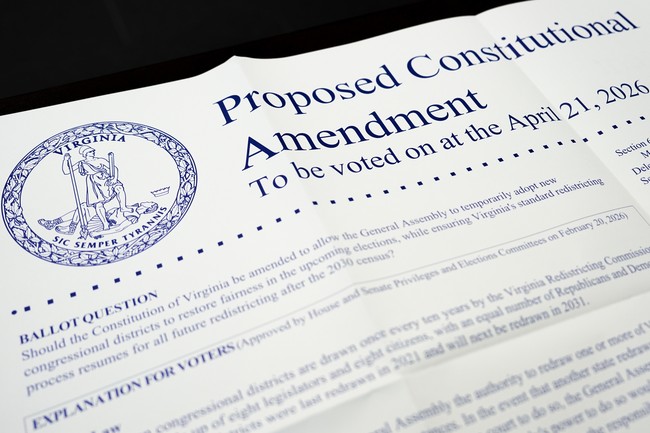
Virginia voters faced a referendum on April 21 about a redistricting change pushed by the Democratic-controlled General Assembly, and the announced result showed the “yes” side prevailing by three points after vastly outspending opponents. That margin has been cited repeatedly by advocates as proof that “the people have spoken,” a phrase repeated like a final verdict. But the dispute now centers not on raw vote totals but on whether the amendment process complied with Virginia’s Constitution and statutory rules. The state’s highest court has already intervened by refusing to lift an injunction blocking certification, signaling that legal review is far from routine.
The law in Virginia sets clear steps for amending the Constitution, and those steps matter. Lawmakers must pass an amendment proposal twice with an intervening election, and the timing of those actions is not decorative; it gives voters a chance to evaluate the officials and choices that will affect the final outcome. The cases before the court argue that the General Assembly did not respect those guardrails and instead rushed a mid-election power shift that denied voters the procedural protections the Constitution requires.
Facts in the calendar make the complaint straightforward. The General Assembly’s first passage occurred on October 31, 2025, during a 45-day early voting period that had started on September 19, 2025, meaning more than a million Virginians cast ballots before that first passage. Many of those early voters did so without knowledge that the congressional map and the redistricting rules approved five years earlier were in active danger of being overturned. Plaintiffs say that massive number of early, uninformed votes undermines the fairness and legitimacy of the amendment process.
Beyond the timing of the first passage, there is a second timing issue tied to the Constitution’s own delay requirement. The second legislative passage took place on January 16, 2026, and Virginia law bars a referendum until at least 90 days after that second passage. Yet voting for the referendum began on March 6, 2026, well short of the statutorily required interval. Critics argue that this compressed schedule converted an amendment process intended to be deliberative into a last-minute maneuver engineered to minimize public scrutiny.
Supporters of the referendum counter that voters ultimately decided its fate on April 21, and that should settle the matter. But when the Virginia Supreme Court pressed the state during oral argument on whether the referendum’s outcome actually resolved the constitutional questions, the Commonwealth’s own lawyer answered bluntly: “no”. That admission undercuts the claim that election results can simply erase procedural defects that may have occurred before ballots were even cast.
This is not a debate about the popularity of a policy so much as a dispute over the rule of law and whether the legal steps required to change a Constitution were followed. The constitutional framework exists to prevent precisely this sort of hasty change that benefits those in power while leaving voters unaware. If the process is found to have violated the Constitution, courts can, and historically have, set aside results that flowed from unconstitutional procedures.
The Virginia Supreme Court has acted quickly, with briefs filed and argument held on an accelerated schedule, reflecting the practical urgency. Candidate filing deadlines for congressional committees began on May 1, and elections planning cannot proceed under a cloud of uncertainty. The court’s prompt handling underscores that unresolved legal questions about the amendment process create real logistical and legal risks for upcoming elections.
What the court decides will have immediate consequences. If it concludes the General Assembly failed to follow constitutional procedure, the referendum result could be nullified and any maps enacted under that process would be invalidated. If the procedure survives scrutiny, map challenges could still lead to redraws if the maps themselves violate constitutional standards. And if everything is upheld, the political landscape will shift accordingly. Each outcome turns on one central question: did the Legislature obey the Constitution and statutes that govern amendments?
Democratic messaging that proclaims “the people have spoken” simplifies a multi-layered legal issue into a political slogan, but courts do not resolve constitutional disputes by slogans. When a procedural rule is designed to protect voters and preserve legitimacy, that rule cannot be discarded because a vote is convenient for one side. The Virginia Supreme Court will decide whether process or popularity controls the result, and that determination will shape how constitutional amendments are handled in the commonwealth going forward.
Editor’s Note: Republicans are fighting for election integrity by requiring proper identification to vote.


Add comment