
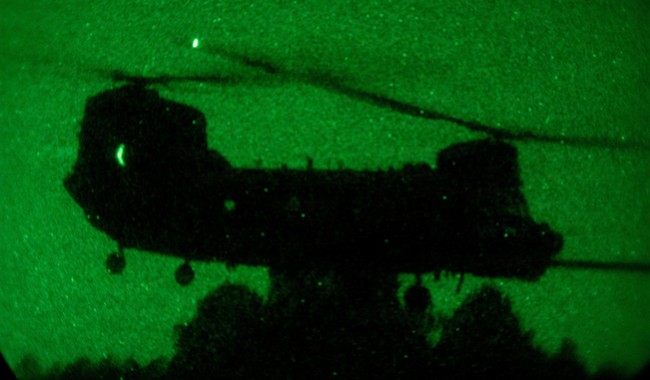
The raid that captured Nicolás Maduro produced a stark casualty count and clarified what President Trump meant when he called the operation “very violent,” revealing dozens of Cuban and Venezuelan security personnel killed, a handful of American injuries, and questions about the makeup and readiness of Maduro’s protectors.
The pre-dawn assault on Maduro’s living quarters was surgical and deadly, leaving foreign and local security forces flattened and a trail of grim confirmation from Havana’s announcement of 32 Cuban fatalities. Casualty numbers reported by U.S. sources and Venezuelan officials diverge slightly, but both point to a high death toll that changes how the mission will be discussed both politically and militarily. The operation’s lethal outcome underlines the stakes when the United States moves decisively against a hostile regime and its allies.
Not everyone was willing to accept the reported results at first, with doubters on the left and elsewhere insisting Maduro and his companion could not have been removed without more obvious evidence. Prominent voices questioned the narrative and the plausibility of such a clean extraction accompanied by so many deaths. That skepticism intensified until governments and officials provided corroborating details, including photographs and lists of the deceased.
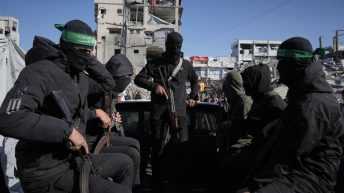
Public reaction ranged from disbelief to grudging acceptance, and social media posts from international commentators captured that mix of doubt and outrage. Observers pointed at images published by foreign authorities and at profiles of some of the dead to make sense of who had been protecting Maduro. The presence of experienced foreign operatives among the casualties helped explain why the fighting could be so intense in a compound raid.
Major press outlets then published detailed assessments of the wreckage and the toll, which shifted the debate away from theory and toward grim facts. Reporting consolidated a picture in which dozens died during the operation, including engagements inside the compound and skirmishes elsewhere. Those reports fed the narrative that the raid was both precise and brutal.
The U.S. government assesses that about 75 people were killed during Saturday’s military raid to capture Venezuelan President Nicolás Maduro, including dozens of fatalities that resulted from a gun battle at his compound in Caracas, according to officials familiar with the matter.
One person said that at least 67 people were killed in the predawn strike, while another said that about 75 to 80 people were left dead. The officials, who like others spoke on the condition of anonymity because of the issue’s sensitivity, said the assessments account for Venezuelan and Cuban security forces as well as civilians caught in the fray. The figures roughly match an estimate that Venezuelan officials have shared in recent days.
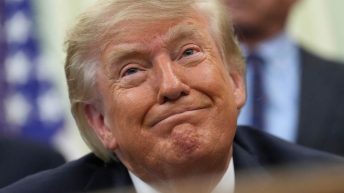
The sizable death toll adds meaning to President Donald Trump’s public remarks that the operation he approved was “effective” but “very violent.”
Breaking the numbers down, the most notable figure was the 32 Cubans who died in the fighting, a loss significant enough for Cuba to proclaim days of mourning. Among them was Colonel Humberto Alfonso Roca, a seasoned officer whose death underscores the caliber of personnel Maduro relied upon for protection. Those profiles pushed back against any suggestion that the Cuban presence was merely ceremonial.
Embedded material and posted images further identified members of the security detail and one Cuban reportedly with past combat experience who had fought in conflict zones outside the hemisphere. That revelation raised questions about outside actors operating in Venezuela and about how hardened some of Maduro’s guards may have been. The presence of veterans with Wagner-style experience explains part of why the raid unfolded with heavy casualties.
Venezuelan authorities acknowledged roughly two dozen of their own dead, while U.S. assessments estimate that Venezuelan military losses may have been higher, near forty. Reports also mentioned two women among the fatalities, likely members of the military or security apparatus rather than civilians. The lack of widespread civilian casualty claims from Venezuelan officials is notable given the intense urban combat that sometimes accompanies such raids.
On the American side, the government confirmed no fatalities among the assault force and said several operators were wounded. Seven members of the assault team were injured; five have returned to duty and two remain hospitalized at a designated military medical center. Officials emphasized that the choice of that medical facility was planned and does not necessarily speak to the severity of the injuries.
Identify!!
Colonel HumbertoAlfonsoRoca, one of the Cuban soldiers who died in Venezuela… he was 67 years old and was part of Nicolás Maduro’s seat belt.
He had also been seen “escorting” Pope Francis or John Kerry himself during his visit to Havana.
A clear pattern emerges: Maduro’s protection relied on older, perhaps complacent officers supplemented by foreign specialists, while the assault was executed by elite U.S. forces trained to act quickly and lethally. Open-source accounts of Tier 1 special operations training describe high volumes of live and simulated practice that prepare teams to clear buildings under fire. That training, combined with careful planning, produced an operation that did what it intended with minimal American losses but heavy hostile casualties.
Some commentators were surprised by how effectively the raid unfolded, given the vested interests and propaganda wars that sprung up immediately afterward. Others saw the casualty list as proof that the U.S. acted against a dangerous nexus of foreign-backed operatives and a brutal regime. The facts emerging from the aftermath will fuel both policy debates and legal questions in the months ahead.
Add comment