
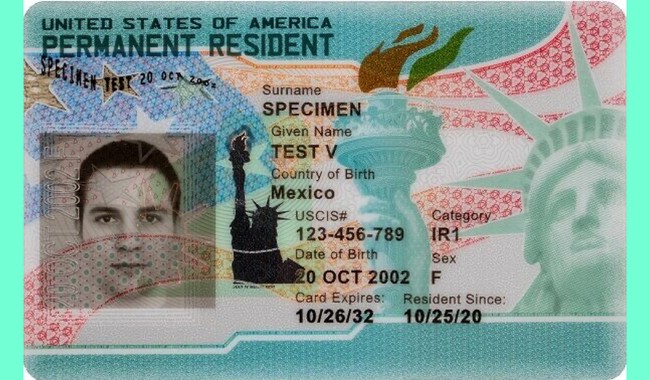
The Supreme Court has overruled the 2nd Circuit in Blanche v. Lau, ruling that border officers do not need a heightened proof standard at ports of entry before treating returning lawful permanent residents as applicants for admission when certain crimes are alleged.
The Court issued its decision as part of a batch of opinions late in the 2025 term, and while it might not headline every news cycle, this ruling matters for how returning green card holders are handled at the border. The question was narrow: what level of evidence must officers have at the moment of reentry before they can treat a lawful permanent resident as seeking admission rather than an already admitted resident. That procedural point has big consequences for removal and deportation pathways.
The case centers on Muk Choi Lau, a Chinese national who became a lawful permanent resident in 2007 and was later charged in 2012 in New Jersey with trademark counterfeiting. Lau left the country before trial and, when he tried to return, Customs and Border Protection paroled him into the United States rather than formally admitting him. After Lau pleaded guilty, the Department of Homeland Security moved to remove him on inadmissibility grounds.
Lau’s argument, adopted by the 2nd Circuit, was that because officers lacked proof at the time of his attempted return, he should be treated as already admitted and only removable through formal deportation proceedings. The Supreme Court rejected that approach, explaining the 2nd Circuit had effectively imposed an extra-statutory evidentiary requirement that Congress did not include in the Immigration and Nationality Act.
In a 6-3 opinion authored by Justice Clarence Thomas, the Court explained that the statute functions in two distinct stages. The first stage asks whether the Government can regard the person as seeking admission, and the second stage asks whether the Government can ultimately remove the person for inadmissibility. Justice Ketanji Brown Jackson wrote the dissent, joined by Justices Elena Kagan and Sonia Sotomayor.
The Court emphasized that the initial classification as an applicant for admission depends on whether the traveler has committed one of the listed offenses, including crimes involving “moral turpitude.” The majority stressed that the Government does not have to satisfy its ultimate evidentiary burden at the border before deciding how to classify the traveler, because the statute itself separates classification from removal.
Justice Thomas outlined the stages plainly: first, can the Government regard the person as seeking admission? That step requires only that the person committed one of the listed crimes. Second, can the Government actually remove the alien? The Government must then prove inadmissibility, which in this case rests on Lau’s guilty plea supplying that proof. By blending those steps, the 2nd Circuit had required more at the port of entry than the statute demands.
The Court vacated the 2nd Circuit’s ruling and returned the case for further proceedings to resolve whether trademark counterfeiting qualifies as a crime involving “moral turpitude.” The decision does not itself decide that substantive issue, but it clears the way for border officials to classify returning LPRs as applicants for admission without meeting a heightened proof standard at the gate.
This outcome favors border authorities and underscores a broader principle: courts should not add burdens to statutory text that Congress did not write. The majority’s reasoning preserves the separate roles of initial admission decisions and later removal proceedings, preventing judges from collapsing those stages into one evidentiary hurdle at ports of entry.
For practitioners and travelers alike, the ruling signals that returnees with unresolved criminal allegations may face immediate classification as applicants for admission, with removal then pursued through the standard evidence and procedures that follow. That maintains a procedural route for DHS to pursue inadmissibility without forcing officers to resolve guilt or provide heightened proof on the spot.
Although the opinion is narrow, it could have ripple effects across circuits that have required various proof levels at entry points. By rejecting an invented burden, the Court restored a statutory reading that leaves investigative and adjudicative tasks for later stages, while permitting initial admission determinations to proceed on the basis Congress set out.
The split vote highlights continuing disagreements over immigration procedure and evidentiary thresholds, with the dissent maintaining a different view of how protections for long-term residents should operate at reentry. The case now returns to the lower court to resolve whether the specific offense at issue meets the statute’s substantive definition of a disqualifying crime.
https://x.com/scotus_wire/status/2069426897075765596


Add comment