
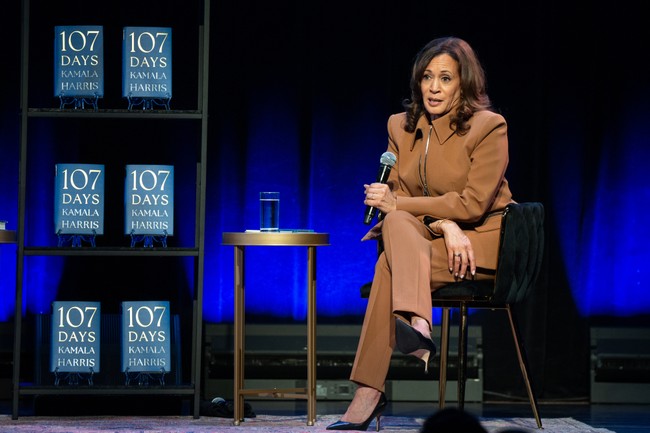
The escalating public spat between Pennsylvania Gov. Josh Shapiro and Vice President Kamala Harris over passages in her new memoir has become a signal flare in early 2028 speculation, with both political futures now wrapped up in a messy exchange of accusations and denials that could reshape the Democratic landscape heading into the next presidential cycle.
After Kamala Harris’ second failed presidential run in 2024, pundits and party insiders immediately started circling potential leaders for the Democratic Party and possible 2028 hopefuls. Names like California Gov. Gavin Newsom and Minnesota Gov. Tim Walz have surfaced, along with Illinois Gov. J.B. Pritzker and former Transportation Secretary Pete Buttigieg. Harris has publicly ruled out a 2026 California gubernatorial run but will not fully close the door on another White House bid.
Harris spent months promoting her memoir “107 Days,” and one excerpt that grabbed attention accused Pennsylvania Gov. Josh Shapiro of coming across as overly fascinated with the perks and symbolism of the vice presidency. In her account she described Shapiro asking about bedrooms in the vice-presidential residence and musing about borrowing Pennsylvania art for the house, a portrayal that Shapiro has called inaccurate and inflammatory.
Until recently, Shapiro’s rebuttal focused on a broader charge: that Harris knew about then-President Biden’s cognitive decline and did not speak up. That claim, explosive on its face, raised eyebrows and warranted scrutiny, but the corporate press has largely steered clear of pressing follow-up questions. Now, in a high-profile interview, Shapiro responded directly to Harris’ memoir and made it clear he was not going to let the characterization stand unchallenged.
Harris also wrote in her memoir that, before Shapiro’s interview, the Pennsylvania governor asked her residence manager how many bedrooms were in the vice-presidential residence and wondered aloud about whether the Smithsonian might work with him to loan Pennsylvania art for the house. This particular detail seemed to provoke the most incredulous and defensive response from Shapiro, according to [the Atlantic’s Tim] Alberta.
“That’s complete and utter bull—-,” Shapiro told the Atlantic. “I can tell you that her accounts are just blatant lies.”
When asked if he felt betrayed by Harris, whom he had known for 20 years, Shapiro “snapped,” according to Alberta.
“I mean, she’s trying to sell books and cover her a–,” Shapiro told the Atlantic, before apparently collecting himself and backtracking. “I shouldn’t say ‘cover her a–.’ I think that’s not appropriate … She’s trying to sell books. Period.”
The rawness of Shapiro’s language reflects a larger political truth: public spats between prominent Democrats are not just personal; they are strategic. A governor weighing a 2028 presidential run cannot comfortably have a narrative circulating that paints him as vain or opportunistic, and being accused by a well-known former running mate complicates any national pitch. For conservatives watching from the outside, these cross-party dramas underscore ongoing disarray among Democrats and provide talking points about discipline and coherence.
Some will see Harris’ memoir as a sales tactic that landed at the expense of intra-party goodwill. Others will argue memoirs are meant to be candid, even consumptive, and that no political figure should be immune from tough recollections. Either way, the episode highlights how memoirs and media appearances can become tactical weapons in the contest for influence inside a party preparing for a consequential election year.
The timing matters: 2028 speculation is still in its early stages, but narratives form fast. California remains a heavyweight breeding ground for national contenders, and governors who spend time building national profiles can either benefit or be damaged by every media exchange. Harris’ decision to publish these anecdotes, whether accurate or exaggerated, has real political consequences for allies and rivals alike who are playing the long game.
From a practical standpoint, the true impact will depend on how both sides manage the fallout. Will Harris continue to use blunt language to mobilize her base and drive book sales, or will she temper public attacks to avoid alienating potential coalition partners? Will Shapiro transform his vocal defense into a launchpad for a national campaign, or will the controversy leave lingering doubts among swing voters and donors?
Democratic operatives now face a tricky calculation: balancing loyalty to figures like Harris with the electoral realities of swing states such as Pennsylvania, where Shapiro remains relatively popular. Pushing too hard on intra-party disputes risks handing Republicans a ready-made narrative about dysfunction. For Republicans, the spectacle is useful; a divided opposition is easier to dissect and exploit on the campaign trail.
The bottom line is that the Shapiro-Harris exchange is more than gossip. It shows how personal memoirs, media appearances, and sharp public retorts interact to shape perceptions of fitness and character in an era when every misstep can be digitized and amplified. As 2028 edges closer, these skirmishes will likely multiply, and the party that manages them with discipline will have a strategic edge heading into the next presidential contest.


Add comment