
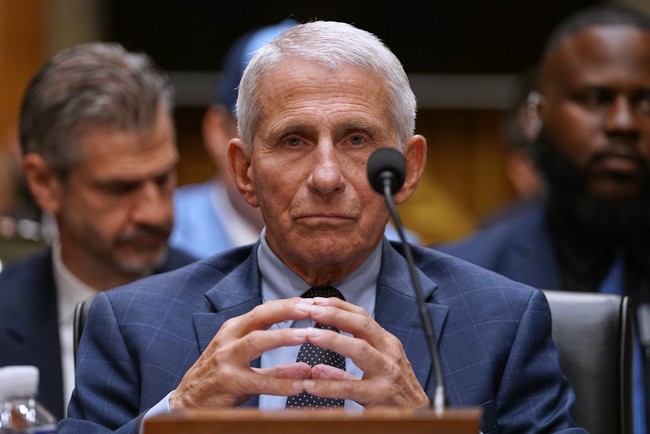
Breaking: Senate Committee Holds Fauci in Contempt of Congress
The Homeland Security and Governmental Affairs Committee voted along party lines to find Anthony Fauci in contempt after he invoked the Fifth Amendment repeatedly at last week’s hearing. Republicans argued his refusal to answer questions and the sheer number of invocations made meaningful oversight impossible. The vote came after a markup led by Sen. Rand Paul, with Republicans pushing for a referral to the Department of Justice. Democrats tried procedural moves to block the action and demanded more time for Fauci’s lawyers to speak.
The committee vote was stark: all eight Republicans supported the contempt resolution while all five Democrats opposed it. That split reflects a wider frustration among conservatives who see Fauci as emblematic of unaccountable bureaucratic power. Republicans believe invoking the Fifth 111 times is not about legal caution but about hiding critical information from the American people. This move is intended to force answers about the origins of COVID, pandemic policy decisions, and taxpayer-funded research ties.
FAUCI CONTEMPT OF CONGRESS RESOLUTION VOTE
PARTY LINE VOTE GOP – 8
DEM – 5
Senate Homeland Security and Governmental Affairs Committee @HSGAC holds Anthony Fauci in contempt of Congress after invoking his Fifth Amendment right against self-incrimination more than 100 times at last week’s hearing into COVID origins, vaccines and pandemic restrictions.
@SenRandPaul argued President Biden’s preemptive pardon meant Fauci had no reasonable fear of criminal prosecution and should have answered senators’ questions.
https://x.com/C__Herridge/status/2085353524620136604
Chairman Paul said Fauci should be treated like any uncooperative witness.
Before the vote @SenRandPaul said he was prepared to make a criminal referral @DOJgov
Democrats tried to block or ‘table’ the resolution arguing Senator Paul was bypassing the full senate, his legal strategy was untested and the committee should hear from Fauci’s attorney.
CONFLICT OF INTEREST: Declassified records reveal US taxpayer dollars funded high risk gain of function research at the Wuhan, much of it flowing through Fauci’s NIH.
Fauci “diaries” indicate he knew as early as January 2020 that the science pointed toward a leak from the Wuhan lab, but publicly Fauci blamed the Wuhan wet market.
CONTEXT: With this vote, Fauci legal exposure grows.
Wednesday night @SenRonJohnson confirmed his investigations subcommittee had obtained a copy of Fauci’s iPhone
Records, texts and other communications may answer lawmakers’ questions that Fauci refused to answer last week.
Committee chair Sen. Rand Paul framed the vote as a constitutional duty to compel compliance with lawful congressional demands. Republicans contend that when an official repeatedly refuses to answer, Congress must use its contempt power to preserve oversight. The party-line result sets up a likely referral to the Department of Justice for potential criminal contempt proceedings. That is exactly what conservatives have been calling for since inconsistencies and withheld records emerged.
Democrats attempted to delay or “table” the resolution with procedural motions and appeals to hear from Fauci’s attorneys. Conservatives saw those efforts as stalling tactics aimed at protecting a protected class of “experts” instead of enforcing accountability. The clash turned partly on whether Biden-era pardons or legal maneuvers can shield Fauci from consequences. Republicans rejected any notion that political shelter should trump congressional oversight.
Independent journalists and witnesses described tense moments during the markup, including an instance when one of Fauci’s lawyers tried to speak despite not being a witness. Republicans said that behavior underlined a pattern of obstruction, not cooperation. The spectacle only hardened GOP resolve to pursue a criminal referral if necessary. Senators on the committee emphasized they were not interested in partisan theatrics but in obtaining facts for the record.
New developments fed the urgency: the investigations subcommittee reportedly obtained a copy of Fauci’s COVID-era iPhone data. If true, those records could contain texts and communications that answer questions Fauci declined to address in person. Republicans argue those records are central to understanding decisions about gain-of-function research funding and public messaging during the pandemic. The committee believes documents and messages will clarify whether public statements matched private knowledge.
The contempt finding is not merely symbolic for conservatives; it is a tactical move to elevate the matter to the Justice Department. Republicans want prosecutors to decide if a criminal contempt charge is warranted. The path from committee vote to DOJ referral is deliberate: it forces institutions to confront alleged misconduct and either prosecute or explain why they will not. That accountability mechanism is at the heart of a functioning oversight system.
As suspected, the Democrats are trying every angle to table the Fauci contempt vote.
Keep you posted.
So far there’s been motions put forward by Peters, Hassan, & Blumenthal. These people would rather protect the “experts” than the American people.
Sen. Paul reiterated that invocation of the Fifth so many times in one hearing was not acceptable and signaled preparedness to pursue a criminal referral. Republican members view the contempt vote as an appropriate response to a pattern of evasive behavior. They argue the American people deserve answers about what policymakers and scientists knew and when they knew it. For many conservatives, this is about restoring trust and making sure no official stands above the law.
The debate will continue beyond the committee room. Republicans have positioned this vote as a step toward fuller accountability, and they expect the Justice Department to weigh the evidence. Even if DOJ declines to prosecute, the contempt vote itself narrows the political space for unaccountability. For Republicans, the message is clear: Congress will not quietly accept endless refusals to answer questions about a national catastrophe.


Add comment