
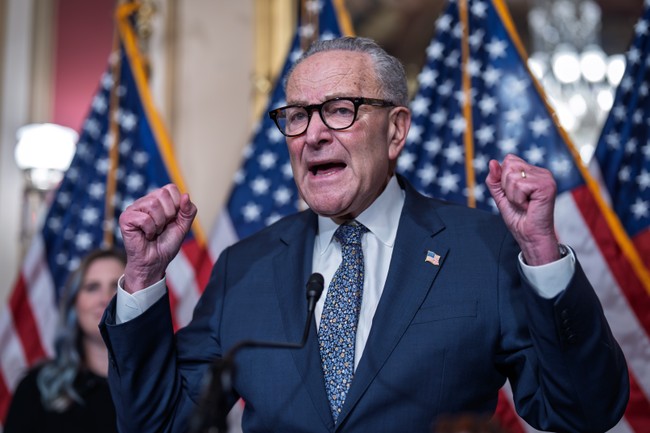
This piece examines Democratic inconsistency on the filibuster, highlights comments from key figures including Rep. Jamie Raskin, Sen. Bernie Sanders, and Senate Minority Leader Chuck Schumer, and argues that the party’s stance shifts based on political advantage rather than principle.
Remember when Democrats loudly denounced the filibuster as an obstructionist relic? Back then it was labeled a Jim Crow leftover and the debate over procedural rules became a moral crusade for many on the left. That rhetoric has a very different tone now that Democrats find themselves in the minority and benefit from the same protections they once attacked.
In March, a continuing resolution passed with cross-party cooperation, and pundits noticed the irony when Democrats praised the outcome. Scott Jennings noted that Senate Minority Leader Chuck Schumer went along to get the CR done, and commentators pointed out the rhetorical acrobatics involved. Fast forward and the same tool Democrats criticized is now being used to block action that affects everyday Americans.
President Donald Trump has urged the Senate to eliminate the filibuster, a move that would change how legislation gets through the chamber. Given the party’s past claims about the filibuster being an undemocratic barrier, one might expect a consistent welcome for that idea. Instead, leading Democrats have offered evasive or contradictory answers when pressed about whether the rule should be removed.
Dana Bash asked Rep. Jamie Raskin a direct question about whether he agreed with Trump on scrapping the filibuster, and Raskin’s response revealed the contradiction. He refused to endorse a procedural fix and shifted the focus to what he called a Republican-imposed healthcare crisis, which sidestepped the core question about Senate rules. That kind of answer highlights a broader tendency to treat rules as tools to be praised or condemned depending on partisan benefit.
“One of the things that he has been talking about for the last couple of days more intensely is getting rid of the filibuster. That’s actually something that you wanted to do when Joe Biden was president. Things weren’t getting through the Senate. So is that an area where you agree with him?” Bash asked.
“Look, we don’t need a procedural fix at this point,” Raskin answered. “We need the Republicans to recognize that there’s a healthcare crisis they’ve imposed on the country. Millions of people are facing the loss of their health insurance because of the skyrocketing premiums under Trump and the end of the ACA tax credits.”
When Bash pressed again, pointing out the inconsistency, Raskin ducked by saying he was not in the Senate. Evading the institutional question does not resolve the contradiction. It simply shifts blame and avoids owning the broader debate about how the Senate should function.
Sen. Bernie Sanders offered a more candid moment, conceding his current position in the Senate is to maintain the filibuster. His comment acknowledged that political circumstances shape strategic positions, even for lawmakers who have advocated for change in the past. That admission undercuts the moral certainty Democrats used to project when they argued the filibuster needed to go.
Host Kaitlan Collins then asked, “And you think they won’t get rid of the filibuster, something you’ve advocated for at times?”
Sanders answered, “Well, I think, right now, we should maintain the filibuster. And I think that’s Senate Majority Leader Sen. John Thune’s (R-SD) position and the position of a number of Republicans.”
Schumer’s public posture has shifted too, and his recent rhetoric reads as frustration at Republicans rather than a clear explanation of his own party’s options. He implored Republicans to “stop the bull” and negotiate, but that demand rings hollow if Democrats are also voting to block compromises. The spectacle is political theater with real consequences for government operations.
The practical fallout is notable: the filibuster is now cited as a reason for stalled action that affects citizens’ lives. Critics of the Democrats argue that this is not accidental but a calculated use of procedure to wield leverage while avoiding accountability for policy outcomes. That interpretation is bolstered by the party’s past calls to abolish the same rule when it served their interests.
On healthcare, Democrats continue to blame political opponents for rising premiums while deflecting attention from the policy choices that set the current path. Subsidies were introduced as a bandage, not a cure, and scheduled changes created instability in the market. Pointing fingers at the opposition does not change the fact that complex policy failures require clear fixes, not rhetorical attacks.
Ultimately, the debate over the filibuster has less to do with consistent principle and more to do with which party benefits from the rules at any given moment. When a procedural rule becomes a partisan weapon, the public loses transparency and trust in governance. That erosion of trust is the real cost of treating institutional norms as tactical tools rather than civic goods.


Add comment