
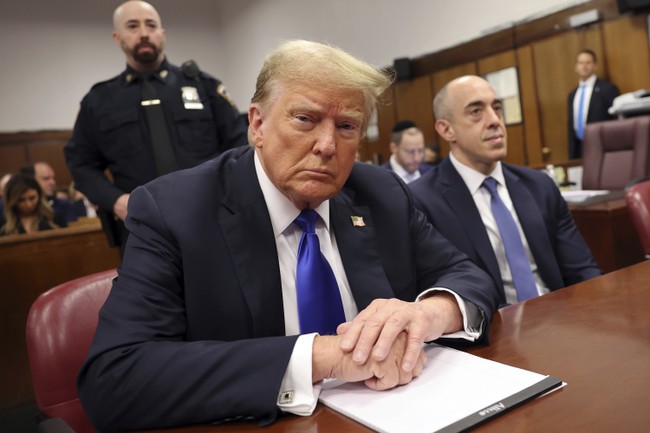
The Second Circuit Court of Appeals stunned observers by vacating a lower court order that rejected President Donald Trump’s renewed attempt to move his New York criminal case into federal court, sending the matter back for reconsideration and raising serious questions about whether the state trial was proper. The ruling focuses on whether the district court adequately weighed the post-trial Supreme Court decision on presidential immunity and whether evidence at the state trial may relate to official acts, matters that could change removability and potentially the fate of the convictions. This development forces the federal court to take a fresh look at timing, evidentiary immunity, and the interplay between state prosecutions and presidential duties. The outcome is uncertain, but the procedural victory for Trump shifts the legal battlefield and exposes weaknesses in how the lower court addressed key issues.
The facts are straightforward and familiar: in May 2024, a New York jury convicted President Donald Trump on 34 counts of falsifying business records in a case brought by Manhattan D.A. Alvin Bragg. The charges centered on payments allegedly arranged to influence the 2016 campaign by keeping damaging stories quiet, specifically a $130,000 payment made to Stormy Daniels, an adult film actor, through Michael Cohen. Judge Juan Merchan presided over the trial, which ended in guilty verdicts on all 34 counts. That state-court conviction set off a complex chain of removal and appellate maneuvers that culminated in Thursday’s Second Circuit opinion.
Before the Supreme Court clarified presidential immunity in July 2024, Trump’s initial effort to remove the case to federal court was denied. After that decision, Trump argued the landscape had changed and that the prosecution might “relate to” his official acts, making the case removable under federal law. He renewed his motion to remove, asserting that the Supreme Court’s ruling created new grounds and thus “good cause” to permit a belated removal under the statute. The district court denied that renewed effort, prompting Trump to appeal to the 2nd Circuit, which heard argument in June 2025 and issued its written decision on Thursday.
The Second Circuit did not itself say the case must be in federal court or that the convictions are null and void. Instead, the appeals panel found that the district court failed to meaningfully address whether the Supreme Court decision altered removability and whether evidence admitted at trial implicated immunized official acts. The panel explained that the district court’s analysis omitted critical questions that bear directly on whether the matter should have been in federal court in the first place. Those omissions were significant enough to prevent effective appellate review, so the court vacated and remanded for proper consideration.
The District Court denied leave, concluding, among other things, that “good cause” had not been shown for the delay in seeking removal a second time. We cannot be confident that in doing so, the District Court adequately considered issues relevant to the good cause inquiry so as to enable meaningful appellate review. Those issues include but are not limited to the impact of Trump v. United States on the removability of the underlying state prosecution. For example, the District Court did not consider whether certain evidence admitted during the state court trial relates to immunized official acts or, if so, whether evidentiary immunity transformed the State’s case into one that relates to acts under color of the Presidency. Nor did the District Court consider whether any notice of removal of a criminal prosecution under § 1455(b)(1) must be filed before trial even if new grounds for removal arise during or after trial. We therefore VACATE the District Court’s order denying Trump’s motion for leave to file a second notice of removal and REMAND for reconsideration of the motion consistent with this opinion.
From a conservative perspective, the decision highlights how vital it is that federal courts properly safeguard presidential functions against state prosecutions that could encroach on the office. The Second Circuit demanded that the district court squarely address whether evidence at trial implicates the President’s official duties and whether that connection makes federal removal appropriate. That scrutiny matters because the Constitution does not permit states to prosecute actions that are truly presidential acts; allowing such prosecutions risks chilling future presidents and upsetting the separation of powers.
Practically speaking, the remand forces the district court back to the drawing board to consider timing and whether the motion was untimely, balanced against the significance of the Supreme Court’s intervening precedent. The panel specifically flagged whether notice of removal must always be filed before trial, or whether new legal developments after trial can supply “good cause” to remove. That is a technical but pivotal question—the answer could determine whether a change in law during or after trial can cure an otherwise late removal.
The stakes are high. If the district court concludes, after a careful record-based analysis, that parts of the state case relied on evidence tied to official acts, that finding could transform the legal posture of the entire prosecution. That does not instantaneously erase the jury verdicts, but it opens pathways to federal adjudication and further appeals that could undo the convictions or require retrial under very different conditions. For supporters of limited state interference in presidential matters, Thursday’s opinion felt like a correction to a lower court’s cursory handling of constitutional questions.
This ruling also underscores a larger political reality: when courts ignore or shortcut vital constitutional issues, the results ripple through public confidence in the justice system. A proper, transparent reconsideration by the district court is now required, and the Second Circuit made clear it will not allow procedural shortcuts where fundamental questions about the Presidency and federal jurisdiction are at stake. That pushback aligns with a conservative view that courts must defend institutional prerogatives and ensure fair, consistent treatment under the law.
The road ahead will be procedural and complex, with more filings, evidentiary analysis, and potential appeals. The remand does not guarantee acquittal or dismissal, but it does give federal judges a clear command: address the impact of presidential-immunity precedent and decide whether removal is warranted. In a high-profile case tied to a former president and current political leader, those legal steps will matter for years to come.


Add comment