
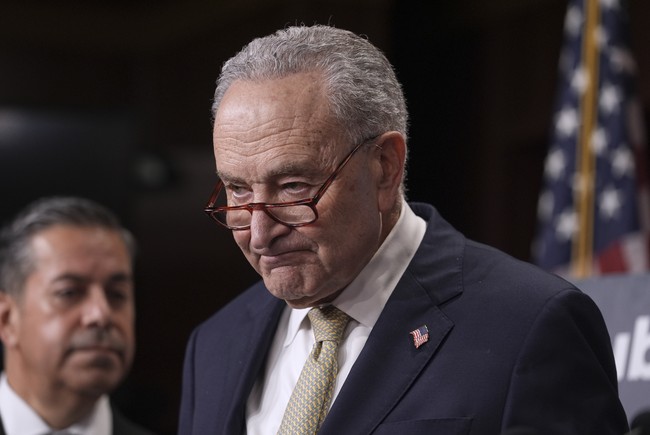
This piece explains why Senate Minority Leader Chuck Schumer surprised observers by backing a GOP-led proposal to stop senators from collecting pay during a government shutdown, outlines what the measure would do, notes timing and political risks, and considers likely paths in the Senate and the House ahead of the midterms.
The surprising moment came when Chuck Schumer publicly said he would support a resolution to halt Senate pay during a shutdown, aligning him with a tactic Republicans hope will reduce the incentive to close the government. The proposal, advanced by Senate leaders including John Thune and Sen. John Kennedy, aims to force consequences on lawmakers when they fail to fund the government. It requires 60 votes to clear procedural hurdles in the Senate, which means bipartisan cooperation could make the move effective. That alone changes the leverage dynamics heading into an election year.
Senate Republicans’ gamble to inflict pain on themselves to thwart future shutdowns just got an unlikely backer: Senate Minority Leader Chuck Schumer, D-N.Y.
The upper chamber is set to vote on Sen. John Kennedy’s, R-La., resolution on Wednesday that would prevent senators from getting a paycheck during a government shutdown. It’s a tool that Republicans hope will give them leverage in preventing Democrats from again shuttering the government in the fall.
And Schumer, who has led Democrats through two shutdowns in the last year, plans to support it.
This move is notable coming from a leader who has presided over recent shutdowns, but it’s also politically sensible for Republicans. If senators face real financial consequences for shutting down the government, the calculation shifts for lawmakers who might otherwise use a shutdown as leverage. Voters rarely tolerate shutdowns, and a clear, enforceable cost to lawmakers could deter future standoffs, especially with midterms looming. From a Republican angle, encouraging Democrats to face that cost is a straightforward way to force accountability.
There are obvious criticisms and tactical concerns on both sides, and one practical detail matters: Schumer’s personal finances mean he can endure a pause in pay without the hardship some Americans would face. “I’m going to vote for it,” Schumer said. “And I think it has a lot of support.” That admission gives Republicans a talking point about seriousness and fairness, while also showing Democrats can be boxed into a position where the optics favor voters angry about shutdowns.
“I’m going to vote for it,” Schumer said. “And I think it has a lot of support.”
Kennedy’s resolution would direct the Secretary of the Senate to withhold lawmakers’ pay until a shutdown is resolved. A rank-and-file senator earns $174,000 per year, while a leader of either party can earn over $193,000 per year.
His resolution would only pertain to the Senate, too. However, it wouldn’t take effect until after the November midterm elections, and some Republicans fear that Schumer and Democrats will again shut the government down before voters hit the polls.
Timing is everything: the resolution would not apply retroactively and would only take effect after November, which injects a worrying loophole for Republicans who fear Democratic leaders might gamble on a shutdown before voters decide. That risk creates an immediate strategic choice for GOP senators running in close races. They can advertise Schumer’s vote as evidence Democrats won’t risk constituents’ livelihoods, or they can push for tighter rules that kick in sooner. Either way, the measure makes shutdowns a messier political gamble for elected officials.
The House is a different story, and the prospects there are murkier. House Democrats and their leader Hakeem Jeffries have little incentive to back a plan that hands a clear talking point to Republicans. Party leaders often calculate short-term political advantage over long-term policy discipline, and that inertia in the House makes passage less likely even if the Senate moves. Expect Republicans to press the issue hard, forcing votes that expose where Democrats stand.
For Republicans, Schumer’s support is an unexpected win that gives policy momentum and messaging ammunition. It creates a straightforward choice for every senator: either defend shutdowns and risk voter backlash, or accept the no-pay rule and take responsibility for avoiding government closures. That binary is useful in campaigns and debates and should be exploited by conservative strategists focused on accountability and limited government spending.



Add comment