
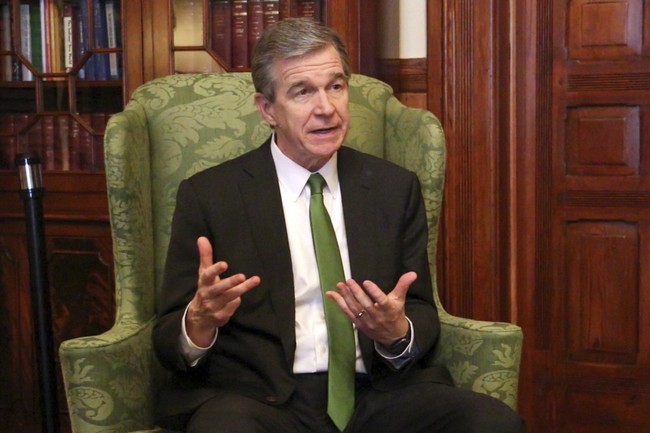
This article examines how Roy Cooper’s record on public safety, early releases tied to a COVID-era settlement, and his actions during the 2020 unrest have resurfaced in his North Carolina Senate bid, highlighting reoffense statistics, eyewitness accounts of the Raleigh unrest, and public statements made at the time.
Report: Roy Cooper’s 2020 Riot-Era Democrat Privilege Moment Comes Back to Haunt His NC Senate Bid
Roy Cooper is the Democratic nominee for the U.S. Senate seat in North Carolina, and his record as governor is now under renewed scrutiny from opponents and voters who care about safety and accountability. The GOP nominee has been emphasizing Cooper’s decisions on criminal justice and public order, pointing to specific releases and policies during his administration. The conversation has shifted from policy theory to real-world consequences as critics dig into who was released and what happened afterward.
A new searchable database brought a sharper focus to the fallout from a COVID-era settlement that led to early releases. The key finding reported was that “2,412 of the 4,234 inmates released under the settlement later committed additional crimes or post-release violations, a reoffense rate of nearly 57 percent.” Those numbers have driven renewed calls for scrutiny of the decisions made by Cooper’s administration.
That same dataset flagged that “at least 18 of those released inmates were later charged with murder.” Those cases are being used to argue that the settlement’s implementation lacked sufficient safeguards to protect communities. Voters and local officials are asking whether the administration prioritized legal settlements over public safety protections or failed to enforce effective oversight.
The tragic killing of 23-year-old Ukrainian refugee Iryna Zarutska on Charlotte’s light rail system intensified the debate. The suspect charged is a repeat offender who had been released during the period in question, and that high-profile case has become a rallying point for critics who say policy changes led directly to increased danger on the streets. Families and community members expect answers about decisions that might have contributed to this outcome.
Eyewitness accounts from Raleigh during the George Floyd protests in late May 2020 add another layer to the story, describing how officials reacted as unrest swelled near the Executive Mansion. According to those accounts, law enforcement resources were shifted and officials decided to evacuate the governor from the mansion amid concerns about being overrun. The narrative of a hurried evacuation has been used to contrast leadership decisions with the needs of residents and business owners at the time.
North State Journal (NSJ) has learned from former law enforcement officers who were in Raleigh helping to quell the rioting that then-Gov. Roy Cooper was evacuated from the Executive Mansion to outside the city during [the early days of] the unrest.
[…]
Between 500 and 1,000 people were estimated to have gathered in the downtown Raleigh area on May 30, 2020, to protest, and skirmishes with police began by early that evening.
[…]
A former officer confirmed to NSJ that protesters had approached the area of the governor’s mansion on the night of May 31 and were observed throwing objects, including water bottles and bricks.
Former NCSHP members on duty that night said they were ordered to split off from assisting Raleigh Police and were diverted on foot to intervene at the Executive Mansion because the law enforcement presence at the mansion was “worried they were going to be overrun.”
[…]
By the afternoon of May 31, then-Raleigh Mayor Mary-Ann Baldwin had signed a state of emergency declaration giving her the ability to request the National Guard, but a city spokesperson indicated she had not yet opted to do so.
Earlier in the day, then-Raleigh Police Chief Cassandra Deck-Brown held a press conference about the riots that took place the night before. At that time, Deck-Brown said their plan on Saturday night did not include requesting National Guard assistance.
Those who were on the ground and later spoke about the events described scattered resources and tough choices, and critics say the response fell short of protecting property and livelihoods. The debate over whether officials should have called in the National Guard sooner or prioritized business and civilian safety continues to fuel political attacks. For opponents, these are not abstractions but evidence of leadership failures.
Public statements from the period are being revisited, including Cooper’s comment at the time: “Let me be clear. People are more important than property. Black lives do matter.” That line has been cited both by supporters who see solidarity and by critics who argue the emphasis devalued property and security during chaotic nights. Political messaging from those moments still carries weight in 2026 as voters weigh tone against outcomes.
Former local law enforcement and civic leaders have also criticized some law enforcement decisions and public messaging during the unrest, arguing that mixed signals and politicized language undermined effective policing. Those critiques feed the larger narrative about public safety under Cooper’s leadership and are being amplified as the campaign season intensifies. Campaigns on both sides are framing the events to their advantage.
Video and contemporary footage from those days remain in circulation and are being used to illustrate how officials acted while downtown businesses suffered damage and residents felt vulnerable. The combination of the database, victim cases, and protest-era accounts gives opponents multiple lines of attack to raise questions about judgment and priorities. That triad of evidence—statistics, cases, and eyewitness narrative—has reshaped the conversation around Cooper’s candidacy.
As the campaign progresses, voters will continue to compare the data on reoffenses, the documented accounts of the 2020 unrest, and public remarks from leaders on the scene. These elements will be central to debates about public safety, criminal justice reform, and accountability for elected officials. For now, the controversy is a clear line of attack in a competitive race for a critical Senate seat.

Means nothing to the liberals in Wake and Moore counties! When he was the AG for the state an article came out about how he would not enforce laws that he disagreed with! He was first elected governor by a magically 90,000 votes that had not been noticed in an election building!