
This piece examines Russia’s limited but symbolic moves in Venezuela, Nicolás Maduro’s outreach to Moscow, Beijing, and Tehran, and why those gestures may matter more as political posturing than as decisive military backing, with attention to recent deployments, diplomatic signals, and the risks each side faces.
Venezuela’s ruler finds himself squeezed and is publicly petitioning foreign patrons for help, while the United States has concentrated significant military power nearby. From a Republican perspective, the U.S. must project resolve so adversaries understand deterrence matters, not bluster. Maduro’s pleas to Moscow, Beijing, and Tehran look like a frightened leader hunting for props to shore up his regime. That context explains why Russian moves are careful and largely symbolic rather than a full-bore commitment.
Amid a buildup of American forces in the Caribbean, Venezuela’s President Nicolás Maduro is reaching out to Russia, China and Iran to enhance its worn military capabilities and solicit assistance, requesting defensive radars, aircraft repairs and potentially missiles, according to internal U.S. government documents obtained by The Washington Post
The U.S. carrier strike group arriving in the Caribbean changes political calculus; when you bring that kind of force, you telegraph seriousness. In my view, a genuine display of strength deters further escalation and communicates that backing lawlessness in our hemisphere comes with costs. Some commentators argue that a large concentration of forces creates pressure to act, but prudent leadership pairs capability with clear political objectives. That distinction matters for how Moscow reads the playing field and how the region perceives American intentions.
Russia’s past support for Chavez and Maduro was loud and theatrical; this time Moscow is quieter, constrained by its commitments in Ukraine and its own shortages. Kremlin spokesmen reportedly say the Venezuela issue “has not been discussed at all, and it was not on the agenda.” That reticence signals a Russia stretched thin and reluctant to risk a direct clash with the United States. From a Republican viewpoint, this reality undercuts narratives that Moscow will rush to prop up every client at the cost of its global posture.
Maduro’s renewal of a “strategic partnership” with Russia reads like rhetorical insurance, but it may amount to little beyond declarations. The partnership text mentions cooperation in energy and security, yet concrete delivery of modern air defenses or missile batteries would require substantial logistics and political will. Putin has reasons to avoid stepping into another costly confrontation when his military is already strained. That suggests the partnership serves political theater more than a reliable military lifeline.
Russian social accounts claim remnants of the Wagner Group have moved to Venezuela, framed as support but functioning as provocation. Deploying hardened mercenaries can escalate tensions and risk direct U.S.-Russia friction, which Moscow likely wants to avoid. Using proxy fighters offers deniability, but it also increases the chance of miscalculation in a crowded theater. The last time U.S. forces confronted Russian-linked fighters in Syria the outcome was a stark reminder of American firepower and consequences for reckless moves.
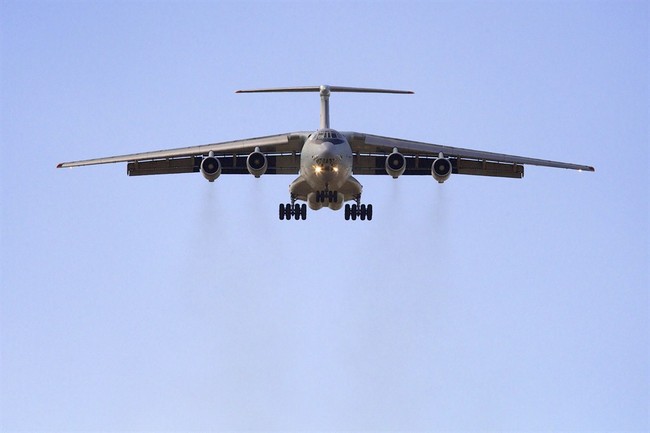
Russia has flown aircraft with dubious histories into Caracas, including transports that reportedly skirted Western airspace via long detours. An Il-76 arrival makes for dramatic pictures, yet its cargo capacity limits what it can realistically deliver in one flight. A single Il-76 can move small arms or a couple hundred personnel, not entire air defense systems that would shift a strategic balance. Such flights are symbolic gestures that underline ties but fall short of altering a military equation against a determined U.S. response.
russia may be sending mercenaries and weapons to Venezuela, which is on the verge of war with the US – yesterday, a Il-76 transport plane landed in Caracas.
What is known about the aircraft:
— Departure was on October 22 from Moscow;
— There were stopovers in Yerevan, Algiers, Rabat, Dakar, and Nouakchott;
— This airline is already under sanctions for transporting cargo on behalf of Wagner, transporting weapons and ammunition to Venezuela and Africa.
What these Kremlin actions mean:
— Either the delivery of any type of weapons from russia and Africa to Venezuela
— Or the use of mercenaries affiliated with the former Wagner.
Should the Americans nevertheless launch a ground invasion of Venezuela, and the russian supply involved human resources, the US will encounter Wagner fighters with combat experience in Africa, Syria, and Ukraine, and with FPV drones.
An Il-76 can carry up to 50 tons, enough for small arms shipments or 100–200 personnel, but not a full battery like the S-400 (which would require multiple flights).
Of course, putin could also send a few thousand russian babushkas to Venezuela; we don’t know.
Maduro has also tried to court China and Iran for military assistance, including radar systems and long-range drones. Beijing likely sees little upside in overtly entangling itself in a direct standoff with the U.S. over Venezuela. Iran can provide drones and gear, but that would escalate the risk environment and invite stronger American measures. Any Chinese or Iranian support would be calibrated to avoid triggering a broader confrontation while still signaling solidarity with Caracas.
From this vantage, Maduro probably overestimates how far Russia and others will go. Moscow must weigh reputational costs and real-world military strain before enlarging its footprint. If Putin overreaches, the U.S. has options to respond and to reinforce partners like Ukraine, making reckless adventurism costly for Russia. Short of sweeping commitments, what we see from Moscow is posturing with limited practical impact.
In the end, Russia faces a narrow path: show enough support to avoid appearing to abandon a partner but stop short of actions that would draw Washington into a bigger clash. For Republicans focused on defending American interests, that split reveals an opportunity to press advantages diplomatically and militarily while reminding adversaries that rhetorical alliances do not equal durable strategic guarantees.

Now the True Colors are showing that too many American Citizens have either missed the boat on seeing or ignored (willful stupidity); that Trump is on target in taking down Maduro and his Evil Dictatorship that’s been aided by the Massive Drug Cartels to kill off American Citizens while Maduro emptied his prisons and mental hospitals into America! And of course Russia with their demonic Maniac Putin in conjunction with the CCP demonic possessed Regime have been working ferociously behind closed doors with Maduro to keep that evil plan in motion to DESTROY America from within!
They’re all demonic Satan worshiping ENEMIES and Americans have to wake up and get tough in Mind, Body and most of all Spirit to defeat these monsters!
“An Il-76 can carry up to 50 tons,”
As with all cargo aircraft, that weight is divided between cargo and fuel. The more cargo you put on, the less fuel you can carry. My slow but ugly C-130 Herc weighed about 75,000 empty, and could weigh 155,000 max, so that’s 80,000 pounds (40 tons) split between fuel and cargo. We could weigh 175,000 with special permission, but we never got that in the 15 years I served.