
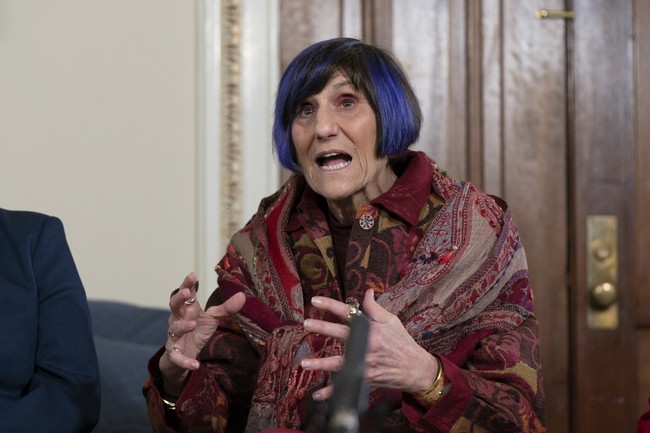
Lee Zeldin faced off with Rep. Rosa DeLauro at a House Appropriations subcommittee hearing over the EPA budget, and the exchange quickly escalated from legal debate to personal attacks; Zeldin insisted he was bound by statute and Supreme Court precedent while DeLauro accused him of denying climate science, culminating in heated remarks and a thrown-around reference to glyphosate. The clash highlighted a broader fight over cuts proposed for the EPA and the limits of agency authority under recent court rulings, and it left both sides trading barbs as cameras rolled. Watch the moments where legal arguments met raw emotion and a White House account weighed in afterward.
The hearing focused on the Trump administration’s 2027 budget request, with the EPA pushing for a significant reduction in funding. Zeldin framed the proposed cuts as necessary to align the agency with law and precedent, not political preference. He emphasized that his answers are grounded in statutory text and the Supreme Court decision in Loper Bright, which constrains agency interpretation.
When Rep. Rosa DeLauro pressed him on whether the Clean Air Act’s Section 202 requires action on global climate change, Zeldin pushed back hard. He asked where the statute explicitly mandates that mission and pointed to Loper Bright as limiting the agency’s room for creative reinterpretation. The exchange quickly became less about policy details and more about who gets to interpret the law in Congress.
Nothing infuriates an uninformed Congressional Dem more than when they realize they voluntarily triggered a debate with someone who actually knows what they are talking about, reads federal statute and adheres to Supreme Court precedent. Today’s self-implosion by @rosadelauro was quite remarkable to witness. Without apology or regret, I will always adhere to the best available reading of federal statute pursuant to the U.S. Supreme Court decision in Loper Bright.
Temperature rose when DeLauro accused Zeldin of “claim[ing] climate change does not exist,” and she reacted vocally to his statutory answer. Zeldin remained composed and reiterated that his duty is to follow statute and precedent, not to advance an agenda. The back-and-forth grew more personal as DeLauro labeled him a “climate denier,” and staffers visibly reacted to the intensity in the room.
At one point the exchange shifted from policy to an odd reference to glyphosate, and DeLauro shouted that remark while the hearing continued. Zeldin responded by describing the legal boundaries he must respect and reiterated that the agency cannot “get creative” beyond what courts allow. That focus on limits of administrative power is central to the Republicans’ case for reining in the agency.
Public reaction moved quickly as clips from the hearing circulated; supporters of Zeldin celebrated the legal clarity he brought up, while critics accused him of dismissing scientific concerns. The moment underscored how legal arguments about statutory text and court precedent can clash with urgent policy claims on climate. For Republicans, the episode reinforced a narrative about following law instead of activist interpretations.
The hearing also put the EPA’s proposed budget cuts at center stage, with Democrats defending funding for climate-related programs and Republicans arguing for fiscal discipline and statutory fidelity. Zeldin framed spending decisions as tied to legal obligations, not whim. That position appealed to colleagues who want predictable, bounded agency actions.
For members of Congress, the hearing served as a reminder that legal literacy matters when agencies invoke broad regulatory powers. Zeldin’s repeated references to Loper Bright signaled a strategic reliance on recent Supreme Court precedent. That reliance is likely to shape future oversight and budget debates over regulatory reach.
The exchange made clear that committee hearings can quickly become platforms for political theater as well as legal scrutiny. Emotions flared, accusations flew, and both sides used the moment to score points with their bases. The episode will be cited by advocates on both sides as they argue over how the EPA should operate going forward.


Add comment