
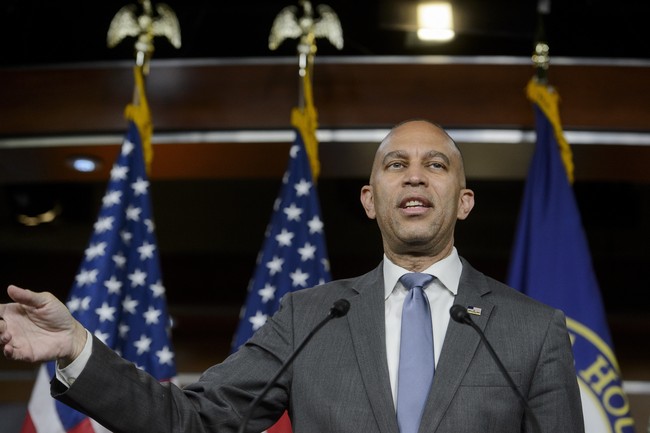
The piece examines Hakeem Jeffries’ post-White House Correspondents Dinner remarks and his startling defense of the “maximum warfare” line, tracing the reactions, the context of recent assassination attempts, and why doubling down now looks reckless and tone-deaf from a Republican perspective.
House Minority Leader Hakeem Jeffries sent a string of messages after the shooting at the White House Correspondents Dinner that showed a disconnect between his words and the nation’s mood. He tweeted that “America will not be lectured about civility by far-right extremists in Congress. Particularly those who provide aid and comfort to hundreds of violent rioters who brutally beat police officers on January 6.” Then he said, “Now is a time to unify,” even after labeling his political opponents as “far-right extremists.” That contradiction drew immediate criticism and disbelief from many who watched it unfold.
On Saturday night Jeffries posted another statement that did not name President Trump yet praised law enforcement: “Thankful for the swift law enforcement action to protect everyone from gunfire at the White House Correspondents Dinner. Praying for the safety of those who may remain in harm’s way. The violence and chaos in America must end.” That was the kind of measured sentiment you’d expect after a violent incident, but it clashed with his other, much more aggressive rhetoric. The mixed messaging left people wondering which Jeffries was the real Jeffries.
Reporters pressed him on Monday about remarks last week where he urged “maximum warfare, everywhere, all the time” in the redistricting fight. That slogan has been repeated by Republicans to highlight how extreme the phrasing sounds coming from the House Minority Leader. GOP members seized on it immediately, and the timing—right after an attempted assassination near the president—made the comment look especially reckless to many.
What they’re saying: “As it relates to the comment related to ‘maximum warfare, everywhere, all the time,’ in connection with the redistricting battle that Republicans launched, I stand by it,” Jeffries said at a press conference Monday.
- Addressing “so-called criticism from these phony Republicans,” Jeffries said: “You can continue to criticize me for it. I don’t give a damn about the criticism … get lost.”
- Jeffries noted that the phrase originated from a source that the Times described as being “close to” President Trump.
Jeffries’ response at the press conference was blunt and unapologetic. “You can continue to criticize me for it. I don’t give a damn about the criticism … get lost,” he said, and those words landed like a grenade in a political climate already jittery about violence. Republicans and many independents saw that line as evidence he was choosing escalation over restraint, even as the nation dealt with another serious security threat to the president.
Calling out anonymous sources as origin points for political language doesn’t excuse using inflammatory phrases in public. Even if a reporter attributed a phrase to someone “close to” the president, repeating it as a near-official slogan is a different thing entirely. A leader in Congress has to understand how words shape behavior and perception, and doubling down right after shots were fired at a major event suggests a disconnect from that responsibility.
This is not just political theater. When prominent figures normalize combat-style language toward domestic opponents, the consequences can be real. We used to see bipartisan appeals after violent incidents urging a new, calmer tone in public life, and those appeals came from across the political spectrum. Now, rhetoric has shifted and the same calls for civility sound hollow when paired with talk of “maximum warfare.”
History shows the media and political class can pivot hard when it suits them, pointing fingers and declaring new language off-limits one week and shrugging it off the next. Democrats lectured about “new tone” after prior attacks, insisting certain metaphors were dangerous, yet some of the current rhetoric mirrors what they previously criticized. That inconsistency fuels cynicism and convinces many voters that standards are applied selectively.
If Republican concerns about escalation are dismissed as mere partisan whining, we risk normalizing a political environment where extremes are acceptable from one side and condemned from the other. When leaders choose provocation over prudence, they lower the bar for political violence by eroding norms. For those worried about the safety of public figures and the health of civic discourse, Jeffries’ insistence on a combative approach is the opposite of what the moment requires.
Watching a congressional leader double down on a war metaphor while the country reels from another near-tragedy is unsettling. Words matter, and responsible leadership would prioritize de-escalation and unity over rallying cries that can be read as threats. The stakes are high, and this episode makes clear that the rhetorical battlefield has shifted in a way that should make every citizen uneasy.
Editor’s Note: The 2026 Midterms will determine the fate of President Trump’s America First agenda. Republicans must maintain control of both chambers of Congress.

Add comment