
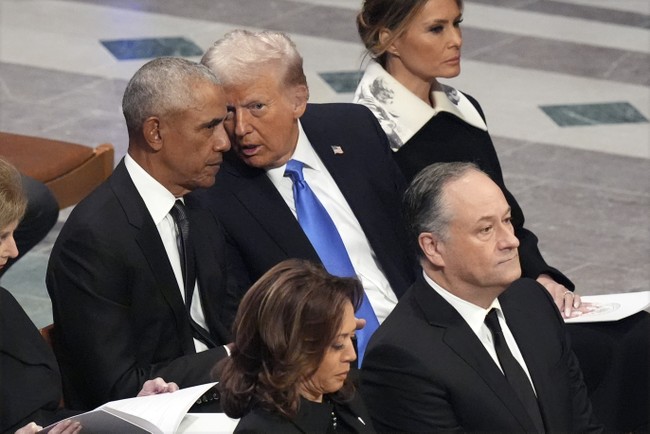
Chuck Todd’s offhand praise of Donald Trump as the best communicator of his generation has rattled the usual media narrative, and this piece breaks down why that admission matters, how Trump’s blunt authenticity connects with voters, and why Democrats currently lack a comparable figure capable of matching that appeal.
It’s rare to hear liberal media figures give Trump credit for anything, which is what makes Chuck Todd’s comment so striking. In a podcast interview he was asked, “Who is the best communicator of this generation?” and his answer singled out Donald Trump. That line cut through the usual spin because it came from someone inside the mainstream media bubble admitting what voters already feel: Trump speaks in a way people understand.
Todd expanded the point, saying, “He’s figured out how to communicate in this fragmented environment. Who else has?” That sentence nails the advantage. In an age of social feeds, niche outlets, and constant noise, a communicator who can bypass filters and land directly with people has an enormous edge. Trump’s method—simple, direct, and unvarnished—fits the moment better than polished political speechwriting.
Contrast that with Barack Obama, who Todd credited as “the best communicator the Democrats have had in the 21st century.” Obama could shape-shift between audiences, making progressives feel revolutionary and moderates feel pragmatic. That skill won him admiration, but Todd’s point is that effectiveness in today’s chaotic media ecosystem requires something else—an ability to cut through, not charm everyone at once.
There’s a reason Trump’s bluntness lands where polished rhetoric sometimes fails: authenticity. People sense when a leader is reading a script and when he’s speaking from conviction. Trump’s words often come off rough and unapologetic, but that roughness translates into trust for many voters. They believe he will act on his words, and action matters more than promises in a world tired of empty rhetoric.
That authenticity explains why some former Obama voters have migrated toward Trump. They see someone not just articulating concerns about jobs, immigration, and national security, but actually taking steps to address them. Voters reward that record of action, and it shows up in results at the ballot box. Winning the popular vote and the Electoral College in 2024 reflected more than personality; it reflected perceived competence and follow-through.
The media’s discomfort with this reality is visible every time a mainstream commentator grudgingly acknowledges Trump’s strengths. Admitting he communicates effectively forces a reckoning: either the left produces a communicator who matches Trump’s emotional reach, or it concedes ground. Right now that gap is real, and it’s a political liability for Democrats trying to rebuild a broad coalition.
On foreign policy and toughness, Trump’s directness also plays differently than the cautious statements of recent Democratic leaders. The public notices when a politician’s words are backed by decisive moves. Todd’s remark about communication implicitly recognizes that strategic clarity—saying what you mean and following through—resonates internationally as well as domestically. Voters reward leaders who don’t issue ambiguous red lines that others ignore.
Meanwhile, Democrats lack an obvious heir to Obama’s rhetorical toolkit or to Trump’s combative authenticity. The current bench has weaknesses that commentators point out: faltering delivery, mixed messaging, and public missteps. That absence of a compelling alternative amplifies Trump’s advantage; it’s not just about his strengths but also about the opposition’s failures to present a convincing counter-narrative.
Republican figures beyond Trump are also sharpening their communication chops, which compounds the problem for Democrats. Voices like JD Vance and Marco Rubio are building profiles that blend humor, negotiation, and results-driven narratives. That combination helps the party translate policy wins into stories voters can relate to, and it gives Republicans multiple messengers who can reach different audiences effectively.
That said, effective communication is not a substitute for policy success, but it often shapes perception of whose policies are working. When a leader plainly explains what they stand for and then produces results, the political payoff is real. Chuck Todd’s admission is unsettling to critics because it forces them to confront what voters have known for some time: clear, forceful communication paired with action wins support across the political spectrum.
Editor’s Note: The Schumer Shutdown is here. Rather than put the American people first, Chuck Schumer and the radical Democrats forced a government shutdown for healthcare for illegals. They own this.

Add comment