
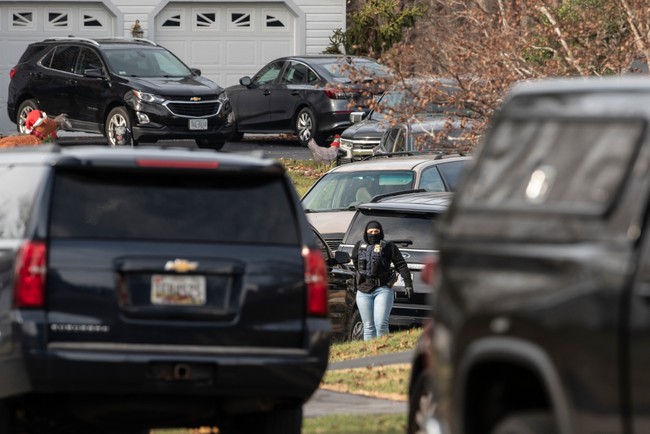
The arrest in the long-unsolved Washington, D.C. pipe bomb case finally gave Americans answers they deserved after years of apparent indifference from the prior administration, and Judge Jeanine Pirro laid out what investigators found, how the suspect looked ordinary on the surface, and why this should matter to anyone worried about public safety and accountability.
The case sat unresolved for more than four years, and that delay left a lot of people frustrated and suspicious about priorities inside the Department of Justice. Jeanine Pirro appeared on Laura Ingraham’s show to explain why the investigation stalled and what changed when law enforcement refocused on the evidence. Her account paints a picture of an investigation that was deprioritized, then revived with urgency once it received proper attention.
Pirro was blunt about the consequences of that early inattention. “Well, Americans had a right to feel that this case would never be solved, because it was clear that the Biden administration did not make this a priority. Within a couple of months of the finding of these pipe bombs, they pulled agents off this case.” Those words push the point that political leadership and management choices affect whether dangerous crime gets the attention it needs.
She described how, under a renewed focus, investigators reanalyzed mountains of data to find the thread that tied things together. “When President Trump came in, he made a decision that he was going to reinvigorate the investigation. [FBI Director] Kash Patel, [Deputy Director] Dan Bongino, [they] made a decision that we were going to look at this, reanalyze evidence, and what I said there was clear. Three million pieces of data, and we had to find the commonality.” That level of data work is painstaking, but it shows how results follow from prioritization and resources.
Pirro then turned to the suspect himself, and her description is unsettling for a simple reason: he looked normal. The danger in this case was not a dramatic caricature of a criminal but someone who blended into everyday life. That reality is a reminder that threats do not always announce themselves and that determination and investigative skill are required to connect the dots.
This is a guy who kind of has a very low profile… He lives with his mother, his family… He does very little.
We surveilled him… what I can tell you is that he was always wearing his headphones. He would take his dog out, he’d go to the 7-Eleven. He was very, if you [would] say, low key, low profile. There wasn’t a lot going on.
His closest friends are his family. He lives with his mom and his sisters. He would go to work for a few hours a day. His father had a bail bondsman company. And he was just a very low-key person that you would never expect.
The description underscores a sobering fact: ordinary routines can conceal extraordinary danger. Authorities discovered enough forensic and digital evidence to place his phone in the area on January 5, 2021, the night the devices were left by the DNC and RNC. That digital trail, paired with traditional investigative work, finally gave agents the leverage they needed to move from suspicion to an arrest.
Pirro went on to describe the physical evidence that made the case more than circumstantial. “He’s that quiet individual that you would never imagine could put a pipe bomb, put it together… The FBI went in this morning, they found a lot of other products and pieces for pipe bombs… Other pipes, other wires, other, you know, timers. He was into this, very much into this.” Finding components and materials turns speculation into a prosecutable reality.
The suspect had no prior record and rarely used social media, which is exactly what makes cases like this harder to break. Investigators had to rely on surveillance, phone data, and painstaking forensics rather than a trail of online boasts or prior arrests. That kind of work takes time, funding, and a willingness from leadership to keep agents focused on tough, slow investigations.
Pirro insisted the case was now solid and that justice would follow: “This [case] is solid, Laura — solid as they get.” Those words reflect confidence built from tangible evidence and careful case-building. For those who demanded accountability, the message is that methodical police work can still win, but only when it is treated as a priority.
The portrait of the suspect as ordinary and quiet should unsettle any community, because it highlights how easily danger can hide behind normalcy. It also raises questions about how cases like this get handled when political choices reduce resources or attention. The outcome here—an arrest backed by evidence—shows what happens when investigators are allowed to do their jobs with focus and support.
Pirro’s interview serves as a lesson about priorities, competence, and the consequences when serious investigations are sidelined. The public can appreciate the painstaking work that brought this result, while also demanding that future threats not be allowed to linger because of management decisions inside the agencies meant to protect us.
Here is the full interview:


Add comment