
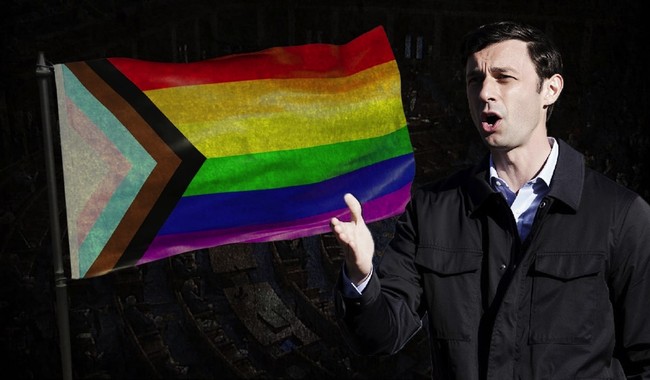
The Pentagon has pushed back against a partisan demand from seven Senate Democrats seeking detailed explanations and demographic breakdowns for recent military promotion decisions, saying the requests risk politicizing personnel decisions and undermining efforts to restore a lethal, merit-based force.
Seven Senate Democrats led by Sen. Jon Ossoff pressed the Department for detailed authorities, criteria, and explanations behind removals from promotion lists, including demographic tallies. Their letter aims to force public justification for personnel moves that the Pentagon says are routine and tied to restoring readiness and proper leadership standards. Republicans see the effort as an attempt to weaponize identity politics against a return to merit-based promotions.
Defense officials have defended recent actions as part of a broader push to prioritize operational competence over ideological commitments, and they stress that selection by a promotion board is not an automatic promotion. Under longstanding law and Department procedures, senior leaders retain authority to delay or remove officers from promotion lists for reasons including professional qualification, conduct, or fitness for leadership. That authority exists to ensure the services are led by officers who meet the demands of modern warfare, not those chosen for political signaling.
A senior official gave an example that has circulated in conservative reporting: a Navy captain who hosted a Pride Month event aboard a notable ship and later was passed over for promotion despite prior command of a high-profile vessel. The account has been used to argue that some removals stem from documented conduct viewed as incompatible with the standards expected of flag officers. Critics of the Democrats’ request say highlighting such episodes further proves the Pentagon is reasserting standards that were eroded under the previous focus on diversity advocacy.
https://x.com/CynicalPublius/status/2061957981944918071?ref_src=twsrc%5Etfw
Pentagon spokesman Sean Parnell told media outlets that “The Department of War rejects this partisan letter as an attempt to re-politicize military promotions and drag the Armed Forces back into the failed identity politics and DEI experiments that hollowed out readiness under the previous administration.” That language frames the dispute in stark terms: officials say they are reversing policies they see as harmful to cohesion and combat effectiveness. From the Pentagon’s perspective, reverting to merit and lethality is a necessary correction, not a punitive political purge.
Opponents on the left have framed removed officers as victims of bias, claiming the decisions target women and minorities, but Pentagon officials point out that white male officers have also been included in those removals. That reality undercuts the narrative that the actions are driven by discrimination and supports the department’s case that decisions are performance-based. For Republicans, the key question is whether leaders prioritize the mission and readiness of the force above social experiments and identity-driven promotions.
The Senate letter’s demand for demographic breakdowns and expanded written justifications, critics warn, would inject political oversight into routine command responsibilities and could chill commanders’ ability to manage talent. Requiring scorecards and itemized explanations risks turning personnel offices into political reporting shops rather than tools to support unit readiness. Military promotion systems must retain discretion for senior leaders to act in the national security interest without fearing immediate public political backlash.
With a deadline for response set during NDAA negotiations, the Democratic push keeps the debate front and center in Congress as lawmakers consider broader defense policy. Republicans argue the timing is deliberate and designed to obstruct reform efforts that favor combat effectiveness over ideological priorities. The underlying struggle is about the character of the armed forces: whether they return to a warrior ethos or remain entangled in social agendas.
Pentagon officials have reiterated their posture: “Promotion decisions are driven solely by merit, prioritizing the best, most capable warfighters to deter our adversaries and win our nation’s wars,” Parnell said. “We will not entertain demands for demographic scorecards or endless justifications that treat our military as a social experiment rather than the lethal fighting force it must be. America’s service members deserve leaders selected for excellence, not equity quotas, and this administration will continue delivering exactly that with confidence and resolve.” Those words make clear the department’s determination to resist what it calls partisan micromanagement.
The debate highlights a broader political clash over civil-military norms and who gets to decide standards for senior leaders. Republicans pushing for a return to mission-focused standards see the department’s stance as restoring discipline and fighting edge. Democrats demanding transparency and demographic information frame their request as oversight, but critics say the oversight veers into politicization that could weaken command authority and unit cohesion.
In the coming weeks, congressional exchanges will test how far lawmakers can push for detailed personnel disclosures without undermining commanders’ discretion. The Pentagon’s rejection of the letter sets the tone for a fight over whether promotion decisions remain a matter of professional military judgment or become a new front in partisan politics. Either way, the controversy underscores how personnel policy can become a proxy for larger cultural and strategic battles in Washington.


Add comment