
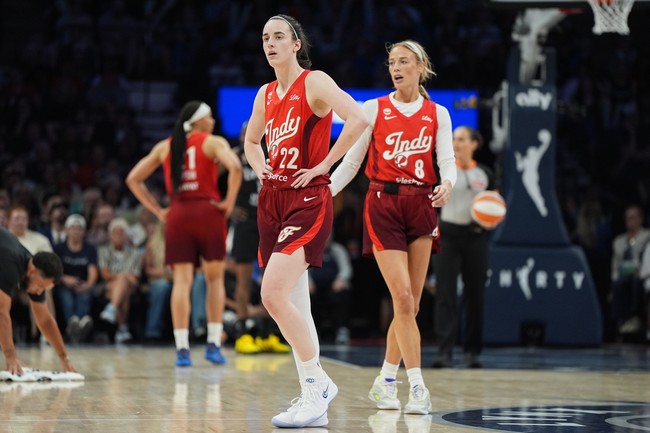
Payton McNabb, a former North Carolina high school volleyball player who still lives with lasting injuries from a violent on-court incident, speaks out in defense of female-only sports and calls out Caitlin Clark for staying silent while teammate Sophie Cunningham faces a backlash for saying men do not belong in women’s sports.
McNabb says her experience—sustaining a concussion, neck injury, two black eyes, impaired vision, partial paralysis on her right side, and ongoing anxiety and depression—cemented her stance that biological differences matter in competition. She tells the story plainly: separate categories exist for reasons tied to safety and fairness, and those realities should not be ignored. Her pain is both physical and a motivation to protect other girls from similar harms.
Sophie Cunningham recently stated, “I want to protect young girls in a locker room, or young girls in sport who shouldn’t have to go against biological men,” and immediately drew scorn from powerful voices inside and outside her league. Cunningham’s comments came after she joined a team where she was expected to help protect star players, and her blunt line about men in women’s sports triggered cultural pushback. McNabb views Cunningham’s willingness to speak as a brave, athlete-driven intervention in a debate usually led by politicians or activists.
McNabb describes the typical pattern when someone challenges the prevailing narrative: critics rush in to punish the speaker as an example to others. “Honestly, I wasn’t shocked at all. That’s become the playbook,” she says, noting the predictable aim to silence dissent. In her experience those reprisals are meant to make athletes and public figures think twice before speaking up for fairness and safety.
More than abstract principles, McNabb stresses lived consequences. “People are ignoring why separate men’s and women’s sports exist in the first place,” she says, and explains that equipment, performance expectations, and safety standards were set to reflect biological differences. She learned those facts the hard way and refuses to let them be sidelined by ideology that treats biology as optional.
McNabb reports that many female athletes privately agree but are afraid publicly to voice their concerns for fear of losing teammates, scholarships, or sponsorships. She argues that the financial and social pressures create a chilling effect, which is why public statements from high-profile players can matter so much. “Courage is contagious, and every athlete who speaks up makes it a little easier for the next one,” she says.
When asked about Caitlin Clark’s public reaction—or lack of one—McNabb calls Clark’s silence a missed chance to support fairness and inspire young fans. Clark told reporters, “It’s not really a discussion we really have in our locker room,” and said the matter belongs to leagues and governing bodies, emphasizing the team’s focus on basketball. McNabb understands the temptation to stay out of controversy, but she insists that prolonged silence functions as an endorsement of the status quo.
McNabb points out that Clark occupies an outsized role in shaping younger players’ aspirations, noting how little girls buy jerseys and emulate stars. She says hearing “support your teammate and stand up for fairness” from such a prominent figure would have lifted many who are quietly worried about the future of women’s sports. In McNabb’s view, leaders in sport have responsibilities beyond box scores and PR lines.
McNabb is clear-eyed about the risks Cunningham faces: league pushback, sponsor pressure, and a cultural backlash designed to intimidate. Yet she encourages Cunningham to keep speaking up because athlete voices carry a different credibility than politicians making noise. She argues that when active competitors challenge harmful trends, it resonates in ways legislative speeches never will.
Her advice to Sophie is succinct: keep going. McNabb says athletes should be able to express beliefs without being ostracized or financially punished, and that shaming dissent into silence undermines honest debate and women’s safety. “Whether people agree with Sophie or not, athletes should be able to speak honestly without fearing they’ll be ostracized for it,” she says, urging more athletes, coaches, and parents to join the conversation.
McNabb’s message is rooted in both pain and principle: she refuses to accept a future where biological realities are dismissed and women’s sports are left undefended. For her, this is not a theoretical dispute; it is about protecting the next generation of girls from physical harm and preserving fair competition. She wants public figures in sport to recognize that staying neutral can itself be a statement with real consequences.
https://x.com/JennPellegrino/status/2071968943829368892


Add comment