
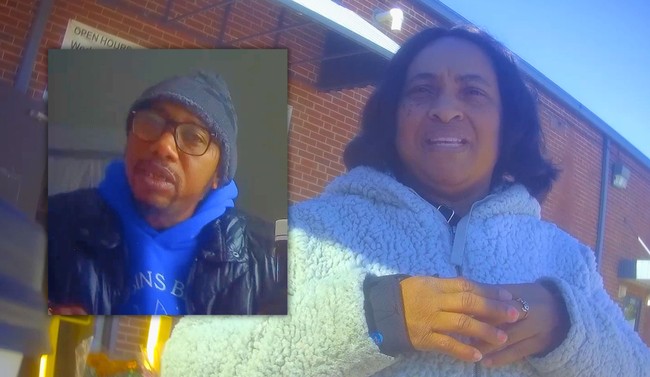
This article examines undercover video alleging a bribery scheme in an Ohio immigration court, outlines the people named and the claims made, and highlights why the alleged operation should alarm anyone who cares about rule of law and secure immigration policy.
The footage presents a hard-to-ignore picture: claims that migrants from Mauritania were being coached, coached to fabricate asylum stories, and told that favorable rulings could be bought. Those are explosive allegations because they go straight to the integrity of hearings that decide whether someone stays or goes. When the process that grants relief from removal is treated as a business opportunity, the system itself is at risk.
At the center of the accusations is a woman named Patricia Golder, who the video portrays as someone running a fee-based operation to shepherd migrants through asylum procedures. The reporting says she collects money from migrants and describes paying judges and lawyers to secure extended stays or approvals. That kind of transactional description, if accurate, is not just corruption; it is a coordinated attack on the immigration adjudication system.
“In exclusive footage obtained by Townhall, evidence has emerged suggesting that migrants from the West African nation of Mauritania are exploiting the U.S. immigration and asylum system in Lockland, Ohio, raising serious questions about the integrity and oversight of the process.”
The footage reportedly includes claims that migrants were coached on how to meet legal thresholds for asylum and encouraged to fabricate elements of their stories to qualify. It also alleges that people were informed they could get favorable rulings through illicit payments. Those are procedural and criminal concerns at once, because they imply coordinated fraud and the involvement of trusted gatekeepers.
The video goes further in naming payments and describing how funds are divided. “You get the lawyer and you say, ‘Okay, we have this sheet of paper. I need you to ask the judge how much to carry these people two more year in this country? Probably until we get this project done.’ He say, ‘Okay, give me $50,000.'” That line is central to the controversy because it lays out specific sums and a specific mechanism for buying leniency.
That $50,000 line is followed by the claim that the money is split among multiple participants, an allegation that transforms isolated wrongdoing into a networked corruption scheme. If attorneys and judges are implicated, the betrayal of public trust is acute, since those professions are entrusted with impartial application of the law. Citizens expect justice, not a price list.
These practices are often seen in nations where institutions are weak, but the allegation that such a scheme operated inside an American court is shocking and should trigger immediate scrutiny. Corruption at this level would take time to develop, implying a degree of organization, repeated contacts, and a willingness by multiple actors to cross legal and ethical lines. That suggests institutional vulnerability that must be addressed.
The video shows people who entered the country and then allegedly proceeded to the person who organized assistance and payments. It paints a barbed portrait of an entire flow: entry, referral, payment, legal maneuvering, and then — allegedly — favorable rulings. That flow, if real, is the sort of exploitation that undermines public confidence and fuels calls for stricter oversight and accountability.
Republicans who insist on secure borders and honest enforcement will view these claims as validation for tighter controls and more rigorous vetting of the systems handling asylum claims. The core issue is not compassion versus toughness; it is whether the asylum system retains credibility when people allege it can be purchased. Credibility is the currency of law, and it is being spent fast if these claims hold up.
Journalists and investigators will need to verify the names, dates, payments, and any court decisions tied to the events shown in the footage. Law enforcement and judicial oversight bodies should take any credible lead seriously, because the stakes include public safety, taxpayer exposure, and the rights of genuine asylum seekers who rely on a fair process. The public deserves answers, and those answers should come from investigators, not partisan spin.
Watch:
The video also contains a quote about how migrants are counseled on attitude toward American values, and that portion raises a separate but related concern about integration and intent. The reporting suggests many involved neither embrace nor intend to adopt core American values even as they access public resources meant to protect legitimate claimants. That point feeds broader debates about assimilation and public policy priorities.
Accountability means subpoenas, audits, and criminal inquiries where warranted, and it means transparent action from courts and immigration agencies. If judges or attorneys are implicated, professional discipline and criminal charges should follow where the facts support them. Allowing accusations to linger without investigation breeds cynicism and damages the rule of law.
We should also note that the mainstream narrative around immigration often ignores corruption that hurts both citizens and legitimate migrants. Calling out alleged fraud does not oppose immigration itself; it insists on systems that are fair, enforceable, and free from pay-to-play schemes. That is a conservative and practical demand for governance that works.


Has she been arrested yet????