
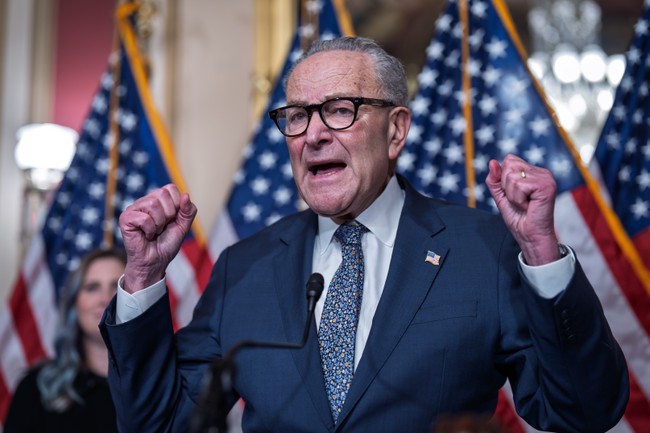
The Senate is locked in what critics call the Schumer Shutdown, a standoff that exploded into a tense hallway confrontation when Sen. Bernie Moreno pressed Majority Leader Chuck Schumer on whether Democrats have a written plan and whether taxpayer-funded health subsidies would include millionaires. The exchange highlighted unanswered questions about income caps, zero-dollar premiums, and who ultimately benefits from any bailout of Obamacare-era programs. This article walks through the confrontation, the key claims on both sides, and the practical concerns Moreno raised about fraud and corporate windfalls.
The chamber reconvened Sunday with a stalemate still unresolved, and the public is left asking what exactly the Democrats are offering. Moreno demanded specifics: a written proposal and clarity on whether subsidies would be capped by income. Without that baseline, Moreno argued, you cannot have meaningful negotiations or vet the fiscal impacts accurately.
The exchange grew heated when, according to witnesses, Schumer chose not to answer direct questions and left the discussion abruptly. Moreno described Schumer’s response as evasive and full of theatrical gestures, suggesting the leader preferred optics and headlines over substance. That reaction only deepened concerns that Democrats were trying to move forward without a full accounting of costs or recipients.
Moreno did not pull punches in outlining the flaws he saw in Schumer’s approach. He stressed that subsidies do not go into people’s pockets but are paid to insurance companies, which raises questions about whether the policy enriches corporate interests more than it helps patients. The senator listed four core problems: no income caps, millionaires eligible for subsidies, zero-dollar premiums vulnerable to fraud, and larger payouts to insurers without reform.
“So just to be clear, number one, he [Schumer] acknowledged that the Democrats have not put forward a written proposal that people could look at. Number two, he acknowledged that his plan would be to allow millionaires…would receive Biden-era Obamacare COVID Obamacare subsidies. No income cap.
I was going to ask him before he stormed out of the room, because, evidently, he doesn‘t want to hear any opposing views or actually engage in meaningful negotiation. [….]
Would he continue zero dollar premiums, which we know for a fact, have enormous levels of fraud…If he had stayed, I would have asked him a third question: Does he want these monies to go directly to insurance companies?”
Those allegations focus on two practical concerns lawmakers face: the distribution of benefits and the enforcement of eligibility rules. If high earners continue to receive large subsidies, the program’s progressivity collapses and political support could erode. Moreno argued that without a cap, the program subsidizes people who can afford coverage, which weakens arguments for targeted assistance.
On fraud, Moreno emphasized the track record of zero-premium plans creating incentives for abuse and error. When taxpayers are on the hook for entire premium bills, the system depends heavily on accurate income reporting and tight oversight. Moreno warned that loosening rules or expanding eligibility without checks invites waste, fraud, and abuse that ultimately harms honest enrollees and drives up costs for everyone.
Beyond fraud, the senator questioned whether expanded subsidies simply redirect public money straight into insurer coffers. When the government covers the bulk of premiums, insurers face less pressure to control costs or compete on price, which can entrench market power and reduce incentives for innovation. Moreno’s point was not hypothetical; it rests on how federal dollars interact with private industry in the existing health system.
Schumer, for his part, framed the standoff as a choice to keep government functioning and extend protections, arguing that negotiations could follow a short-term extension. But critics note that a unilateral extension without concrete terms has historically led to permanent policy shifts without adequate review. Moreno reminded listeners that rushing bills to pass first and explain later is how major policy mistakes have been institutionalized before.
Republican critics see this moment as a broader reflection of Democratic strategy: prioritize quick headline wins while sidestepping tough oversight questions. Moreno’s push for written specifics is a straightforward demand for transparency that would let lawmakers and the public evaluate costs, beneficiaries, and accountability mechanisms. That request is procedural but essential if Congress plans to change how taxpayer dollars support health care.
The confrontation also underscores a political reality: debates over healthcare are never just policy exercises, they are about allocation of scarce public funds and the distribution of benefits across income groups. Moreno’s intervention aimed to force a public accounting that details who gains, who pays, and how taxpayer money will flow. Until those answers are on paper and open to scrutiny, the standoff is likely to continue.
Editor’s Note: The Schumer Shutdown is here. Rather than put the American people first, Chuck Schumer and the radical Democrats forced a government shutdown for healthcare for illegals. They own this.


Sedition, Treachery and Treason!!! He should be executed!!!
GITMO NOW!!!
Non of these so called politicians care about you and healthcare if they did we’d all have the same plan they have!!!! Not only do working people have to pay for their mandated healthcare ( mandated cause your fined if you don’t have it)but also every politician past and present that’s alive!!!! We need a mandate that states if the government is shut down non of these morons get paid NONE!!!! We also need these morons to be like everyone else and pay for their healthcare!!!!
Ron; all right-on great points and true!