
The week’s roundup covers a major court decision affecting Donald Trump, fresh talk about the Senate-driven shutdown, developments in the Israel-Hamas fight, a viral office confrontation at a major publisher, and a provocative take on urban policy experiments. Each item stirred headlines and debate, and the summaries below stick to the key facts and notable quotes so you can catch up fast.
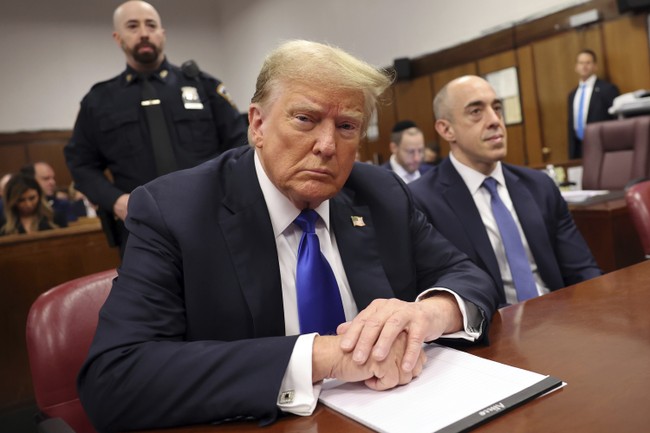
The leading story is a significant win for Donald Trump in the appeals courts, where judges found the lower court hadn’t fully evaluated his renewed attempt to move a New York prosecution into federal court. The legal fight revived after the Supreme Court’s decision in “Trump v. United States” in July 2024, and the 2nd Circuit concluded that earlier rulings needed a closer look. That move could change the procedural path for the case, at least for now, and it has people on both sides of the aisle recalculating next steps. The procedural ruling is narrow in scope but meaningful in practice, since it requires the trial court to reexamine the removal motion in light of intervening precedent.
But a funny thing happened on the way to the presidency…The Supreme Court issued a ruling on presidential immunity that had far-reaching implications.
Trump had initially attempted to remove the case from state court to federal court, which effort was shot down. But after the Supreme Court issued its ruling in Trump v. United States in July of 2024, Trump renewed his efforts to remove the case to federal court, asserting that the Supreme Court’s intervening decision rendered the State of New York’s prosecution one “relating to” his official acts as president, such that the case was now removable and established “good cause” for his untimely filing.
U.S. District Court Judge Alvin Hellerstein shot down that renewed effort in September 2024, and Trump again appealed to the 2nd Circuit, which heard oral argument on the matter in June of 2025. On Thursday, they issued their ruling, determining that the district court failed to properly consider the renewed motion.
Washington watchers are also focused on the budget standoff dubbed the Schumer Shutdown, where Republican and Democratic leaders are trading blame. Conservative voices argue Democrats prioritized political goals over the practical effects on workers and benefits, while Democrats frame their negotiating posture as protecting priorities they deem essential. Whatever hammer falls next, the shutdown has tangible effects on pay schedules, SNAP recipients, and federal services. The political fallout will be evaluated in districts and on talk shows for weeks to come.
As with many things with Democrats, this could backfire on them.
It says something about Democrats, too, if this is their motivation – that they’re more concerned about their own power than they are about how such political games would affect the people who haven’t gotten paid, the people on SNAP, the people who may otherwise be hurt by the shutdown, and the harmful effects on the economy.
It’s completely believable, given what we have seen from Democrats.
On the international front, reporting from the front lines of the Israel-Hamas conflict described dozens or hundreds of militants remaining in tunnel networks, and analysts debated whether those fighters remained trapped or were deliberately left to mix with the civilian population. Military accounts emphasize that tunnel-clearing operations began in earnest only recently, while other reporting suggests exits, phone lines, and other routes would have been available. Strategic concerns remain: tunnels can be left as staging grounds for future attacks or used to hide combatants among civilians. The debate underscores the difficulty of verifying battlefield claims during active operations.
Quite honestly, that story may be the most ridiculous Arab military report since Baghdad Bob reported the destruction of the U.S. Army at Baghdad International Airport. Given that the Israelis didn’t begin a systematic campaign against Hamas tunnels until this spring, the idea that a couple of hundred men lacked the curiosity to either contact friendly units on the surface, use existing telephone lines, or simply walk underground toward friendly lines is nonsense.
As late as the week after the ceasefire agreement, the terrorists were still fighting Israeli troops underground showing they had access to adequate food, water, and ammuntion, “A detachment of Israeli engineering troops was demolishing tunnels behind the withdrawal line in Gaza last month when Hamas militants sprang from a hidden shaft, fired an antitank missile toward their excavator and killed two soldiers.”
A more plausible explanation for the episode is that Hamas was leaving gunmen behind to emerge and blend in with the returning population. This would quickly return the Israeli-occupied area to Hamas control. Keeping the tunnels in use would also provide a jumping-off point for another October 7-like assault.
A different story that went viral involved an internal confrontation at a major media company, where employees challenged leadership and a video surfaced showing the clash. Observers criticized the staff behavior as entitled and disruptive, while others defended dissent as part of workplace culture debates. Management reportedly responded firmly and ultimately dismissed several employees tied to the incident. The episode became shorthand for ongoing culture battles inside big media firms.
So this news coming out of another publisher’s offices is hardly surprising, and now it gets more illustrative. For reasons possibly related to making a case for their defense, a video of this confrontation in the Condé Nast offices has emerged, and it displays all of the dysfunction we have heard about over the years. We see these staffers behaving like insufferable, entitled scolds who disregard the directives from their boss, behaving like they are owed some sort of audience. It is bewildering.
What is most surprising is that Duncan did not coddle these cranks, something that has been seen far too often in these media maelstroms. He directed them properly to get back to work, and after a time, he took the appropriate steps and let go of these demanding brats.
Finally, opinion pieces pushed a bold approach to city governance: let cities test expansive, left-leaning policies and allow results to play out without federal bailouts. Proponents argue that voters should face the consequences of electoral choices and that market signals will follow. Critics say abandoning struggling cities worsens harm for vulnerable residents and undermines national cohesion. The debate is raw and politically charged, and it feeds into national discussions about federalism and fiscal responsibility.
Editor’s Note: The Schumer Shutdown is here. Rather than put the American people first, Chuck Schumer and the radical Democrats forced a government shutdown for healthcare for illegals. They own this.


Add comment