
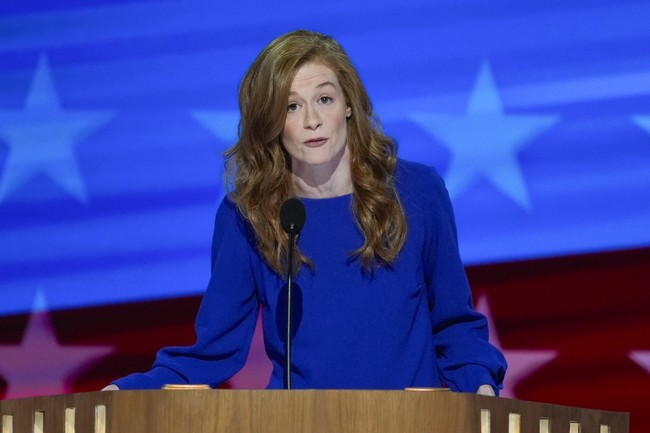
Quick take: I walk through a CNN interview where Michigan Senate candidate Mallory McMorrow struggles with past posts, comparisons she made to Nazi Germany, and inconsistencies about when she became a Michigan voter, highlighting why voters deserve straight answers from anyone seeking federal office.
CNN’s interview pushed a Michigan Democrat into a corner over old social media posts and comments that undercut her message of unity. The exchange centered on tweets and reshared posts in which McMorrow criticized rural Americans and praised coastal perspectives, a line of attack that looks bad in a state with a large working-class population. Voters in Michigan want clarity, and the interview raised real questions about judgment and tone.
He asked her about a post she re-shared that said “all of this talk about coastal elites needing to understand more of America has it backwards.” The same user went on to write several more posts she endorsed, including one that said “many rural Americans have isolated themselves from the rest of the country. They live in very unrepresentative areas.”
McMorrow had earlier echoed that thread, writing, “Trump’s base fears what they’ve never seen.” That line reads as dismissive toward millions of voters who feel ignored by the political class. When a candidate frames an entire group as fearful or backward, it gives opponents a clear opening and makes persuading swing voters much tougher.
When asked whether she still stood by that sentiment, her reply tried to shift the focus to mutual understanding and to criticize former President Trump for dividing people. Her attempt to reframe was weak at best and sounded like political damage control. Saying “we all need to understand each other better” rings hollow if someone’s previous posts branded large swaths of Americans as isolated or unrepresentative.
“I think we all need to understand each other better,” she said. Then she attacked Trump for “weaponizing” people against each other. Those words won’t erase the impression left by the original posts, and they feed the narrative that Democrats look down on non-coastal voters.
“I’ve lived all over the country. I’ve met a lot of different people, and I stand by that. Was it the most eloquent tweet I’ve ever tweeted? No.”
That defense is awkward: claiming broad experience while admitting a post lacked eloquence doesn’t address the substance. It also leaves a gap between her stated values and the public record of what she amplified. In a tight primary, these kinds of mixed messages can cost credibility with both primary and general election voters.
Her remarks went further when she compared the political climate to historical extremism, saying she saw “parallels between Nazi Germany and what’s happening under the Trump administration.” For many conservatives, equating American political disagreement with the horrors of Nazi Germany is not only inaccurate but offensive. It underlines a tone among some Democrats that treats political rivals as moral monsters rather than fellow citizens with different views.
“To convince people if you’re not doing well, it’s someone else’s fault, is an incredibly dangerous place to be in,” she asserted. That line accuses millions of voters of being manipulated rather than acknowledging genuine economic or cultural grievances. Claiming that people have simply been duped is a poor basis for building broad, effective coalitions.
Raju pressed McMorrow on another concrete problem: her residency and voting timeline. In her memoir she wrote she “permanently relocated” to Michigan in 2014, yet there are posts suggesting she voted in California in 2016. That discrepancy is textbook campaign trouble—opponents will use it to paint a picture of inauthenticity. Voters expect consistency about where a candidate lived and when they chose to vote there.
“Like a lot of millennials, moving takes time,” she replied, saying work and relationships spread across states delayed her registration in Michigan until August 2016. Explaining logistics is one thing, but it doesn’t square the autobiographical claim of a permanent move two years earlier. When a candidate’s timeline shifts under questioning, it invites skepticism instead of confidence.
Raju highlighted that she once criticized someone for voting after moving, calling that behavior “illegal,” and McMorrow now said yes, voting in the wrong place intentionally is illegal. But she insisted she wasn’t a “permanent” Michigan resident until 2016 despite earlier wording. That sort of back-and-forth will stick in voters’ minds as a lack of straightforwardness.
The overall impression from the interview is a candidate trying to walk back a mix of tone-deaf cultural comments and factual inconsistencies. Saying you stand by having met people everywhere doesn’t erase language that reads as dismissive of many Americans’ values and experiences. For a Democrat in a swing state, that matters a lot.
McMorrow’s attempts to reframe or explain do not erase the original statements or the optics they create. Turning to attacks on Trump or pointing at media narratives won’t neutralize the damage when many voters feel spoken about rather than spoken to. In a close primary and an even closer general election environment, voters will judge whether a candidate speaks for them or above them.
Add comment