
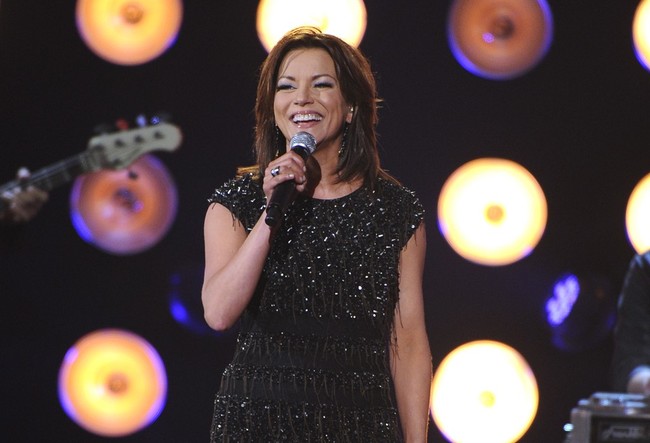
I explain why Martina McBride pulled out of the Great American State Fair, how fans reacted, the distinction between Freedom 250 and the official America250 commission, the social media fallout including exact quotes from McBride, and the broader questions this raises about artists, politics, and public celebrations.
Country star Martina McBride announced she would not perform at the Great American State Fair on June 25th, saying she felt “misled” about the event’s nature. She wrote, “I would like to talk to you and clear the air,” and followed with, “I will not be performing at the Great American State Fair on June 25th. I was presented with an opportunity to perform at a nonpartisan event, but that turned out to be misleading.” Her statement set off a quick wave of criticism from fans who saw the pullout as a surrender to political pressure.
The fair is organized by Freedom 250, a group distinct from the congressionally directed America250 commission, and that distinction matters politically. Freedom 250 has ties to Trump-aligned organizers, while America250 was designed to be explicitly bipartisan and nonpartisan. McBride’s claim that she was expecting a “wholesome, nonpartisan celebration” turned into a flashpoint because many see commemorating America’s 250th as beyond ordinary politics.
Fans and commentators were blunt. One message circulating read, “If we had cowards like you 250 years ago, we would still be a British colony,” and another asked, “How is celebrating America ‘partisan’?” Public reaction made clear that celebrating national milestones can be treated as a litmus test for loyalty by segments of the audience. That pressure is real, and performers now face a choice between principle and public perception.
McBride also emphasized her role as an advocate when she said she has “been blessed with the opportunity to be a voice for those who have felt like they didn’t have one.” She added she was “saddened that any fan who has been moved by my music may now feel like I’m abandoning the meaning behind those songs.” That phrasing highlights a tension: artists who see their work as personal and community-minded can still be swept into political battles over who is allowed to celebrate America.
Social media responses were swift and severe; McBride’s post on X drew heavy backlash and was widely criticized as “ratioed into oblivion.” Talk show voices urged her not to back down, arguing the 250th anniversary of the nation is a once-in-a-lifetime occasion. One host told her, “Martina — don’t let people bully you. This is the 250th anniversary of our great land. 250 years from now, those who perform to celebrate it will be remembered. To me, this seems like a great opportunity.”
Critics noted past performances where McBride separated event hosts from honorees, pointing out she has performed for former presidents and at the White House without apparent political controversy. Observers asked why those past appearances were acceptable while this gig was framed as problematic. This line of questioning underlines the double standard some fans perceive when entertainers decline invitations tied to politically sensitive organizers.
Supporters of the singer argued that the specifics of an event and who organizes it do matter, and that artists have a right to choose engagements that match their values and public image. Opponents argued that pulling out of a community-style state fair robs audiences of a unifying celebration. Both positions reflect how fraught public events have become when organizers carry political associations.
https://x.com/martinamcbride/status/2060150008045822053
The broader debate here isn’t just about one show on one date; it’s about whether national celebrations can remain neutral when political actors claim them. The Great American State Fair is framed as a family-friendly showcase of state pavilions, food, rides, and performances from across the country. Yet once an event is linked to partisan players, the line between cultural celebration and political statement gets blurred in the public eye.
Fans questioned authenticity and courage, asking where the “old Martina McBride” went and why she would pass on a chance to sing material that celebrates American life. Others urged empathy, noting the complexity artists now face when organizers and sponsors carry political baggage. That split reaction captures the current climate: public figures are judged both for their choices and for the people who stand behind the events they join.
Embedded public reactions and posts from social platforms circulated alongside commentary about legacy and future memory, and the debate showed no sign of cooling. The controversy reveals how quickly a performer’s decision can become a proxy for larger cultural fights, and how celebrations meant to unite can instead amplify division when politics enters the picture.


Add comment