
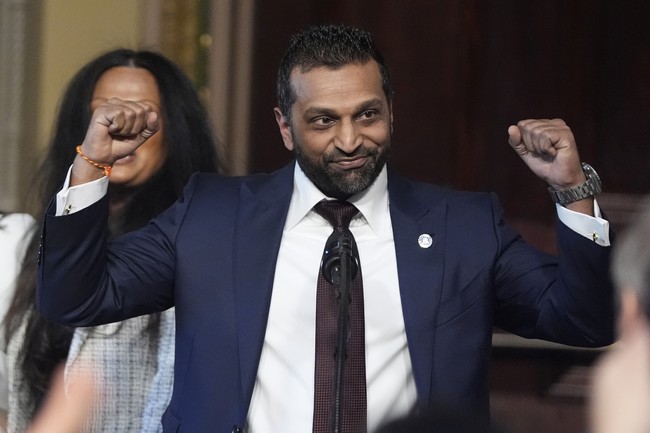
This article breaks down a recent political dust-up in Minnesota where Governor Tim Walz publicly praised a fraud enforcement effort, only to be publicly corrected by FBI Director Kash Patel and others who point to investigative journalists and federal agents as the real drivers. It tracks the timeline, names key investigators, and questions political credit claims while keeping close to the original quotes and reported facts.
Politics often rewards the loudest photo-op rather than the hardest work, and this episode fits that pattern. Governor Tim Walz posted praise for state agencies after federal raids addressing suspected fraud, but that praise drew an abrupt response. FBI Director Kash Patel pushed back, and several journalists and whistleblowers had been doing the investigative groundwork for years. The result is a public tug-of-war over who deserves credit for exposing large-scale fraud schemes.
The governor’s social media post said exactly this: “Today’s raids by state and federal law enforcement happened because our state agencies caught irregular behavior and reported it. That’s how the system is supposed to work, and our agencies will keep at it as long as there are fraudsters around to put behind bars.”
That quote triggered swift reaction because it implied primary state ownership of the entire operation, when federal authorities and independent investigators had already pushed the issue into the spotlight. Investigative reporting and whistleblower testimony stretching back years made prosecutions possible and increased federal scrutiny. People who risked reputation and safety to document fraudulent daycare operations and other schemes deserve recognition far beyond a single gubernatorial tweet.
Among the key figures who kept the story alive were former state employees and local journalists who flagged suspicious activity years before this recent enforcement action. Whistleblowers began raising alarms about fake daycare centers as early as 2015, and independent reporting continued through 2025 and beyond. A steady drumbeat of documentation, interviews, and on-the-ground reporting created pressure that federal investigators eventually acted upon. That sequence matters when determining who actually built the case that led to search warrants.
Federal search warrants were executed in coordinated raids on about 20 childcare centers early one morning, according to official statements describing a renewed effort to address alleged COVID-era fraud schemes. Reports note that the FBI, along with federal, state and local law enforcement, carried out court-authorized searches as part of a larger investigation. No arrests were reported at the time of those raids, which suggests warrants were aimed at gathering evidence for potential charges. Those are federal actions with federal procedures, not a ceremonial state press conference.
Outside investigators and journalists, including local deep dives and on-the-ground documentation, played a decisive role in identifying patterns and providing leads. Their reporting moved the issue from scattered complaints to an evidentiary trail that federal investigators could follow. That grassroots work is often messy, dangerous, and unglamorous, yet it’s the backbone of many major criminal investigations. A governor taking a victory lap without acknowledging those contributions looks like opportunism more than leadership.
Politically, this episode also underscores a broader problem: when public officials grab headlines for enforcement actions they did not originate, accountability gets blurred. Governors and other politicians routinely attach themselves to the closure of messy problems they did not solve, while those who did the legwork remain in the background. For Republicans and conservatives watching the cadence of public credit, the concern is both practical and cultural—public trust suffers when officials claim wins that others achieved through sustained effort and risk.
There is a chain of effort here: whistleblowers who reported internal problems, journalists who documented and amplified the pattern, state lawmakers who pushed for inquiries, and federal agents who executed warrants. Each link was crucial. A public narrative that overemphasizes a single political actor erases that chain and rewards photo-ready opportunism. That matters not just for fairness, but for public confidence in how enforcement and oversight genuinely work.
Governor Walz’s post and the subsequent public correction from FBI leadership sequence into a familiar storyline: politics first, modesty last. When federal law enforcement and independent reporters unite to expose organized fraud, the appropriate response from elected officials is to acknowledge the effort and assist where needed, not to seize sole credit. The people who did the tedious, risky work deserve the spotlight before any podium photo session does.
Local reporting and whistleblowers set the stage for these raids and should be recognized for moving the issue forward at considerable personal and professional cost. Federal agents carried out the warrants and will handle any subsequent charges through federal channels, and that procedural reality deserves to be stated plainly. The public conversation about credit and accountability continues, but the facts about who did the investigative heavy lifting are clear to anyone paying attention.
Add comment