
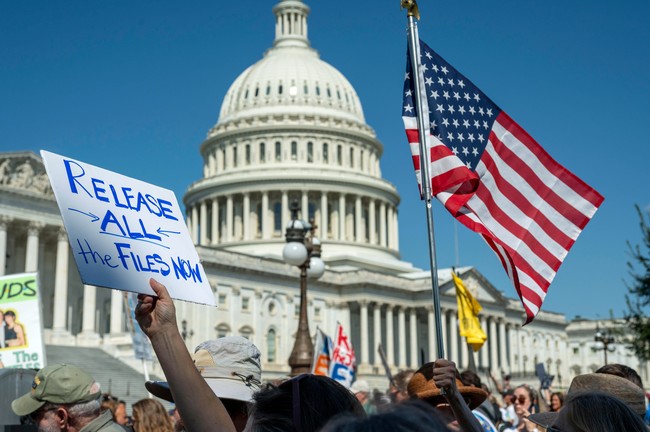
The Justice Department’s inspector general has opened an audit to check how the DOJ complied with the Epstein Files Transparency Act after millions of pages were released, raising questions about redactions, timing, and the protection of victims’ privacy.
Congress and the president moved quickly last year to force the release of documents tied to Jeffrey Epstein, responding to long public pressure for transparency. The law set tight deadlines and strict disclosure rules, and the Justice Department scrambled to identify and produce material from its files.
The DOJ ultimately turned over roughly 3.5 million pages, but the release timeline and the handling of sensitive information drew criticism. Alleged victims complained that photos and identifying details were not properly redacted, and that records about people tied to Epstein were not always fully disclosed.
The department faced legal hurdles before some categories of material, like grand jury transcripts, could be made public, but those obstacles were cleared and the releases proceeded. Officials have defended their efforts, saying they worked under an unrealistic deadline while trying to follow the statute’s requirements.
Now the Justice Department’s Office of the Inspector General is auditing the agency’s compliance to determine whether the DOJ met the law’s standards in identifying, redacting, and releasing records. The review aims to assess how the department collected responsive material and whether redaction decisions matched the law’s limits.
Department of Justice (DOJ) Deputy Inspector General Performing the Duties of Inspector General William M. Blier announced today that:
The DOJ Office of the Inspector General (OIG) is initiating an audit of DOJ’s compliance with the Epstein Files Transparency Act. Our preliminary objective is to evaluate the DOJ’s processes for identifying, redacting, and releasing records in its possession as required by the Act. To accomplish this preliminary objective, the OIG plans to focus on reviewing (1) the DOJ’s identification, collection, and production of responsive material; (2) DOJ guidance and processes for redacting and withholding material consistent with the requirements enumerated in the Act; and (3) DOJ’s processes for addressing post-release publication concerns. If circumstances warrant, the OIG will consider addressing other issues that may arise during the course of the audit.
Consistent with the requirements of the Inspector General Act of 1978, as amended, the OIG will issue a public report with the audit’s results when our work is complete.
Republicans pushed hard for these disclosures to bring sunlight to investigations that many felt were handled too quietly for too long. The goal was clear: make the facts available so the public can see how law enforcement handled Epstein and whether others were involved and shielded.
Victims and their advocates remain focused on privacy and dignity, insisting that public accountability must not come at the cost of exposing survivors. Those concerns help explain why the OIG will pay special attention to post-release publication issues and the department’s redaction rules.
DOJ officials argue they did their best under a compressed schedule imposed by lawmakers, and they say some delays were unavoidable because of court processes and the sheer volume of material. Still, critics point to missed redactions and the late production date as evidence that the department needs to tighten its procedures.
The audit will look at internal guidance on how staff identified responsive records and made decisions about withholding or redacting material. It will also review whether the DOJ adequately documented its choices and whether any additional steps should be taken to protect victims while fulfilling transparency obligations.
For Republicans, the audit serves two purposes: it holds the DOJ accountable for following the law, and it ensures that the reforms Congress demanded actually work in practice. Oversight is supposed to be a reality check on agencies that could otherwise be left to make unilateral decisions about sensitive disclosures.
As the OIG conducts its review, observers on all sides will be watching for clarity on a few key points: timing of the releases, consistency of redaction practices, and whether information about associates or conspirators was handled appropriately. The forthcoming public report should answer some of those questions and recommend fixes if the audit finds problems.
The broader political moment matters too. The Epstein releases came amid intense public scrutiny and political pressure, and how the DOJ handled that pressure will be part of the story the inspector general tells. For now, the audit signals a willingness to examine process, not just outcome, and that will be important for both victims and the public interest.



Add comment