
This article examines the Department of Homeland Security’s rebuke of a local TV station’s coverage after an immigration arrest at a church food drive, explains what DHS says actually happened, and looks at how the outlet and church framed the incident for the public.
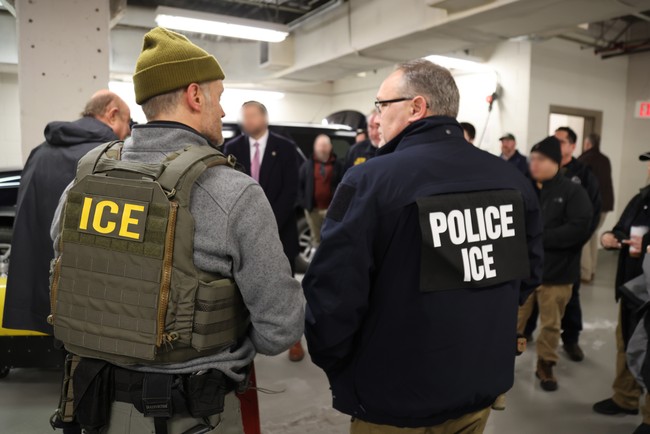
The Department of Homeland Security publicly criticized KTLA for what it called misleading coverage of an enforcement action at a Los Angeles church food distribution. DHS argued the station presented a sympathetic narrative without including the department’s account, and that omission changed how viewers perceived the scene.
Video of the incident shows officers pursuing Carlos Chavez-Guzman at an event on church property, and the footage became a focal point for debate over enforcement near religious institutions. The chase was captured amid a crowd, and some bystanders—including children—were clearly visible and audible as the suspect attempted to evade officers.
Fleeing from law enforcement is explicitly a federal crime, and DHS stressed that fact while pushing back on the local outlet’s reporting choices. The department maintains the nature of the arrest and the individual’s immigration history matter for understanding why agents intervened in that location and time.
KTLA and church leaders described the episode as an aggressive intrusion during a sacred event, portraying the detained man as a harmless volunteer helping with children’s ministries. That version of events resonated emotionally with viewers and helped shape immediate public outrage, since sacred spaces and charitable activities naturally draw strong protective instincts.
In response, DHS said the station failed to include an official statement it had already provided, a statement the agency says clarifies that Border Patrol did not target the church or its parking lot as the objective of the operation. “This is dishonest reporting by @KTLA,” the department wrote when calling out the outlet, and it provided a screenshot to back up its claim.
“KTLA omitted our official statement, sent to them yesterday, which clearly states that U.S. Border Patrol did NOT target the United Methodist Church or its parking lot in North Hills, California,” DHS wrote, and it urged the outlet to correct its coverage. The department also added a sharp line about the permanence of screenshots: “We look forward to them updating their story, but screenshots are forever.”
The DHS release laid out additional details about the individual involved, including that Chavez-Guzman had been removed from the country in 2016 and chose to flee from officers during the encounter. “Carlos Chavez-Guzman, an illegal alien from Mexico who was previously removed from the United States in 2016, chose to flee from law enforcement—a federal crime—leading officers on a foot chase before his arrest,” the department revealed, adding context that the local narrative did not prominently include.
Beyond that arrest, DHS said the operation also led to other enforcement results. “This operation also resulted in the arrest of two other individuals from Mexico who have violated the immigration laws of our country,” the statement continued, indicating the event was broader than the emotionally focused video clip suggested.
Local leaders posted their own descriptions of the scene, calling the incident a forced entry onto church grounds and framing the detained man as a regular volunteer or community member. Those posts and the station’s early coverage amplified the impression of a raid at a charity event, which in turn escalated criticism of federal agents from local activists and congregants.
The department also pointed out alternative options available to people in similar situations, noting programs that allow voluntary return through official channels with support. DHS highlighted that those avenues exist to help avoid chaotic confrontations and to manage repatriation in an orderly way, presenting a policy angle often left out of immediate emotional coverage.
After receiving the DHS statement, KTLA later updated its story but placed the department’s response well down in the article, which critics say reduced its visibility and impact. That decision reinforced DHS’s complaint that the outlet’s original framing dominated public perception before the agency’s explanation could be seen by most readers.
The clash over this story reflects a larger tension in coverage of immigration enforcement: emotionally charged scenes can overshadow legal facts and operational details. For residents and religious institutions, the visceral reaction to agents on church property is understandable, but public debate should include the full sequence of events and the reasons authorities acted.

Add comment