
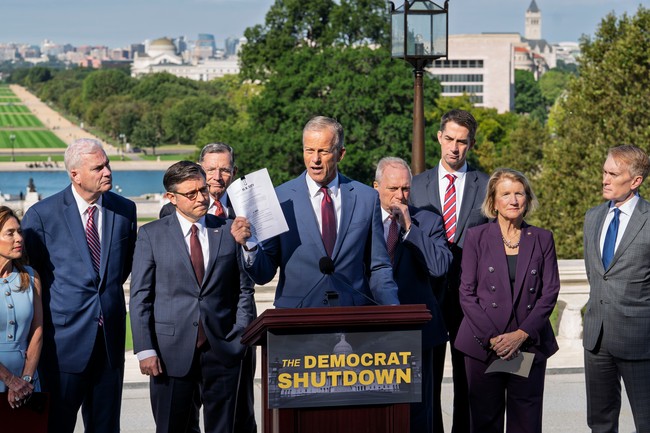
The House voted 217 to 214 to accept the Senate’s amendments to the spending package, ending a brief partial shutdown after roughly three and a half days and funding most of the federal government through FY 2026, while leaving the Department of Homeland Security on a short-term continuing resolution for further negotiations.
Poor Shutdown 2.0 — we hardly knew ye. The House’s narrow margin shows how fragile majority coalitions can be when high-stakes items like immigration and border security get wrapped into must-pass funding bills. With regular order restored for most departments, attention now turns to DHS and the contentious debates that are sure to follow.
The Senate package funds the government through September 30, 2026, except DHS, which received just a 10-day continuing resolution to buy time for lawmakers to hammer out a deal. That limited extension reflects how sharply divided members are over immigration enforcement and border security policy, and it sets up a tense window of negotiations in which both parties will jockey for leverage.
Some lawmakers crossed party lines on the final agreement, illustrating the fractures within both caucuses: 21 Democrats voted with Republicans to accept the Senate amendments, while 21 Republicans opposed the package. Those numbers are a reminder that votes on funding are rarely simple partisan affairs and that individual members will weigh local politics, constituent pressure, and policy priorities when the stakes are this high.
The DHS clock creates an immediate pressure point. Ten days is not much time to resolve disputes over border policy, asylum processing, and enforcement resources, yet it forces leadership on both sides to prioritize negotiations instead of letting the issue drift into months of brinkmanship. Expect intense backroom talks, public messaging campaigns, and strategic concessions as lawmakers try to lock down a compromise before the short extension expires.
RELATED: Senate Votes on 5-Bill Minibus After Trump, Dems Sequester DHS Funding Ahead of Partial Shutdown
Breaking: President Trump Brokers Last-Minute, Short-Term Deal Preventing Partial Government Shutdown
Those related developments set the context for the House vote: senators had already moved a five-bill minibus, and some high-level intervention pushed leaders toward a quick resolution to avert a longer shutdown. Political leaders on both sides will claim credit for avoiding prolonged disruption, but the real test is whether the DHS conversation produces policy changes that address border crises and restore public confidence in immigration enforcement.
Notably, there is also a visible split between House and Senate Democratic leaders on how to approach DHS funding and immigration matters, which complicates unified bargaining for the minority party. When the minority is not speaking with one voice, it gives House Republican negotiators an opening to press for stricter enforcement provisions and clearer funding guards. Conversely, a fractured majority can make it harder for the GOP to present a consistent set of demands.
Capital tactics will evolve over the next week as members and aides map leverage points: continuing resolutions, policy riders, earmark tradeoffs, and targeted funding carrots are all tools that could be used to build a coalition around a final DHS package. The short CR buys time, but it also creates urgency that may force compromises neither side prefers. Timing, messaging, and votes will all be critical in shaping the final outcome.
The public and affected agencies will want stability, especially after any shutdown even a few days long disrupts federal operations and undermines confidence. Republicans will emphasize the need for firm border security measures and accountability for enforcement, while Democrats will press for humanitarian protections and due process safeguards. Those competing priorities will define the bargaining landscape over the coming days.
Later, top Democrats will host a bicameral forum on DHS’s immigration crackdown. Speakers include the brothers of Renee Good, who was shot and killed by an Immigration and Customs Enforcement officer last month.
Editor’s Note: This article was updated post-publication for clarity.


Add comment