
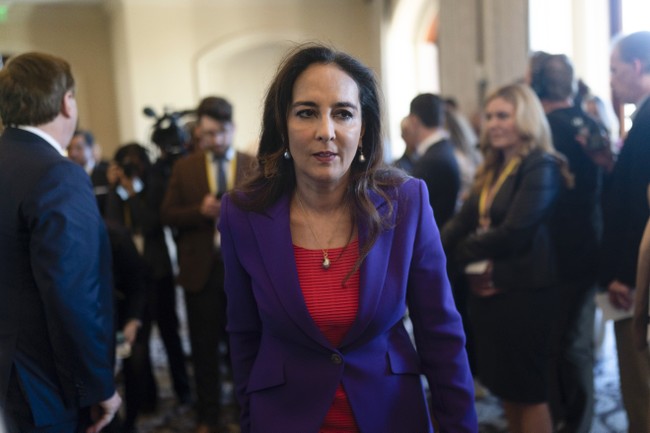
This piece looks at the controversy over Minnesota’s same-day voter registration vouching rules, the demand for records by Harmeet Dhillon, and why conservatives see this as a clear election-integrity issue deserving federal scrutiny.
Harmeet Dhillon Drops the Hammer on That ‘Vouching’ for Voters Question in Minnesota
Minnesota has become ground zero for a larger debate on election integrity after reports surfaced about same-day registration practices that let a voter vouch for multiple other voters. The rule allows a registered voter to vouch for up to eight people in the same precinct, and employees of residential facilities can vouch for an unlimited number of residents. That setup should make anyone who cares about secure elections uneasy.
Scott Presler brought renewed attention to the vouching rule, and his questions have been taken up by attorneys and activists who want a closer look at how these procedures are being used. The person doing the vouching must swear under oath that the vouched-for person lives in the precinct, but skeptics point out how easy an oath is to game. When you put large numbers and same-day registration together, you open the door to confusion and potential abuse.
Assistant Attorney General Harmeet Dhillon stepped in with a formal demand for records from Minnesota Secretary of State Steve Simon, asking for documentation covering federal elections over the past 22 months. Dhillon specifically requested records supporting or documenting same-day registrations and anything tied to the vouching framework under Minnesota Stat. 201.061, Subd. 3. She set a short deadline—15 days—so the state would demonstrate compliance with federal law.
Dhillon said, “This system seems facially inconsistent with the Help America Vote Act of 2002. We’ll see!” That quote has energized conservatives who believe federal standards should prevent state-level loopholes. From a Republican perspective, the point is simple: federal election law exists to set minimum safeguards, and any system that appears to sidestep those safeguards needs transparent answers and swift fixes.
Critics note that the vouching rule puts a lot of trust in the honesty of whoever signs the oath, and that’s a risky way to run elections when turnout and stakes are high. There are supposed safeguards, but skepticism runs deep—especially after other fraud and social-services scandals have already put Minnesota in the spotlight. Where confidence in the process drops, so does faith in outcomes, and that’s not healthy for democracy.
Dhillon asked for material that would cover the 2024 primary and general election cycles among others, demanding evidence that Minnesota followed HAVA requirements. The aim is to see whether paperwork, logs, or other supporting documents substantiate same-day registrations that relied on vouching. If a pattern of problematic registrations shows up in the records, that will justify further federal attention.
Conservative activists applauded the move, arguing this is a necessary step toward restoring integrity and transparency to the system. Presler publicly cheered the action, calling it a victory for accountability—an important signal to states that practices inconsistent with federal rules will be challenged. Many Republicans see this as a test case for enforcing nationwide election standards rather than letting variable state practices create uneven security.
Minnesota officials assert they have multiple safeguards in place to prevent abuse of vouching, but not everyone is convinced those safeguards are effective in practice. Bill Glahn of the Center for the American Experiment put it bluntly: “it’s like murder’s illegal, but it happens all the time.” He added, “It’s a penalty of perjury,” he said. “You signed an oath, but if you signed as Mickey Mouse, they’re not going to find you.”
Federal agencies are already investigating other fraud allegations in Minnesota, and this new focus on vouching rules only adds to the workload state officials will have to explain. From the Republican angle, the practical lesson is straightforward: rules that make voting easy are fine, but not if they make it easy to exploit the system. Transparency and compliance with federal law are non-negotiable if public confidence is to be preserved.
The demand for records is not an automatic indictment, but it is a necessary probe. If the documentation shows gaps or troubling patterns, reforms should follow to ensure same-day registration serves voters without compromising the integrity of the rolls. For now, conservative voices will keep pushing for answers and for clear standards that protect both access and accuracy.

Is there any doubt that democrats cheated they been doing it for so long it’s like second nature to them. This is why they don’t want voter IDENTIFICATION made mandatory because they couldn’t cheat as much. Anyone who thinks there is election fraud is the biggest problem in this country. Democrats been lying and cheating on everything for decades same old assholes have been in government for decades and definitely should be investigated and prosecuted for all their corruption. Even money laundering and massive kickbacks. How come every democrat became a multimillionaire in 4 years of the Biden democrats administration they all need to have a forensic financial investigation aka colonoscopy into all their assets and finances and extra homes expenses cars and Yachts.