
The piece examines the misuse of Holocaust comparisons in modern political debate, pushes back against hyperbolic language, and asks a blunt question: “Where are the gas chambers?” It stresses the difference between lawful immigration enforcement and the state-sponsored genocide of Nazi Germany, argues that comparisons to Hitler cheapen real suffering, and makes a Republican case for debating policy, not engaging in inflammatory historical analogies.
“Trump is Hitler.” “The Republican Party are Nazis.” “ICE is the Gestapo.” Those lines get thrown around like cheap props in every argument. They are false and, more importantly, they are insulting to the memory of real victims of real atrocities. Using those phrases casually is a moral failing, not a rhetorical point.
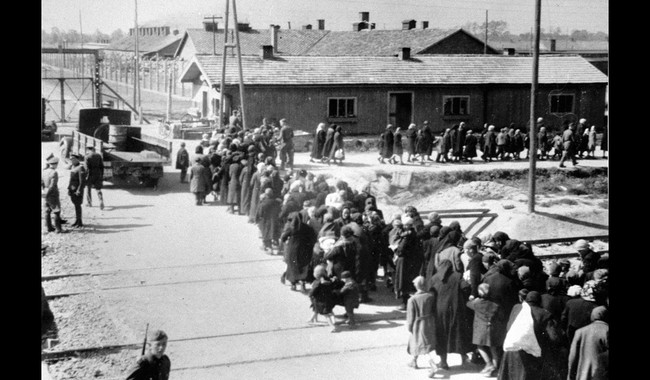
The Holocaust was a uniquely horrific, state-directed campaign that resulted in the murder of six million Jews. Nazis deported people from 21 countries, packed them onto trains, and sent them to camps such as Auschwitz, Buchenwald, Dachau, Mauthausen, Ravensbrück, Sachsenhausen, Flossenbürg, Neuengamme, and Bergen-Belsen. Death camps like Auschwitz-Birkenau, Treblinka, Bełżec, Sobibór, Chełmno, and Majdanek were industrial scenes of mass murder.
When trains arrived at those camps, SS officers performed selections: some were sent to forced labor and others to immediate extermination. Victims were told they were heading to showers; instead they entered gas chambers. Men, women, and children—people whose only “crime” was being Jewish—were killed, and many were subjected to medical experiments by figures like Dr. Joseph Mengele.
Some victims never reached camps at all; they were shot in mass executions. The victims included lawyers, doctors, judges, athletes, parents, and children. Their countries of residence did not protect them. Most of the world either did not know or did not act, and that global failure is part of the tragedy.
That was fascism, that was Nazism, that was Hitler. Those words describe a system of totalitarian violence and genocide, not political disagreements or immigration policy debates in a democratic republic. When we borrow those terms to describe routine policy enforcement, we dilute their meaning and insult survivors and their descendants.
Back in the present, the claim that contemporary immigration enforcement equals the Holocaust is simply false. There is a legitimate debate about border security and the rule of law, and those arguments deserve sober, factual discussion. Equating immigration rules or enforcement agencies with genocide is not argumentation; it is rhetorical inflation.
Liberal activists often make extreme claims that read more like poker bluffs than carefully researched history. Either they fail to check the facts, or they knowingly exaggerate for shock value. Both options are irresponsible. If your side wants to persuade, use facts and moral clarity rather than sensational analogies.
Jewish people and Holocaust survivors understandably respond with pain when the Holocaust is compared to routine political conflicts. Some survivors still carry concentration camp numbers tattooed on their arms, living reminders of what real state-led persecution looks like. Casual comparisons to that suffering are hurtful and wrong, and they create righteous anger among those whose families were murdered.
There is a clear legal framework for entering the United States: come through a port of entry, follow the procedures, and be admitted lawfully. People who enter illegally break those laws, and some of those who cross unlawfully commit violent crimes. Separate those facts from moralizing hyperbole. The existence of law and enforcement does not equate to extermination.
Ask the critics directly: Where are the gas chambers? Where are the firing squads? Those are not rhetorical flourishes; they are literal devices of mass murder that defined the Holocaust. When people equate enforcement of immigration law with genocide, they are making an obscene comparison that erases historical specificity and dishonors victims.
The Jews of Europe were not deported because of immigration infractions; they were targeted for total annihilation because of a racist, genocidal ideology. That is a crucial distinction. Conflating modern policy disputes with the systematic extermination of entire populations is a moral and intellectual mistake.
Political debate in a free society should be vigorous, even harsh, but it should also be honest. If you disagree with an elected official or a party, challenge their policies, their records, and their priorities. Don’t reach for Holocaust analogies that are historically and morally inappropriate.
Keep the memory of six million victims sacred by refusing to trivialize it. Insulting history does not make your point stronger; it reveals a weakness in your argument. Where are the gas chambers? That blunt question should stop the cheap comparisons cold and bring the conversation back to real policy issues that actually matter.



Add comment