
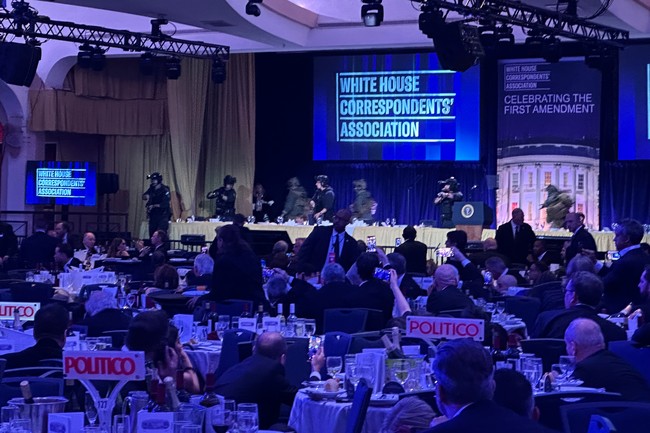
Cole Allen, the man accused of opening fire near the White House Correspondents’ Dinner, now faces a federal grand jury indictment charging him with attempted assassination of President Donald J. Trump, weapons offenses, and related violent-crime counts; this article lays out the indictment’s allegations, the statutes invoked, the courtroom posture, and what to watch next while keeping the legal language and key quoted material intact.
The grand jury returned a four-count indictment alleging that on or about April 25, 2026, Cole Tomas Allen knowingly attempted to kill the President of the United States. Federal prosecutors charged him under 18 U.S.C. § 1751(c) for “Attempt to Assassinate the President of the United States,” asserting a direct threat to a protected official. The indictment is specific about dates, locations, and the official targeted, which elevates the case to the highest level of federal concern. Prosecutors emphasize the gravity of an attack aimed at the commander in chief and the ripple effects such an act would have on national security and public safety.
Alongside the assassination count, the indictment includes an assault charge for using a deadly weapon against a federal officer or employee. That count alleges Allen forcibly assaulted, intimidated, and interfered with a government official with a shotgun in his possession, with the alleged conduct tied directly to the officer performing official duties. Another count details the interstate transport of weapons and ammunition from California to Washington, D.C., naming specific firearms by make, model, and serial number. That charge frames the weapons movement as part of a planned criminal scheme intended to facilitate violent felony offenses.
The indictment also accuses Allen of using, carrying, brandishing, and discharging a firearm during and in relation to a crime of violence, invoking 18 U.S.C. § 924(c)(1)(A). That statutory tool is routinely used to tack on mandatory sentencing consequences when a firearm is tied to violent federal felonies. Taken together, the counts create a stacked set of potential penalties that federal prosecutors can leverage to ensure the defendant faces a long and consequential legal exposure if convicted. The factual allegations in the indictment are designed to show preparation, transport, and the actual use of weapons in furtherance of an alleged plot.
Federal law makes the penalties for attempting to kill or kidnap certain protected officials severe, and the indictment quotes statutory language to underline the consequences. “Whoever attempts to kill or kidnap any individual designated in subsection (a) of this section shall be punished by imprisonment for any term of years or for life.” That language highlights why the Justice Department treats alleged attacks on the president with the highest level of prosecutorial force. The quoted statute is included in the indictment materials and frames the possible sentencing range for the assault on a public official.
According to the filing, the weapons identified include a Mossberg Maverick 88 12-gauge pump action shotgun and a Rock Island Armory 1911 .38 caliber semi-automatic pistol, plus a stated quantity of ammunition. The indictment links these items to the alleged intent to commit multiple felonies, including assassination and assaults on federal employees. By specifying serial numbers and ammunition counts, the grand jury document aims to demonstrate a chain of evidence linking the defendant to the weapons and the alleged plan. Those specifics also let prosecutors meet the legal threshold for interstate-transport and firearms-related offenses.
Procedurally, this federal indictment replaces the earlier magistrate complaint and moves the case to U.S. District Court under a district judge’s supervision. The indictment closes out the preliminary magistrate matter and sets the next formal steps: arraignment, potential plea discussions, and pretrial motions. The case is scheduled for an arraignment date, and as of this writing the defendant remains in federal custody pending the next hearing. Federal custody means the government’s detention determination was sustained, reflecting the perceived flight risk or danger to the community.
From a Republican viewpoint, charges of this magnitude against someone accused of attempting to kill President Trump demand a no-nonsense federal response and clear accountability. The allegations describe a direct threat to the president and to federal officers, and Republicans generally support vigorous prosecution in cases that threaten the office and safety of the nation. At the same time, the system of justice requires that prosecutors prove guilt beyond a reasonable doubt, and the accused is entitled to all constitutional protections throughout the process.
Observers should watch for the government’s evidentiary disclosures, any pretrial detention motions, and whether federal prosecutors pursue enhancements tied to attempted assassination and firearm discharge. Defense strategy, expected motions to suppress or challenge evidence, and whether state authorities bring parallel charges could alter the litigation landscape. This matter will likely remain in the headlines as the court process unfolds and as additional facts are disclosed in filings and hearings.
The case is set for arraignment on May 11, and the indictment’s charges ensure this will be a major federal prosecution with significant legal and political implications. Serious federal counts like these bring mandatory sentencing elements and a prolonged litigation timeline, so further developments will be closely followed in both legal and political circles.



Add comment