
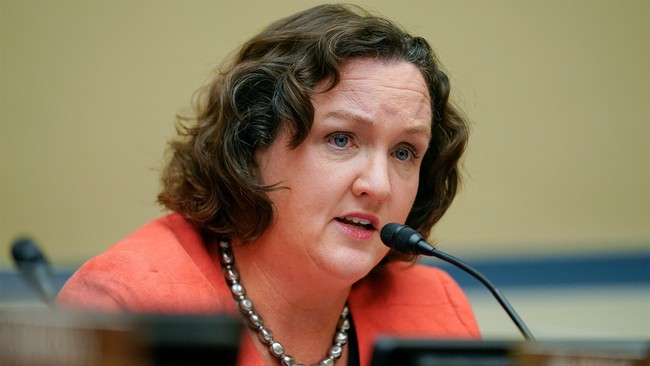
Katie Porter is running for California governor and trying to recast herself with a new ad and interviews, but the campaign’s image work keeps colliding with viral moments and unflattering clips that reinforce doubts about her temperament and credibility.
The race in California is tight, and Porter is trying to change the narrative around her candidacy. Voters remember viral incidents and hot-mic clips that paint her as combative, and those impressions are hard to erase with a staged commercial. This article examines how those moments undermine the ad’s attempt to humanize her.
Porter’s new ad leans on relatability: she pushes a shopping cart, drives an old car, and positions herself as an everyday Californian who “knows what you’re going through.” The spot also leans on the familiar Democrat themes of opposing the wealthy and attacking President Donald Trump, repeating a message that has become predictable. Trying to bundle authenticity and partisan grievances into thirty seconds hasn’t proven convincing so far.
Her campaign even inserts self-deprecating elements to nod to past controversies, including a direct allusion to a viral clip where she told a staffer to “get out of my f**king shot.” That choice comes off as tone-deaf to many voters who saw the original, unedited moments as revealing. Adding a laugh track doesn’t erase the memory of the raw footage; it only highlights the gap between polished messaging and spontaneous behavior.
Warning for graphic language:
Porter has defended the decision to include that reference, saying she wanted to show self-awareness and a sense of humor about the past. But controlled campaign moments rarely match the emotional power of viral clips that appear candid and unrehearsed. People tend to trust unvarnished video more than an ad that tries to rewrite context with a wink.
She recently told a reporter that the joke in the ad was meant to show change and humility, yet interviews since then have produced more awkward moments that reinforce concerns rather than soothe them. One clip saw her invoking Trump again with blunt language, saying everything he touches “turns to s***,” which plays to base rhetoric but risks alienating moderate voters. Critics point out that rhetorical flourishes cannot paper over unfavorable character impressions.
Temperament matters when voters decide who should run a large, complex state like California, and the recurring viral clips raise real questions about how she handles pressure and criticism. Supporters say those moments are blown out of proportion and that Porter’s policy ideas deserve more attention. Opponents counter that temperament is a legitimate metric for leadership and that repeated lapses cannot be shrugged off as isolated incidents.
At the same time, political reality bites: Porter is not leading in every Democratic poll, and the campaign seems eager to shift the conversation. Airing a commercially polished image is a standard move, but when the original, raw footage is widely shared, the ad can come across as too little, too late. Voters who already associate her with volatility may see more of the same when she keeps putting herself in the spotlight.
Her critics highlight an intangible, unsettled look in many public appearances that makes voters uneasy before policy debates even begin. That unease gives opponents an opening to pivot the discussion to competence and steadiness, a potent contrast in a state facing fiscal and governance challenges. Porter’s attempt to flip her image through humor and staged relatability faces an uphill climb against memories that stick.
Campaigns can reset narratives, but they need consistent, credible behavior over time to have an effect. Porter’s ad and follow-up interviews offer a clear example: polished messaging can be drowned out by the louder, more persuasive record of viral moments. Until those moments stop defining her public persona, the effort to remake her image will struggle to land with undecided voters.

Add comment