
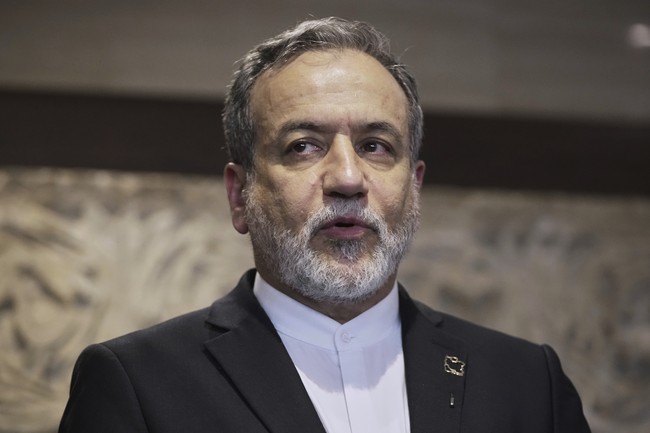
The Iranian foreign ministry spokesman erupted online after X removed his account’s verified badge, sparking ridicule over the contrast between his grand claims and Tehran’s heavier-handed actions at home. This piece walks through the incident, the reaction from users, and the broader context of internet shutdowns and censorship inside Iran, while preserving the spokesman’s own words and the embedded social media posts.
Iranian FM Spox Melts Down Over X Checkmarks, Gets a Brutal Reality Check
Esmail Baghaei, the spokesperson for Iran’s Ministry of Foreign Affairs, publicly complained about losing verification on X after the platform stripped badges from ministry accounts. He framed the de-verification as part of a broader pattern of selective censorship and what he called American digital piracy. The reaction was swift and blunt, with users mocking the complaint given much larger issues inside Iran.
Baghaei had previously made grand statements declaring Iran to be a “superpower” on par with the United States, a claim that many observers found out of touch with reality. That earlier boast set the tone for the ridicule he faced when he focused on a social media checkmark rather than on the suffering of ordinary Iranians. The contrast between rhetoric and public hardship made his protest over a badge seem petty to many commentators.
When X removed the blue check from his account, Baghaei issued a formal complaint that accused the platform of bias and censorship, saying the move aimed to “suppress the truth” about U.S. actions. He insisted the ministry had paid for Premium+ and framed de-verification as arbitrary and politically motivated. His tone suggested indignation that a regime account would be treated like any other user rather than subject to special tolerances.
X has now removed the blue check from Iran’s MFA Spokesperson’s account—after stripping the Ministry and Minister’s verified badges—despite our full Premium+ payments. This arbitrary de-verification fits X’s pattern of selective censorship and American digital piracy, aimed at suppressing the truth about the U.S.’ illegal war against Iran.
The complaints drew quick mockery. Critics pointed out the absurdity of a regime official whining about platform perks while the government itself has curtailed internet access for millions. For more than two months, Tehran has slashed connectivity to limit communication and stop protest organizing, a move that harms families, businesses, and basic daily life.
Cutting off internet access is not a small inconvenience; it severs people from work, from the global economy, and from urgent contact with loved ones. Many Iranians now rely on VPNs and risky workarounds to get online, which puts them in potential legal danger and creates extra expense. In that context, a missing verification mark looks trivial and tone-deaf when voiced by a senior official.
Social media users piled on, calling out the hypocrisy of a spokesman who complains about censorship on a Western platform while his government imposes sweeping digital blackouts. One commenter taunted Baghaei with a blunt insult: “I have a blue tick, you don’t, you loser, go cry.” The online jeers highlighted how little sympathy his complaint inspired outside pro-regime circles.
Some observers suggested a practical reason for de-verification: repeated posting of false or misleading information can trigger account penalties on many platforms. That explanation would make the action less about politics and more about platform rules and credibility. Regardless of the technical reason, the optics were bad for Baghaei and the ministry he represents.
Others offered a moral bargain: return the verification if the regime restores free and reliable internet access for its citizens. That proposal was rhetorical, meant to underline the mismatch between bagging a social media symbol and the real-world harm caused by internet shutdowns. There was no expectation the regime would accept such a trade, but the suggestion sharpened the critique of priorities.
Meanwhile, people inside Iran continue to bear the cost of the shutdowns, with businesses losing revenue and families cut off from each other at a time when communication matters most. The internet restrictions also weaken economic resilience and fuel frustration, risks any government would want to minimize if it cared about stability. Yet Tehran appears willing to accept those costs to control information and public dissent.
The episode ended up revealing more about priorities than about platform policy: a government spokesman worried about symbols of online legitimacy while millions face restricted digital lives. That dissonance is what drew the harshest reactions and turned a bureaucratic enforcement action into a public relations disaster for the ministry. The online taunts and embedded posts preserved below capture how quickly the moment turned from complaint to humiliation.
At least one user posting from inside Iran risked regime scrutiny to mock the spokesman, using a VPN to get online and showing “Connected via” details on their profile. Those details underscore the stakes for everyday Iranians who try to speak out or even just stay connected. The image of citizens paying a high price for access while officials fight over checkmarks summed up why this story struck a nerve.
Add comment