
This article examines how the illegal immigration surge between 2021 and 2024 produced a demand shock that pushed housing prices and rents higher, what the Federal Reserve working paper found about employment and housing impacts, and why enforcing immigration law matters for both markets and the rule of law.
The Federal Reserve Bank of Dallas combined immigration court records with administrative data to measure how the unprecedented wave of unauthorized migration affected local labor and housing markets. Their analysis links shifts in unauthorized worker shares to measurable changes in employment, home prices, and rents across metropolitan areas. The results matter because they show immigration policy has macroeconomic consequences that touch everyday Americans.
The researchers report that a 1% increase in unauthorized workers relative to a local labor force corresponded with roughly a 1% rise in overall employment and no clear reduction in average wages. At the same time, that same 1% uptick was associated with about a 2.2% increase in home prices and a 1.4% increase in rents. Those figures point to a classic demand shock when housing supply is constrained.
A key finding is the limited evidence that homebuilding expanded fast enough to absorb the added demand created by the immigrant influx. Where supply is sticky, even modest demand increases will push prices up sharply, and that is what the paper documents for many metro areas between March 2021 and March 2024. The economists stress these estimates apply to the average metro area studied and are not offered as proof that immigration was the only driver of rising housing costs nationwide.
The paper also estimates unauthorized immigrant flows accounted for roughly 30% of employment growth, roughly 30% of home-price growth, and about 20% of rent growth in the average metropolitan area during the period analyzed. Those proportional contributions are significant and help explain why locals felt pressure in labor markets and housing markets at the same time. This is not a small effect when aggregated across major metro areas.
There are other causes of housing stress, notably heavy regulation, high taxes, and restrictive zoning and permitting rules that limit new construction in many cities. These supply-side constraints mean that when demand rises, prices rise faster than if the market were more flexible. Combining a demand surge with restrictive supply conditions produces the exact outcome the Fed paper highlights.
From a policy perspective, the paper’s findings feed into a larger point about the role of governance and law enforcement in market stability. When federal immigration laws are not enforced consistently, the resulting flows can create unplanned demand in tight local markets. Enforcing existing laws, then, is not merely a legal or political question; it has real economic effects that play out in family budgets and housing affordability.
Political debate has predictably split along party lines, with Republicans pointing to border policies that allowed extraordinary migration and Democrats arguing immigration eased labor shortages and supported growth. Both sides have valid points on different dimensions: labor market impacts can be positive while housing market pressures can be negative. The Dallas Fed results illustrate how a single policy area can produce mixed economic outcomes depending on local conditions.
Since January 2025, enforcement actions and policy shifts have coincided with a moderation in the pace of housing cost growth, although prices are still rising. Housing markets do not reverse instantly; they adjust over time as both demand and supply respond. Still, a slower rate of growth in housing costs suggests policy choices matter for market dynamics.
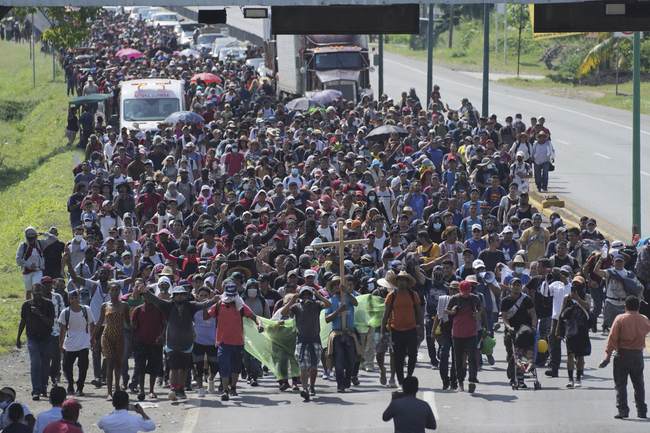
“A new Federal Reserve working paper found the record surge in illegal immigration during the Biden administration triggered higher home prices and rents,” the study observers noted when summarizing the findings and their political salience. They observed the migration wave between 2021 and 2024 strained housing and public resources in some metro areas, underscoring that migration policy has distributional consequences across communities.
Fixing the problem requires addressing both sides of the equation: sensible enforcement of immigration laws to manage flows and serious reform of land-use rules that choke supply. Only by tackling demand and supply together can policymakers reduce the likelihood that future demand shocks will produce sharp, painful increases in housing costs for working families.
Editor’s Note: Thanks to President Trump, illegal immigration into our great country has virtually stopped. Despite the radical left’s lies, new legislation wasn’t needed to secure our border, just a new president.



Add comment