
In the Election to Replace Eric Swalwell, the Mascara Has Hit the Fan
This article previews the tight special election in California’s 14th Congressional District to replace Eric Swalwell, contrasts the backgrounds and platforms of Melissa Hernandez and Aisha Wahab, outlines how outside money and political tactics are shaping the race, and considers what a short-term victory tomorrow could mean for November’s full-term contest.
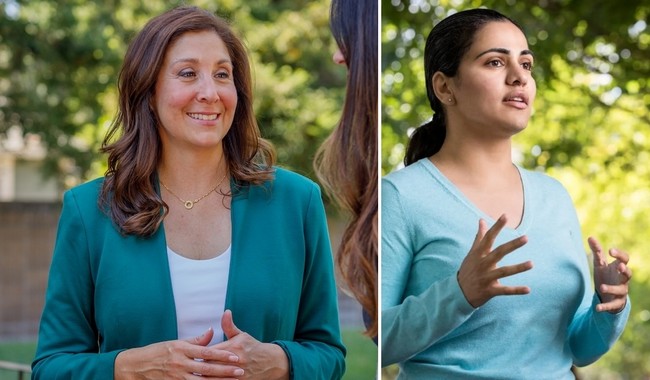
The special election tomorrow in California’s 14th District has turned into a bruising, low-margin fight between two Democrats who look similar on paper but represent different political instincts. Melissa Hernandez is the current president of the BART Board and a former mayor of Dublin, bringing a story of working-class roots and small-business experience. Aisha Wahab sits in the California State Senate as Assistant Majority Leader and emphasizes a narrative of survival and identity, including being the first Afghan American woman elected to public office.
On policy, both candidates pitch familiar Democratic priorities: lower costs for housing, healthcare, and childcare; protection of Social Security and Medicare; and support for small businesses as engines of local growth. Hernandez has also framed her approach around regional cooperation on immigration and skepticism toward political stunts that put families at risk. Wahab’s public platform reads similarly on economic issues but is notably more explicit on military restraint and anti-war language.
Wahab’s foreign policy language appears in her campaign materials as a firm objection to prolonged deployments and unauthorized air campaigns. The original quote reads exactly: “We must end open-ended deployments, stop unauthorized air campaigns, and return service members from conflicts that lack clear goals or a responsible conclusion. The best way to honor our troops is not to send them into wars that political leaders cannot explain and refuse to end. America is strongest when our word carries weight, our alliances are trusted, and our military is used only as a true last resort. A responsible foreign policy can protect our country, reunite military families, rebuild relationships abroad, and prevent another generation from inheriting wars that should have ended long ago.”
Because their policy differences are thin, the campaign has moved into negative tactics and outside influence rather than a substantive debate on solutions. Hernandez is drawing significant outside funding, including donors and groups from beyond the district, while Wahab has relied more on in-district momentum and progressive networks. Outside groups have flooded the air and mail with attacks, turning local voters’ attention toward character disputes and selective messaging instead of detailed policy plans.
One oddity here is timing: the winner of tomorrow’s special election will have to run again in November for a full two-year term. That means whoever prevails could quickly find themselves defending a short incumbency against the same opponent. For voters and strategists, that compresses political calculus and raises the stakes for short-term optics rather than long-term legislative accomplishments.
From a Republican viewpoint, this kind of Democratic infighting and dependency on outside money illustrates broader weaknesses in a party that often struggles with national brand problems in local races. When establishment groups and ideological forces butt heads, it creates openings for Republicans and independents who want governance focused on tangible results and fiscal responsibility. The spectacle of two similar Democrats battling for identity and endorsements highlights the limits of relying on narrative instead of problem-solving.
Voters in the 14th District face a clear choice about representation style as much as policy nuance. Hernandez brings local government and transit experience that appeals to those who value managerial competence and economic practicality. Wahab brings a compelling personal story and a profile that national Democrats may find attractive for broader coalition-building, especially given her history of primary performance earlier this year.
The campaign’s next few months will be a test of stamina and messaging. If Wahab wins tomorrow and then builds momentum into November, she could leverage incumbency and a national profile to expand influence beyond the district. If Hernandez wins but struggles to turn the short term into demonstrable progress, she could be vulnerable to a return effort that paints her as a candidate buoyed by outside money rather than local results.
Outside spending, rapid attack ads, and compressed election timing expose a Democratic Party still wrestling with its identity and strategic coherence. For voters who want clear priorities and accountability, the contest underscores how much modern campaigns hinge on money, narrative, and media choreography rather than direct answers to everyday problems. The outcome tomorrow will tell us a lot about which approach voters prefer head-to-head in this Silicon Valley-adjacent district.
Editor’s Note: The Democrat Party has never been less popular as voters reject its globalist agenda.

Add comment