
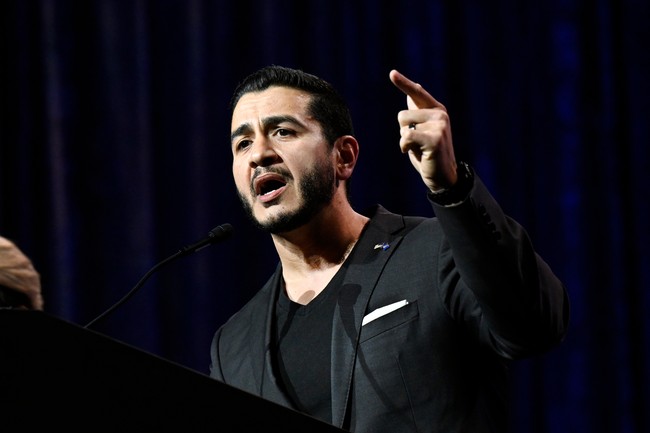
The unearthed 2018 interview of Democratic Senate hopeful Abdul El-Sayed reveals a clear stance: he favored blocking local cooperation with ICE and argued that undocumented people should not be denied state services like driver’s licenses, a policy view that has immediate public safety and legal implications.
Tobias Forsythe was 21, a college goalkeeper with his life ahead of him. In July, a truck driver from Uzbekistan who reportedly could not speak English crossed a median on an Ohio interstate and killed him, and that driver held a commercial license despite having failed a language proficiency test. Those facts matter when politicians propose widening access to driver’s licenses without addressing verification and enforcement.
El-Sayed’s July 2018 interview came back into play around the Michigan Democratic primary, and the clip paints a simple policy position: stop localities from cooperating with federal immigration enforcement and make state services available regardless of documentation. He framed access to a driver’s license as a matter of discrimination rather than a question about public safety or legal status. That framing shifts the debate from enforcement and rules to civil rights language, which has real consequences for how states manage licensing and road safety.
The footage circulated on social platforms just hours before the Democratic primary where El-Sayed faced Rep. Haley Stevens. In the clip, he moves quickly from advocating preemption of local ICE cooperation to insisting that documentation status should not bar people from getting state services. That linkage is central: treating illegal presence as a protected condition in state-administered services would change how licensing systems operate across the country.
His words were explicit. They did not claim that issuing licenses to undocumented residents would improve safety or insurance coverage first; they focused on eliminating what he called discrimination by documentation status. The implication is that legal status should not block access to licenses, even for commercial credentials that grant people the legal ability to operate heavy vehicles on public roads. That distinction drives concern among those who prioritize strict enforcement of immigration and safety rules.
“Beyond that, I look forward to pushing forward legislation that would preempt localities from participating with ICE and using their local resources to do the same. Beyond that, we’ve also got to make sure that in this state we are not discriminating by documentation status. Right now, if you’re undocumented, you don’t get access to a driver’s license, so you’re stuck. You don’t get access to a lot of the basic things the state offers everybody else, and I think that’s ridiculous. And so we’ve got to stop discriminating that way.”
https://x.com/foxnewspolitics/status/2084447350504980932
Those words should prompt policymakers to ask hard questions about enforcement and verification. If documentation status becomes irrelevant for state services, how will states verify identity, ensure language competency, or prevent unqualified individuals from obtaining commercial credentials? Voters expecting secure borders and safer roads will want concrete answers, not only rhetoric about fairness.
Hans von Spakovsky framed the practical stakes bluntly when he explained how state driver’s licenses operate as stand-in national IDs in the absence of a federal card. He warned that issuing licenses broadly without verification would help people use licenses for banking, housing, and other formal transactions. That opens up potential legal and administrative gaps that Republicans argue should be closed, not widened.
“Because America does not have a national ID card like the Europeans and other nations, state driver’s licenses are a stand-in for that ID card. Issuing driver’s licenses to aliens will help them in all the instances where a license is needed, from opening bank accounts to all types of other transactions”
Spakovsky continued with a policy point that goes to the heart of enforcement strategy: making it harder for illegal residents to access housing, banking, and employment encourages self-deportation. He warned that providing driver’s licenses makes living and working in the United States easier for people who are not legally present. For Republican voters focused on border security and rule of law, that trade-off is unacceptable.
The real-world costs are already visible in deadly crashes tied to drivers whose documentation or qualifications were questionable. Investigations revealed cases where commercial drivers held licenses despite failing language proficiency tests or where individuals allegedly entered the country illegally and later were involved in fatal collisions. Those incidents fuel the argument that licensing must include robust verification of immigration status and competency.
A federal audit found that more than 30 states had issued tens of thousands of commercial licenses to ineligible drivers, and the Department of Transportation moved to require immigration status verification before any commercial driver’s license is issued. That federal action underscores the need for clear guardrails when it comes to credentialing commercial operators, and it aligns with a Republican preference for rule-based solutions rather than broad amnesties.
When campaigns are asked afterward whether their position has changed, silence is telling. El-Sayed’s campaign did not answer questions about whether he still supports issuing driver’s licenses to undocumented residents or whether that amounts to endorsing continued presence in the country. Voters who prioritize public safety and immigration control will weigh that silence against the stakes on the road and in communities.
Policy choices about driver’s licenses and immigration are not abstract legal debates; they touch on victims, families, and the integrity of state systems. Republicans argue that fairness includes protecting citizens from avoidable danger and ensuring laws are followed, not changing rules in ways that make enforcement impossible. The tape of El-Sayed’s remarks invites that debate, and it demands specifics if he expects voters to trust him with responsibility for public safety and border-related decisions.

Add comment