
Checklist: examine new leadership in Iran, report on U.S. intelligence findings about Mojtaba Khamenei, note potential fractures inside Iran’s ruling class, consider operational and political consequences, and keep quoted intelligence excerpts intact.
The latest reports suggest that Iran’s passing of the torch landed on a figure many inside and outside the regime did not expect to be embraced as a serious ruler. U.S. intelligence has circulated assessments that the late Supreme Leader Ali Khamenei doubted his son Mojtaba’s suitability for full leadership. That doubt, if true, injects a sizable credibility problem at the heart of Tehran’s power structure just as tensions with the U.S. and Israel escalate.
The intelligence picture, as described to officials, portrays a senior cleric who was publicly dominant but privately skeptical about succession. Those close to the analysis describe Ali Khamenei as having “misgivings” about Mojtaba stepping into the top role. That kind of private skepticism matters in a theocratic system where personal loyalty, clerical legitimacy and factional balance all determine who gets to wield real power.
U.S. intelligence has circulated to President Trump and to a small circle around him that Iran’s late supreme leader, Ayatollah Ali Khamenei, had misgivings about his son replacing him, multiple sources familiar with the matter told CBS News.
The analysis showed the elder Khamenei was wary of his son, Ayatollah Mojtaba Khamenei, ever taking power because he was perceived as not very bright, and was viewed as unqualified to be leader, according to sources.
The information gathered also indicated that the father was aware that his son had issues in his personal life, according to sources within the administration, the intelligence community and people close to the president.
Those quoted findings are stark: being “perceived as not very bright” and having “issues in his personal life” are not the kind of credentials you want attached to a successor in a volatile, surveilled regime. In a place where clerical pedigree and reputation are currency, that perception can fuel factional splits and justify internal challenges. It also hands the West a potential political opening, though openings don’t always turn into clean outcomes.
Mojtaba Khamenei, now aged 56, has been placed at the top by Iran’s clerical elite, according to reporting on the council’s decision last weekend. That selection followed Ali Khamenei’s death from an attack blamed on Israeli military action and seized on by forces aiming to reshape the region’s strategic map. The speed of the council’s choice hints that Tehran’s inner circle wanted to present a united front, even if the unity is paper-thin.
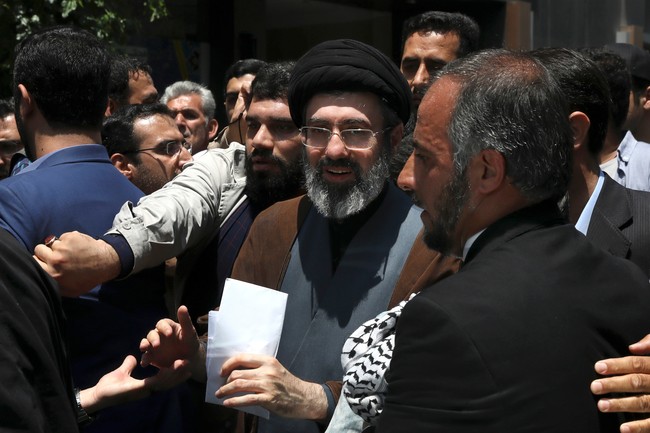
Mojtaba Khamenei, 56, was selected to become Iran’s supreme leader last weekend by the country’s council of religious clerics after serving as a close aide to his father for years.
About eight days earlier, Ali Khamenei was killed in an Israeli missile strike in the opening salvo of the U.S. and Israel’s war with Iran.
Strip away the theater and you get a regime that may have installed a successor who will be treated as a custodian rather than a boss. In that scenario, power flows through other hands: senior clerics, security mandarins, and the Revolutionary Guard commanders who have always been the regime’s real muscle. If Mojtaba is indeed a figurehead, the internal jockeying to control him could be intense, and that jockeying often translates into unpredictable policy moves.
There are practical consequences for the U.S. and allies. First, internal division weakens cohesive command, but it can also produce rogue actors more dangerous than a unified, disciplined leadership. Second, opponents of the new leader may try to replace him with someone more experienced or acceptable to key constituencies, sparking behind-the-scenes coups or public purges. Either path increases instability at a time when Iran’s neighbors and global energy markets already feel the strain.
For those who favor a firm stance against Iranian aggression, reports of succession doubts may justify pressure to exploit weakness and accelerate deterrent measures. From a Republican viewpoint, weakness invites trouble, but disarray can be used strategically if Washington coordinates its diplomatic and military playbook effectively. That requires clear aims and resolve, not wishful thinking that infighting will neatly solve complex security challenges.
Another angle is the human one: power transitions in authoritarian systems often push elites to protect wealth and safety first, not ideology. Expect scrambling and seatbelt-fastening among clerical and military elites who fear being left vulnerable. History shows that many high-ranking figures will quietly seek safe harbors rather than martyr themselves for a fragile new leader.
Whatever the truth behind the intelligence snippets, the development matters. A leadership that lacks broad respect inside its own ranks is a risky proposition for friends and foes alike. The new face at the top might be a placeholder, and placeholders have a short shelf life when national survival is on the line.


Add comment